“Universal” biological signatures of aging shared across different mammalian species—including humans—could offer new clues to identifying longevity and antiaging treatments or interventions, a new study finds.
Age isn’t just the number of candles on a cake. That’s a representation of your chronological age, while your “biological age” is a measure of how your body’s various tissues and cells are holding up over time—and the two don’t necessarily match. Instead your biological age may be higher or lower than your chronological age for several reasons, such as your lifestyle choices, a chronic disease if you have one, your genes, and more. Researchers use molecular “clocks” to estimate biological age, such as by looking at changes to our DNA. But some of these biomarkers don’t help explain why aging is occurring.
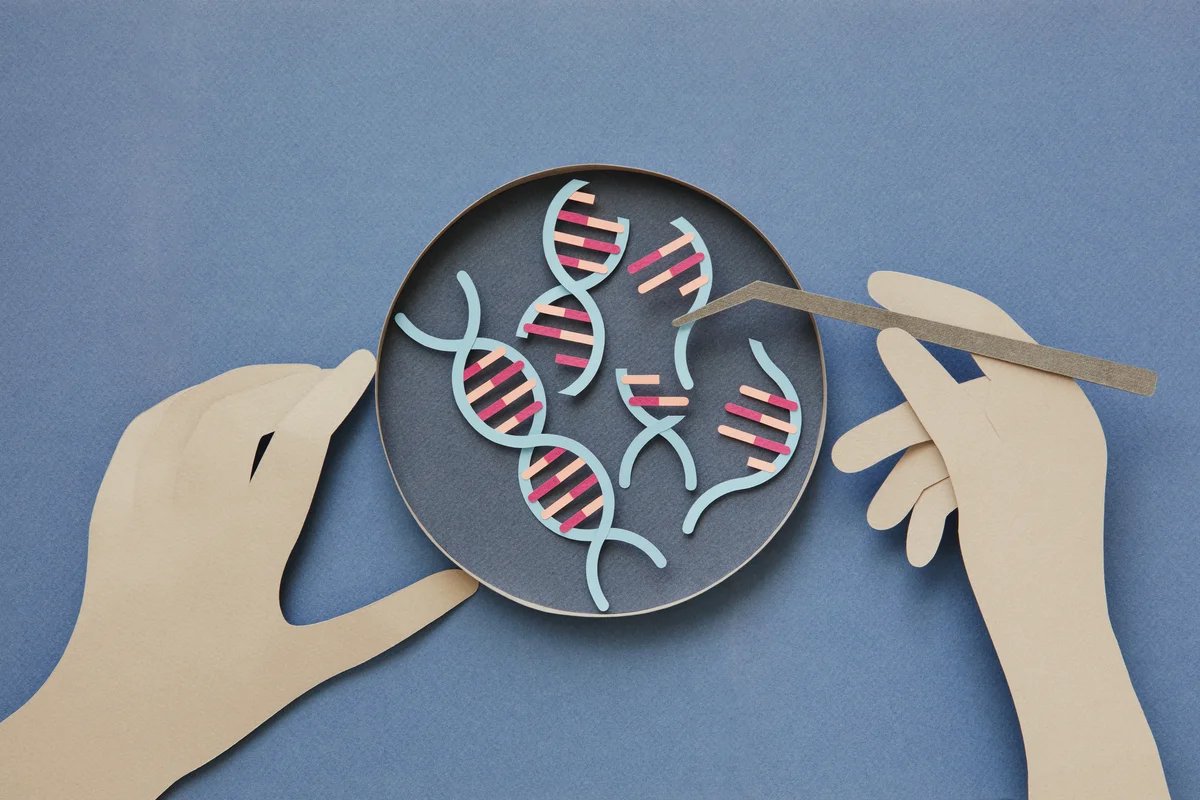
In the new study, published on Wednesday in the journal Nature, researchers analyzed more than 11,000 “transcriptomes”—collections of RNA transcripts that show which genes are being turned on or off in any given cell or tissue at any given time—across various tissues in mice, rats, monkeys and humans.
On supporting science journalism
If you’re enjoying this article, consider supporting our award-winning journalism by subscribing. By purchasing a subscription you are helping to ensure the future of impactful stories about the discoveries and ideas shaping our world today.
What they found was that biological hallmarks of aging in different tissues appear to be highly conserved, meaning they are shared across species, says Alexander Tyshkovskiy, the paper’s lead author and a researcher at Brigham and Women’s Hospital and Harvard Medical School. “The same genes are associated with aging in, for example, liver and heart in rats and humans,” he says.
The hallmarks of aging carried across individual cell types, too, such as liver or blood cells. “Even though the cells have very different functions, very different origin, they still share the same aging-related biomarkers,” Tyshkovskiy adds.
The researchers call this type of aging one’s “transcriptomic age.” Both humans and animals with chronic diseases had a higher transcriptomic age, the researchers found, suggesting it reflects higher levels of cellular damage. And using a large dataset from the U.K. Biobank, the team found that one’s transcriptomic age also appears to correlate with disease and mortality.
Overall, the results suggest that aging seems to be a “very systemic process” that affects different tissues, cell types and species in similar ways, Tyshkovskiy says.
The study is a “major advance,” says David Sinclair, a professor at the department of genetics at Harvard Medical School, who has long studied longevity. Sinclair was not involved with the study.
“[The authors] developed transcriptomic clocks that don’t just estimate age; they measure the progressive loss of cellular function and predict biological decline and mortality risk across mammals,” Sinclair says. The findings could help researchers understand “the underlying process of aging itself, not just the passage of time.”
Tyshkovskiy and his colleagues hope the results will one day lead to potential treatments to slow aging in humans. To that end, the team has developed an online tool called “Transcriptomic Age Calculator Online,” or TACO, to enable other researchers to predict the age of tissue samples using RNA data they may have already collected. For instance, if a researcher has collected tissue from one animal model that was treated with a drug and from another that was not treated, the scientist can measure changes in the biological age between the samples “regardless of the tissue [and] regardless of the species,” says Vadim Gladyshev, the study’s senior author and a professor of medicine at Brigham and Women’s Hospital and Harvard Medical School.
The project could help narrow down possible longevity treatments. “Currently in humans, we don’t have a single intervention that extends lifespan,” Gladyshev says. “We think, using these tools, we could identify candidates that can be tested in the future, and maybe some of them will extend lifespan. That is the hope.”
It’s Time to Stand Up for Science
If you enjoyed this article, I’d like to ask for your support. Scientific American has served as an advocate for science and industry for 180 years, and right now may be the most critical moment in that two-century history.
I’ve been a Scientific American subscriber since I was 12 years old, and it helped shape the way I look at the world. SciAm always educates and delights me, and inspires a sense of awe for our vast, beautiful universe. I hope it does that for you, too.
If you subscribe to Scientific American, you help ensure that our coverage is centered on meaningful research and discovery; that we have the resources to report on the decisions that threaten labs across the U.S.; and that we support both budding and working scientists at a time when the value of science itself too often goes unrecognized.
In return, you get essential news, captivating podcasts, brilliant infographics, can’t-miss newsletters, must-watch videos, challenging games, and the science world’s best writing and reporting. You can even gift someone a subscription.
There has never been a more important time for us to stand up and show why science matters. I hope you’ll support us in that mission.