“The ship has sailed,” film producer Serge Hayat explained this morning during the Marché du Film’s inaugural Creator Economy Summit. There is no longer a question, he continued, about whether content creators have a space in the film industry. They are here and have begun to change how films are made and can be distributed, he said.
A prime example is mk2’s YouTube Ciné-Club, a dedicated label that mk2 launched in 2023 to distribute film projects produced by digital content creators. Discussing the genesis of the project during a panel at the summit, mk2’s Elisha Karmitz said the company’s work with YouTube allows mk2 to attract a new, younger audience to cinemas.
“After COVID, the big conversation was whether Gen Z would come back to cinema,” he said.
“Over the past 150 years, the cinema has been a place where people gather to experience storytelling and community. YouTube is now a place where fans gather. It’s a place where people can regroup around their passions. So we wanted to build these bridges to keep cinema relevant and bring audiences to cinemas.”
The first feature released under the YouTube Ciné-Club was Kaizen, directed by the content creator and filmmaker Inoxtag. The film drew in over 300,000 admissions in one day before being released for free on YouTube.
Speaking of the strategy behind the release, Karmitz said mk2 works around the “talent of the creators.”
“We are simply the facilitators,” he said. “We simply help the creators reach new audiences and show their work in multiple formats. With Kaizen, it was all about the talent of Inoxtag. He had a real intention of coming to the cinema. He wanted his community to come together. And it was that sincerity that made the release a success.”
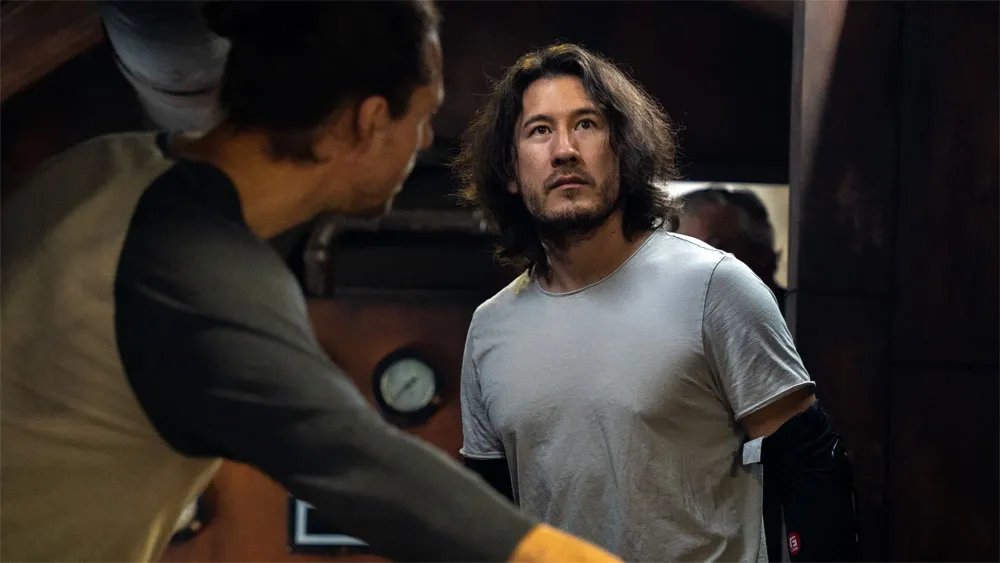
Another early creator-cinema crossover hit is, of course, Markiplier’s Iron Lung, which opened in cinemas on Jan. 30 and has now topped over $50 million worldwide against a $4 million budget. The film had practically no marketing spend and reached audiences through Markiplier’s large social presence. He wrote, produced, directed, financed, and starred in the film, which is an adaptation of the indie horror video game of the same name by David Szymanski. He also self-distributed the title.
Markiplier spoke at the summit and told the audience that he initially attempted to produce the film within the traditional film system because there was previously a “stigma against YouTubers entering the cinematic space.”
“I tried to show it to distributors, and they turned it down. I submitted to film festivals, and it got rejected. After that, I finally decided to just bet on my audience,” he said.
On YouTube alone, Markiplier has over 12 million followers, so he was able to leverage a considerable following when charting the Iron Lung release; however, both he and Angela Courtin, Vice President of Marketing Brand, Creative, Culture & Media at YouTube, told the crowd at the summit that the Iron Lung success can be replicated. The key, they said, is building an audience by honing a specific point of view.
“This is replicable because it’s all just about what and how you’re trying to communicate,” Markiplier said. “YouTube is the biggest platform. There are so many people on the platform that you will find your audience in some way.”
Despite these early successes, Courtin concluded that any stigma around creators must be eliminated if we want to see the full potential of the work they could create.
“If you look at any creator who has been on the platform for many years and has developed an audience, they create every day. They’re artists,” she said. “And art is subjective. We’re currently seeing a real surge in creativity, and if we let go of these constraints about what it means to be a creator, we can allow them to permeate the different mediums and create and move culture.”
Other speakers who took part in the Marché du Film’s Creator Economy Summit included executives from Meta, Prime, and Banijay. The Marché ends on May 20. The Cannes Film Festival ends on May 23.