
In 2023, the Writers Guild of America appeared to take no prisoners in its contract negotiations. The union’s leaders called a strike authorization vote less than a month in, negotiated down to the wire, then launched a strike that lasted nearly five months and only ended once some of the industry’s top CEOs got involved.
So it was understandable when, this year, heads spun as that same union handled its latest contract negotiations very differently. After just three weeks of talks, the WGA cut a surprise deal with the studios that was distinct in its concession to a key studio demand, for a longer deal (four years instead of the typical three) to assure a sustained period of labor peace.
So what happened? It was clear the WGA’s health plan was in dire straits, which affected the union’s leverage, but had the typically aggressive union undergone a complete personality replacement?
Not so, some of its top negotiators said in a recent interview with The Hollywood Reporter. Yes, the WGA needed to take dramatic steps to secure its health plan. But under the new leadership of Gregory Hessinger, the Alliance of Motion Picture and Television Producers also “came ready to talk about really what we needed and what they needed,” said negotiating committee co-chair Danielle Sanchez-Witzel.
And don’t go thinking that the WGA will always agree to a four-year deal cycle from here on out, added WGA West president Michele Mulroney. “I think it’d be fair to say our goal is to go back to three years,” she said.
Members still have to weigh in on whether they’re happy with these deal terms; their ratification voting period will end on Friday.
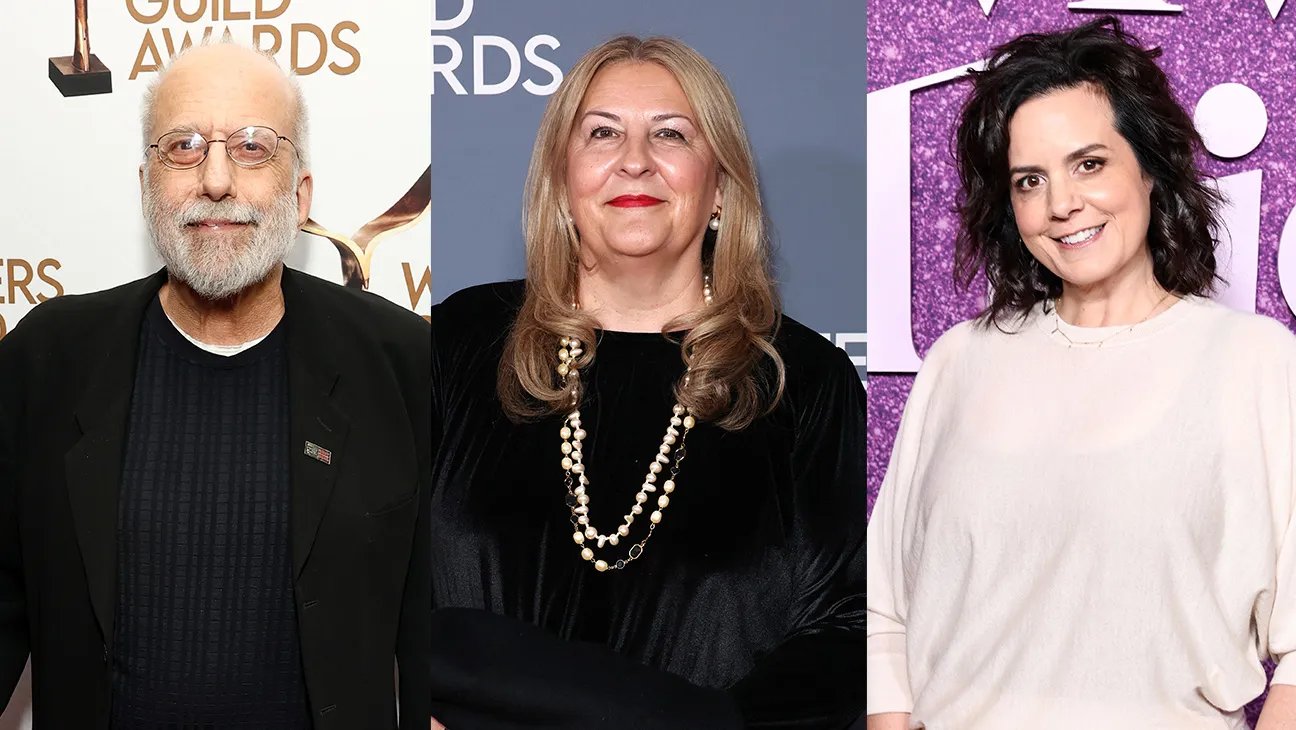
To learn more about the rationale behind the union’s unusually drama-free negotiation in the meantime, read THR’s interview with Sanchez-Witzel, Mulroney and WGA East president Tom Fontana below.
How did studios get you to agree to a four-year deal over a three-year deal?
Sanchez-Witzel: Look, the studios publicly expressed a goal to negotiate a five-year deal with all the unions. And it became clear at the table that a longer term was a top priority to them. And as Tom was just saying, keeping our health plan on the sustainable path was our top priority. So agreeing to a four-year deal this time allowed us to get more and new funding for the health plan than we’ve actually ever gotten before.
Mulroney: I don’t think, Katie, that we should assume this locks us into a four-year deal for the future. We’ve been in four-year deals before as this guild and we’ve reverted back to three, and I think it’d be fair to say our goal is to go back to three years. So this was what we needed to do for this negotiation cycle because we needed to get the health fund in order, and also we were able to negotiate for years three and four the ability to divert a half percent from our minimums into the pension plan in order to protect that in case it fell below a certain funding level. It’s in the green right now, we’re good, but we have that nice cushion that we were able to build into the four-year deal.
How did this deal get wrapped up so quickly compared to deals that you’ve negotiated in the recent past, where they’ve been more down to the wire?
[Laughs]
Fontana: None of us feel it was quickly.
Sanchez-Witzel: Yeah. I don’t know that any of us can even categorize it as quickly, but I understand the question. We had scheduled two weeks and agreed to continue into the third because we thought there was a good chance we were on the path to reaching a deal. And we were working on a deadline, which we made clear to the AMPTP, that if we had gone too far into April, we would have had to break off to take a strike authorization vote in order for there to be time to come back to the table for a couple of weeks’ negotiations before our May 1 deadline. So the companies indicated that they wanted to avoid a strike vote and came to the table ready to offer serious money for the health fund and address other issues. And as a member of neg com [the negotiating committee] in 2023, I feel like that was the big difference in 2026 is that they came ready to talk about really what we needed and what they needed.
What are the major achievements of this deal in your view?
Fontana: To get [$321] million to cover the health fund is a huge win for us. And I think that the other gains [are] the increases in the minimums and the residuals, and also I think personally that there was a shift in the attitude about what writers do. I know this is going to sound ridiculous, but the AMPTP, they have their own attitude about what we do, but I think we made clear the size and the importance of what we do either in film or television.
Mulroney: Just to get to the bottom line, the health fund increases were a projected $321 million in additional contributions over the term of the agreement with $280 million of that being new contributions for the companies. It’s the largest increase in annual health funding this guild has ever negotiated, and that really needs to be underscored. Bringing up the health plan contribution rate from 13 percent to 16.75 percent by the second year of this deal — huge deal for us. And the health contribution caps for screenwriters, pilots, and overall deals, they’ve been frozen for over 20 years. And then I would say we have to look at the AI piece.
Sanchez-Witzel: With a four-year deal, it’s an important thing to talk about. I think we need to start with the fact that the AI guardrails established in our 2023 negotiation have held up and provided clear protections on AI and how we work. So now we’ve expanded our protections to address reuse of our work to train AI systems. As everyone knows, most of our works have been stolen to train AI. But we are planning for the possibility of licensing. So we saw this with the Disney-OpenAI deal, which has already fallen apart while we were in negotiations, in fact. But we are prepared for the next deal because the terms require written notice if the companies license writers’ work to train a commercial GAI system in order to create outputs. And the companies must also discuss the license and any payment for writers with the guild. There is an obligation under labor law to bargain over changes to employment during the term of the agreement. So we stake a claim on compensation when the companies earn money from the exploitation of writers’ work in AI systems.
What’s stopping the company from doing an AI licensing meeting with the union but saying “Sorry, we’re not going to pay you”?
Sanchez-Witzel: The way we think about it and talk about it is this is not unprecedented in terms of getting residuals on DVDs, getting residuals on streaming. There is a conversation to be had about this in those terms. Just how it works and what is it going to be used for, none of us know yet, but I think there is precedent to be able to talk about. So it feels quite reasonable to us that that’s what the next step would be.
Mulroney: Going back to these Article 72 meetings [occasional meetings, negotiated in the 2023 agreement, that the union has with the studios about their use of AI], the general feeling in those meetings has been if there is a revenue stream in the future, that they understand that it is only right and correct that we at least have the chance to discuss and negotiate with them. So we see that as a very real open door there, and we will, of course, walk right through it when that [happens].
Conversely, what are the issues that you didn’t make much progress on, or areas where you had to make some compromises?
Sanchez-Witzel: Well, we wanted a three-year deal. And we made a deal for four, and that was something that the negotiating committee did not take lightly, and we understood what our priorities were and what their priorities were. So I think we can recognize that that is negotiating, that we had to meet each other where things were most important.
Fontana: We tried to expand the number of writers in the writing rooms. It’s something we will continue to fight for in years to come, but we feel like we at least maintained what we had from 2023. And the showrunners are hiring writers on every level. So it feels like that’s something we can come back to and win the next time.
Mulroney: There are two things I’d want to point to. One is the issue of our showrunners getting paid in post-production. We were not able to win that in 2023 despite a five-month strike, and it’s something that this guild is not going to give up on. The second one is screenwriters getting pension and health contributions on their residual payments. What this guild does is we will just keep going, cycle after cycle. Sometimes it takes five, six, seven cycles to win something. If that’s the case, we dig in and so be it.
I’m seeing some remarks from writers — and I’m sure you’re hearing from them — who think the health cuts go too far. In your opinion, why did the WGA need to agree to adjustments to health benefits in this deal?
Mulroney: If I may just correct something, we did not make any cuts to the plan. It’s really important we’re careful with our language there. We still have the same gold-standard health plan we had going into this negotiation. We had this enormous additional funding coming from the companies that we’ve talked about, but we knew going into the negotiation that they would give what they would give and then that there would be some responsibility on the members’ part to agree to some changes to the health plan to address this really steep cost curve. Always with the principles of maintaining high quality, preserving choice for our members and keeping the out-of-pocket costs as reasonable as we possibly could. And I believe we did achieve that.
It’s always a conversation with our members. We always welcome questions. We always invite the back and forth that we’ve been having the last few days, and I would characterize it as very productive, very transparent, and a very important conversation the membership’s having right now.
Did having WGA West staff members — the non-managerial, non-executive staff — out on strike affect negotiations this year?
Mulroney: Not at all. Yeah. I mean, this is our negotiation based on our leverage as writers. We, of course, hope that the staff will reach a deal that works for them as we hope for all unions, but we were very mindful going into these negotiations that of course, as we said, many times, health was a big priority and it’s important to recognize the members of the WGSU staff get the same health benefits as us. So we were in there negotiating on their behalf as well as on behalf of our own members. But to be very clear, they did not affect the outcome of this negotiation in any way. This was our negotiation and we can stand by the deal that we got.
This interview has been edited for length and clarity.


