SPOILER ALERT: This article contains spoilers from “The Ballad of Paladin,” Season 3, Episode 3 of “Euphoria,” now streaming on HBO Max.
One of the defining loose threads of “Euphoria” has been settled — in moving and compelling fashion.
The action of the first season of “Euphoria” back in 2019 kicks off with a crime. Jules Vaughn, the new girl in her high school, solicits sex from older men; Cal Jacobs, a seemingly upstanding member of the community, commits an act of statutory rape. The act is captured on a tape that haunted the show through its first two seasons — as evidence of Cal’s unfaithfulness and of a queer identity he can barely admit to himself, and as a potential catalyst for his fall from grace.
All of this has been compellingly acted, through the show’s run, by Eric Dane and by Hunter Schafer. The latter actor seemed at times in Season 2 to recede from view, and her return, this season, has been welcome; the former seemed like an unlikely addition to this season at all. Dane, who died in February, announced his ALS diagnosis in 2025.
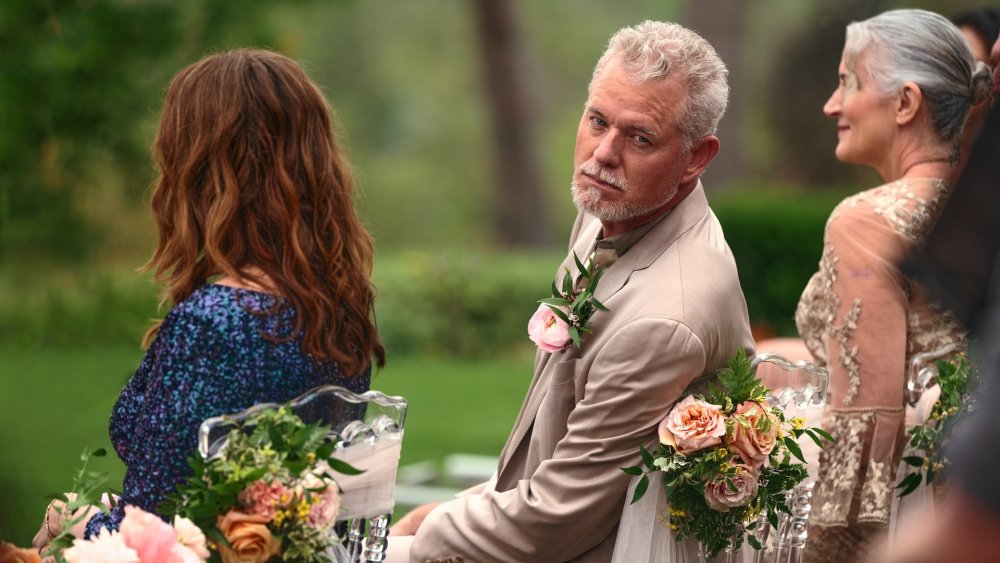
The season’s third episode, “The Ballad of Paladin,” isn’t Dane’s first appearance on the season; he’d shown up briefly the week before. But it’s striking and strong work from an actor working under unimaginable circumstances — and, crucially, the role as written never condescends to Dane. Cal, here, is attending the wedding of a son he loathes and who loathes him; he’s doing so under a cloud of shame, with his depredations (although not his liaison with Jules) having been exposed. “Most of you know me,” he says in his toast. “Some have probably heard about me. That’s the past.” Throughout the series, and particularly in a knockout showcase episode in Season 2, Cal has lived in a sort of fantasy double life, believing that he can outrun his desire if he simply wills it hard enough. Dane imbues his declaration that he’s left foolish things behind with far more evident emotion than his tribute to his son, a painful check-in on a relationship played by actors committed to honesty.
And encountering Jules at the wedding’s open bar, Cal is untrammeled and free. “How could I forget?” he declares to Jules. “It’s not every day you fuck one of your son’s high school classmates.” (Jules, with some measure of annoyance, reminds Cal that he recorded it, too, for which he offers a feeble apology, before making a lewd declaration about what he’d used the tape for.) It emerges in conversation that Cal was eventually arrested for a different statutory rape case and is a registered sex offender, to which Jules, in a moment of mordant humor, declares “So, like, you’re one of those red dots?”
The whole conversation is in this vein. As a low-key oasis in the midst of a high-drama wedding (with some of Sydney Sweeney’s most potentially viral acting of the season so far), it’s written with clear eyes about the person Cal is, but a refreshing lack of judgment. If anything, both Jules and “Euphoria” creator Sam Levinson seem sympathetic to Cal’s inability to understand himself, and his need to constantly make excuses. “I do wish people didn’t think I was a pedo,” Cal tells Jules, who reminds him that he has a taste for the young. “But legal!” he declares. To his final moments on the show, it seems, Cal will exist at a state of remove from whatever it is that he wants, and in a haze of fading charm. (He flirts with Jules, and it seems the intention is not to pick her up but merely to exercise a too-little-used muscle; flirting is what Cal did and does.)
A show taking yearslong gaps between seasons provides all the more opportunity to assess the passage of time, and, this season, “Euphoria” has made that passage its explicit subject: All of the characters, five years in show time removed from where we last saw them, are older, though not all of them have grown up. Gratifyingly, Jules has, and it’s an act of generosity of Levinson’s writing and of Dane’s acting that this conversation shows us how. Informed by Cal that high school represents the best part of one’s life — a period of freedom and possibility that Cal’s entire psychic life is constructed around chasing — Jules replies, with a smile that doesn’t reach her eyes, “I couldn’t disagree more.” She went through hell at Euphoria High in no small part due to Cal’s tape, and, while her adult life as a “sugar baby” sex worker might not look like what Jules fans would have wanted for her, she’s at least in control of her sexuality, confident in herself and existing in a surprising state of forgiveness. What a contrast to Cal’s grasping for a lost youth he misremembers as happy; what a place to have arrived at, as Schafer strides through the frame with a confidence the old Jules might only have imagined.
Dane’s work here is moving not merely for the frankness with which he confronts Cal’s flaws but for his own no-drama approach to work, which he evinced when I spoke to him some months after he made his diagnosis public. Then, Dane respectfully declined to discuss his health; noting that he was in the midst of shooting “Euphoria,” Dane said, “I am ready and willing to do just about anything.” His voice, during the show’s third season, is tremulous, but his bearing is steady. And his rant about how youth is beautiful and age is repulsive has behind it both a real comic idea and a crystalline sense of a character who cannot be shaken into changing. Jules’ response to that rant, that age brings “perspective,” falls upon unhearing ears. But the perspective the real Dane brought to one of “Euphoria”’s most complicated characters was among the show’s secret weapons — and his appearance made clear just how sorely he’ll be missed.