
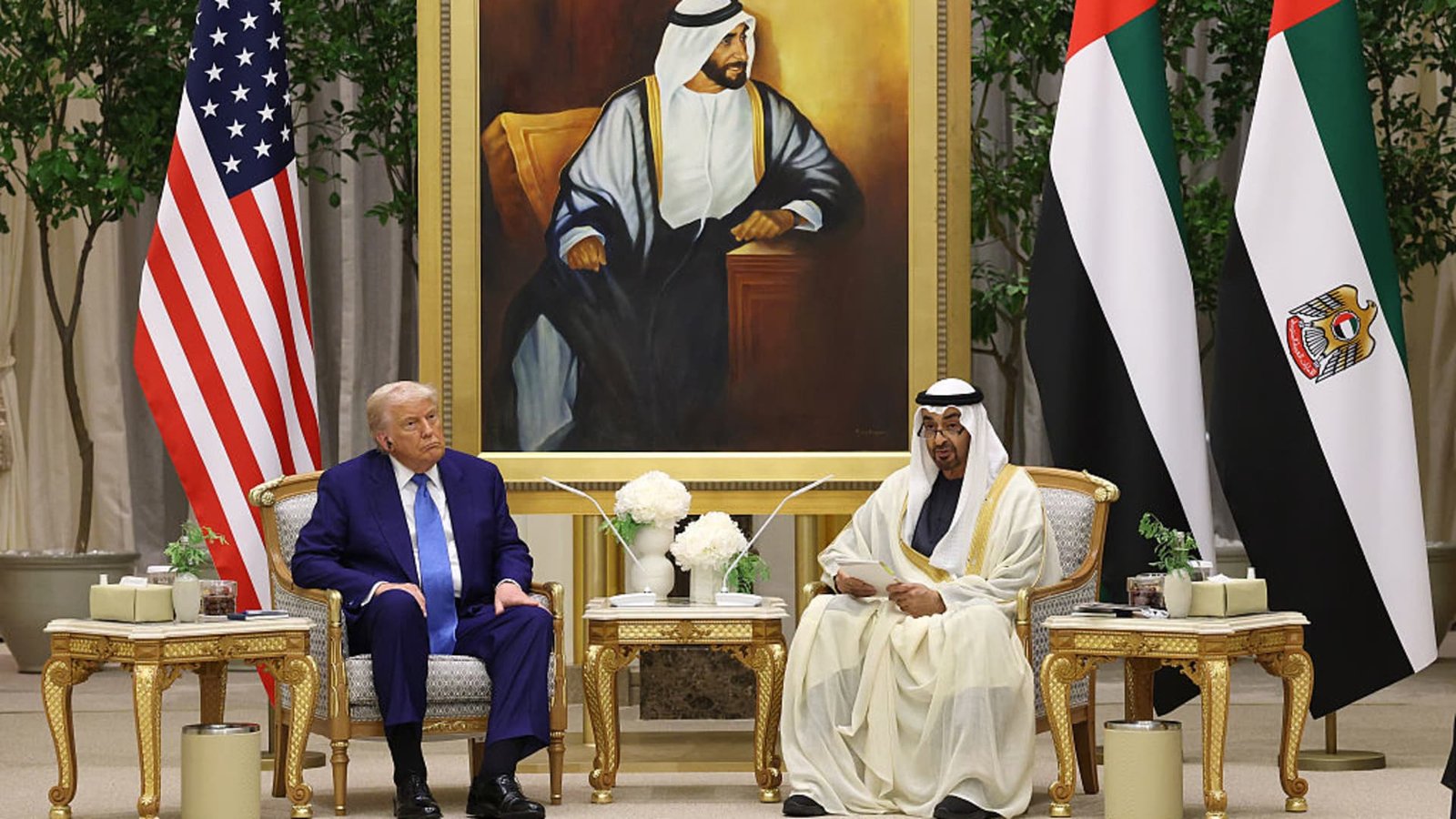
The White House has discussed offering a financial lifeline to the United Arab Emirates as the U.S. war with Iran wreaks havoc on the Gulf state’s economy, a White House official told CNBC.
The UAE has not formally requested a currency swap line, and plans are not currently being drawn up, the official said, speaking on condition of anonymity to talk about nonpublic plans. Still, it is being discussed within the administration, the person said. Such a move would provide liquidity in dollars to the oil-rich UAE, but could be politically tenuous for the administration as U.S. consumers grapple with higher prices at home.
The UAE and other Persian Gulf nations have been hit hard by the U.S. war with Iran. Tehran has fired troves of missiles at the U.S.’ regional allies, damaging economic infrastructure. Iran’s closure of the Strait of Hormuz has also largely choked off oil exports that the UAE depends on for cash flow.
The UAE is a particularly close ally of the Trump administration, and has labored to extend overtures to Washington since Trump returned to the White House. The country committed to invest more than $1 trillion in the U.S. last year. The leaders of the Gulf nation are also reportedly intertwined with President Donald Trump’s family business.
Trump, on CNBC’s “Squawk Box” Tuesday, appeared to say that he was willing to assist the UAE when asked directly about whether a currency swap was under consideration.
“If I could help them, I would,” the president said. “It’s been a good country. It’s been a good ally of ours.”
A potential currency swap line comes with political risk for Trump, however, as U.S. voters could view it as a bailout of a foreign country — and a wealthy one — while American consumers are swallowing higher prices.
The White House official said Trump sees the UAE as a major ally of the U.S. and is open to helping them, but cautioned that a swap is still “something we’re thinking about considering.”
A key Republican lawmaker on Tuesday appeared to be cautiously supportive of a potential swap.
“They’re such a strong ally in the Middle East, I think we should look at what needs to be done to help them through this difficult time,” Sen. Steve Daines, R-Mont., who sits on the Senate Finance and Foreign Relations Committees, said in a brief interview. “[Treasury] Secretary Bessent, he’s good at a lot of things, the one thing he’s really good at in his own experience before he was secretary was currency swaps.”
“I think it’s something that the secretary is moving in that direction, and I support him in that,” he said.
Democrats, however, are deeply skeptical of any deals the administration may make with the UAE.
“Anytime I’ve seen the president doing anything else with the UAE is to the benefit of the Trump family,” said Rep. Gregory Meeks, D-N.Y., the top Democrat on the House Foreign Affairs Committee. “I understand the UAE has been hit hard in that regard, and I want to make sure we help our friends and our allies in the region, but I would have to really examine that deal.”
Even if the administration is open to providing support, the ultimate decision on providing swap lines rests with the Federal Reserve.
Swap lines historically have been limited to major central banks and systemically important markets, so offering one to the UAE would represent an unusual broadening of scope.
The prospect of a swap line between the U.S. and the UAE first cropped up on the sidelines of last week’s World Bank and IMF meetings in Washington, when U.S. Treasury officials pulled some Gulf allies aside to ask what they might need to rebuild their economies after the Iran war concludes, the official said. The UAE later raised a potential currency swap, but did not make a formal request for one, The Wall Street Journal first reported.
The Journal also reported the UAE warned it may have to use the Chinese yuan for oil sales and other transactions if it runs short on dollars, a threat to the supremacy of the dollar on oil markets.
The UAE, in a statement from its embassy in the U.S. posted to X, refuted that it needs a bailout.
“Any suggestion that the UAE requires external financial backing misreads the facts,” the statement read. “The UAE and the United States will continue to prosper together for decades to come, not because one depends on the other for support, but because both benefit from one of the world’s most important economic partnerships.”
— CNBC’s Jeff Cox contributed to this report.
