The AI boom is in many ways a hype cycle like no other. Sure, there are comparisons to draw between the dotcom surge of the late 90s and the mobile revolution of the noughties, but in terms of capital invested and lofty predictions on it causing huge societal shifts, it stands ahead of the rest.
The speed of that progress comes with big hurdles. AI builders are having to grapple with constraints like access to the energy that will power the huge data centers, a memory chip crunch and, increasingly, the efficiency of transferring data between AI chips and systems.
An emerging technology, known as photonics, offers a route to solving for the latter.
Photonics can be used in AI infrastructure by using light to move data between graphics processing units (GPUs), memory, networking chips, servers and data centers, instead of relying on electrical signals running along copper.Some photonics tech is already in use, including in fiber optic connectivity.
But much of the connectivity inside AI servers and racks currently travels along copper wires, limiting speed and increasing energy costs.
“One of the main bottlenecks for the performance of AI models is the speed of communication between chips and between chip servers,” said Gil Luria, head of technology research at D.A. Davidson.
“The faster the communication, the faster the user can get their answer or their task executed,” he added. “By moving the connections between chips and between servers to optical, the performance of the models can improve significantly.”
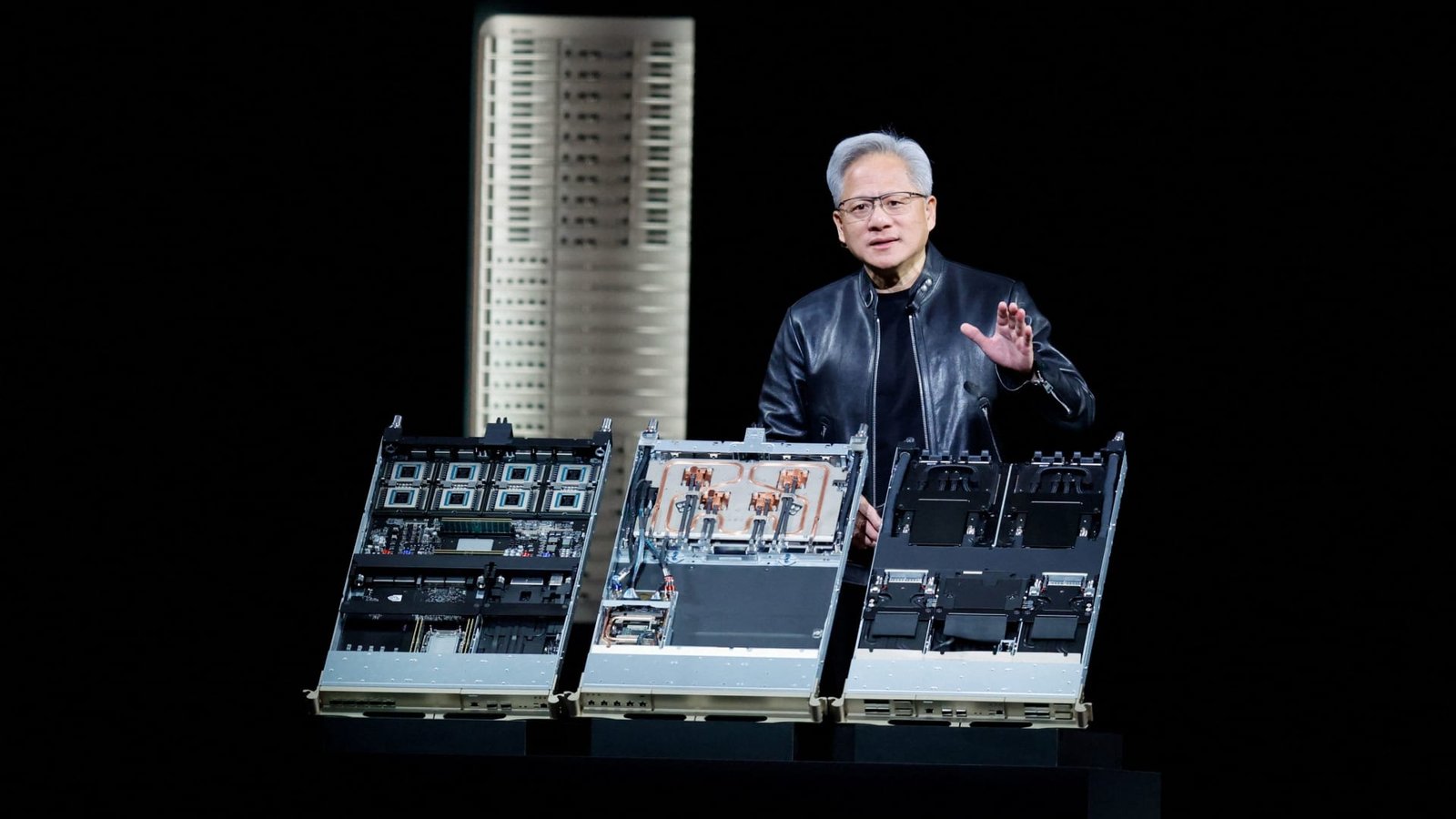
NVIDIA CEO Jensen Huang speaks next to the NVIDIA Vera Rubin system at the NVIDIA GTC global AI conference in San Jose, California, U.S. March 16, 2026.
Fred Greaves | Reuters
Big investment
The promise of photonics has seen Nvidia funnel billions of dollars into companies developing the technology.
Since the beginning of March, Nvidia has announced $2 billion investments into Lumentum, Coherent and Marvell, all of which are developing photonics tech. The chip giant also said it would invest $500 million into Corning to develop advanced optical connectivity solutions, and participated in optics startup Ayer Labs’ $500 million Series E funding round.
Nvidia CEO Jensen Huang told an audience at GTC in March that the chip giant was beginning to scale its silicon photonics tech.
“The amount of silicon photonics technology capacity that we need is substantially higher than the world has today,” he said. Huang added that Nvidia was starting to roll out photonics on its networking platform and GPU-to-GPU interconnect platform.
Challenges
But deploying new tech at scale is never a smooth process.
One hurdle will be manufacturing, Alan Weckel, principal analyst at market research firm 650 Group, told CNBC. “The industry has never seen this type of demand or growth, so ramping the supply chain to match demand, especially when constrained, is challenging.”
Another is adapting active AI systems to photonics tech, said Luria.
“The main challenge for incorporating more optical components is the need to significantly redesign the existing product roadmaps to a different configuration that substitutes copper wires for optical fiber,” he said.
“That may require one or two more generations of products from the likes of Nvidia in order to become more prevalent.”
Latest updates
Snowflake posted its best day ever after boosting guidance and announcing an AI compute deal with Amazon on Thursday.
French startup Mistral AI is exploring designing its own chips and may eventually develop them, CEO Arthur Mensch told CNBC.
SK Hynix hit a market cap of above $1 trillion on Wednesday, with shares jumping as much as 11% as investors continued to pile into artificial intelligence-linked semiconductor stocks.
Taiwan chip stocks climb after Nvidia announced $150 billion spending plans in the country on Wednesday.
Blue Origin’s New Glenn rocket exploded Thursday night during a hot-fire test at a Space Force launch facility in Cape Canaveral, Florida. Jeff Bezos said that all personnel were safe following the explosion.
Stock of the week
Micron has surged over the past year.
U.S. memory chip maker Micron topped a $1 trillion market cap for the first time on Tuesday after shares popped 19%. The company has seen huge demand amid the memory crunch and AI boom. Its stock has increased just under 200% so far in 2026.