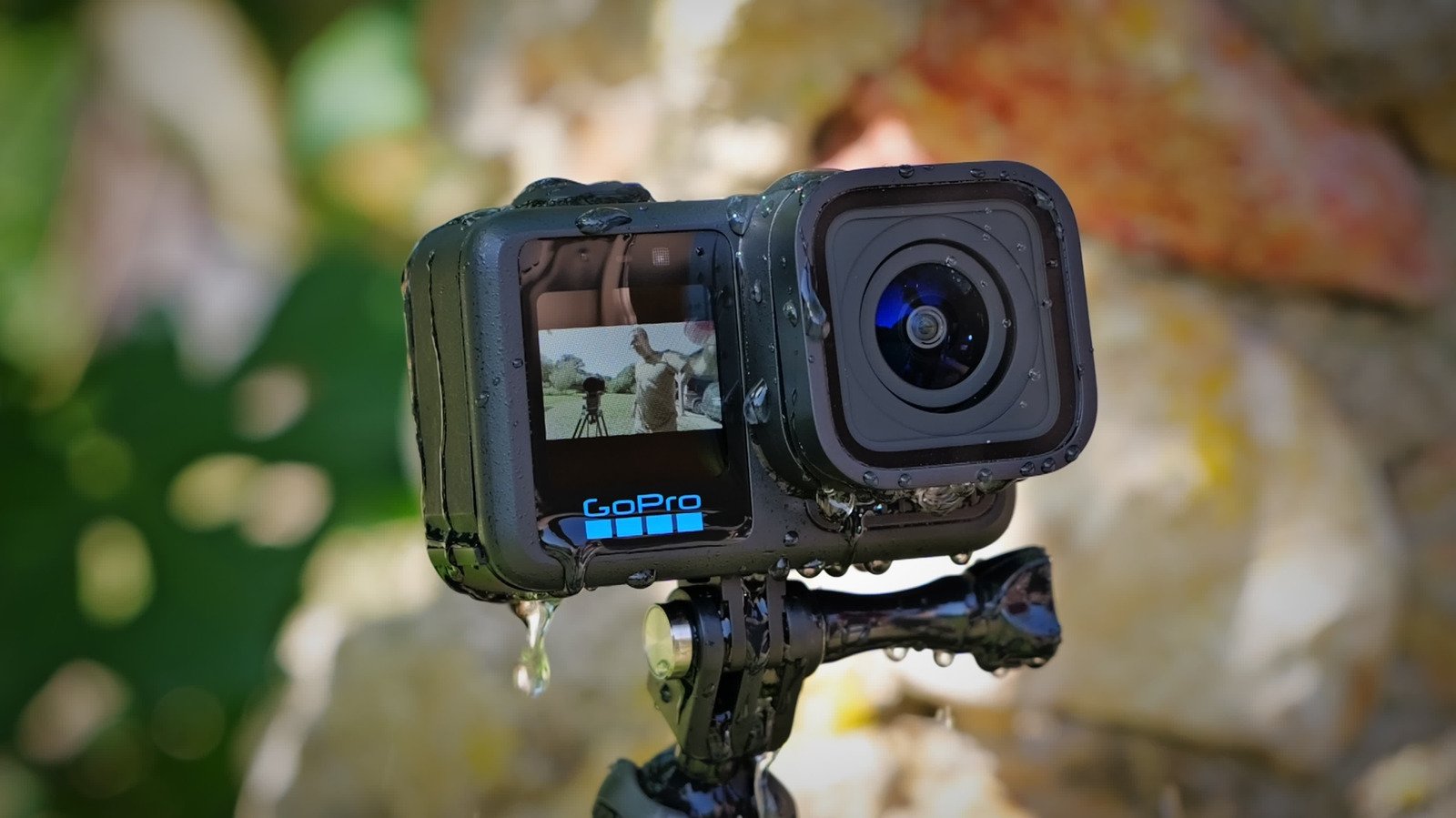
Though you may never release footage in 8K, that resolution allows you to reframe shots for 4K output or vertical video platforms. For example, you can punch in on a subject’s face to add emotion to a shot, or publish on both YouTube and TikTok in 4K without compromising quality. It also offers 4K 240 fps and 1080p at 960 fps, incredible super slow-mo that’s ideal for action content.
In daylight, it delivers more cinematic footage than any action cam I’ve tested, aided by the larger sensor, sharp lens, new (GP-Log2) 10-bit setting and a high 240Mbps data rate. With all that, I was able to capture footage with accurate, natural colors and soft, filmic grain. The video was easy to adjust in post, letting me reduce highlights and reveal clean shadow detail.
The Mission 1 Pro is a bit better in low light than DJI’s Action 6 thanks to the larger sensor. Though not great in the dark of night, it shines in dim-light scenarios like a forest at dusk, since you can shoot at higher ISOs and shutter speeds than other action cams. The result is crisp footage with minimal stabilization artifacts.
The 8K also helps GoPro’s subject tracking, as it keeps subjects sharp when cropping in. However, it occasionally fails to lock onto subjects in low light. Another intelligent capture mode is Dive, which tunes video stabilization and color correction underwater. I tested the Low Light mode that promises high-quality footage in challenging lighting conditions. It did help a little at night, but footage in shadow areas was quite grainy.
DJI’s HyperSmooth electronic stabilization is still the best of any action cam. In good light, it provides gimbal-like smoothness even with jolting action like mountain biking, skiing, windsurfing, drones or motocross. In dim light, I only saw the occasional motion blur artifact.
GoPro also developed the Mission 1 with photography in mind. You can shoot RAW or JPEG at the full 50MP resolution if light is sufficient or dial down to 12MP for extra sensitivity in low light. I captured a number of photos in tricky sunny and night conditions and found it delivered sharp and color accurate results. However, the lens is at least twice as wide as most compact cameras, so you’ll need to get close to your subjects.
For audio, the GoPro Mission 1 series now has four microphones, including two front-facing stereo mics, a new rear-facing mic to capture vlogging audio and another bottom mic for extra wind noise reduction. It can capture sound internally using 32-bit float, so you won’t clip sound even in howling winds amid tumultuous action. Bluetooth 5.3 allows wireless mics from the likes of GoPro (with its new mic) and DJI to be connected, while also supporting wired mics via the USB-C connector.
The built-in mics are important on a GoPro, since recording natural sound any other way for action and extreme sports is complicated. The Mission 1 did that job well, capturing my voice and environmental sounds with high fidelity.