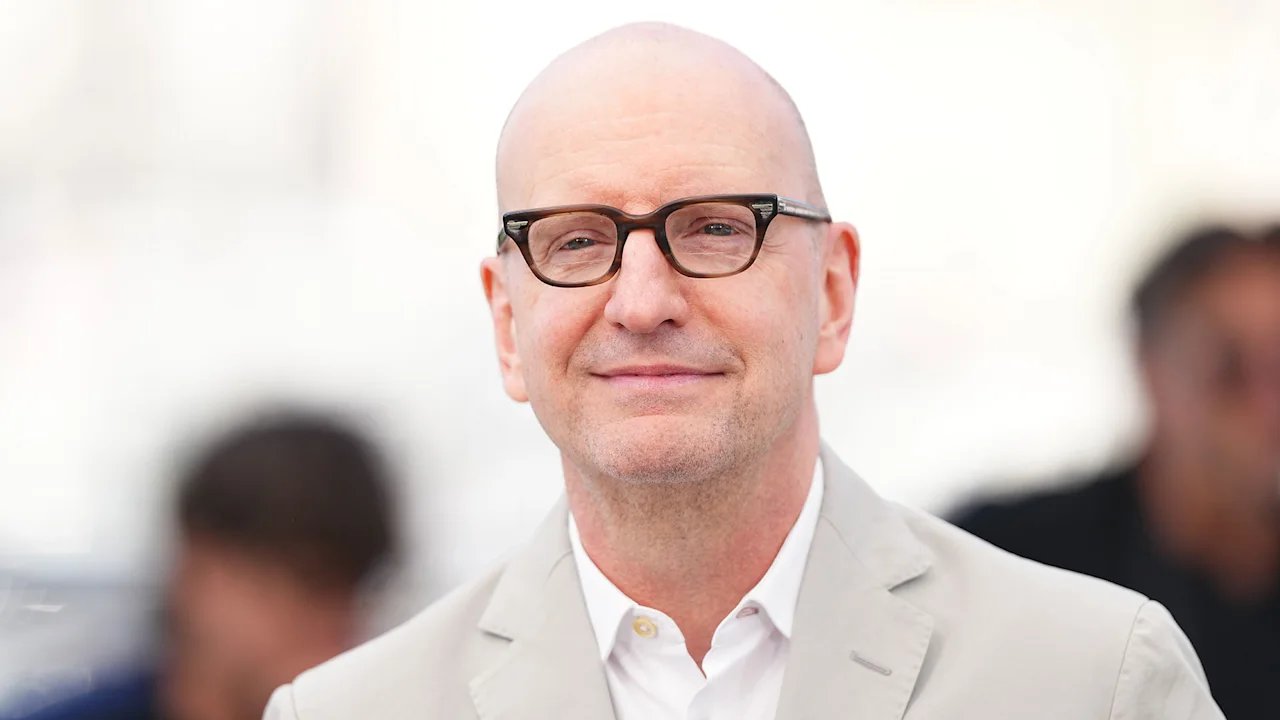
Steven Soderbergh’s film ‘John Lennon: The Last Interview,’ debuted at the Cannes Film Festival on Saturday.
The day John Lennon was shot, on Dec. 8, 1980, he and Yoko Ono gave an interview to a San Francisco radio crew from their home in New York’s Dakota Apartments.
They were promoting their new album “Double Fantasy,” but the two-hour conversation was wide ranging. Though the interviewers had been warned “no Beatles questions,” Lennon and Ono were thrillingly open. That day, Annie Leibovitz also shot the famous portrait of a clothes-less Lennon wrapped around Ono.
The interview is similarly naked. The two, particularly Lennon, riff on love, their relationship, creativity, life after the Beatles, raising their toddler son, writing songs in bed and much more. At the age of 40, Lennon sounds like someone who has found real clarity.
“I feel like nothing happened before today,” said Lennon.
In “John Lennon: The Last Interview,” Steven Soderbergh turns those surviving tapes into a documentary that does as much to demystify Lennon and Ono as “Get Back” did to the Beatles. The film debuted Saturday at the Cannes Film Festival.
“I was just so compelled by their generosity of spirit throughout the conversation,” Soderbergh explained in an interview Saturday in Cannes. “It’s like the world took place in one day, in this apartment.”
Making it posed an acute problem. Soderbergh was resolved to let the audio play. He could finds ways to visualize much of the film, but that still left a large gap where the conversation grows more philosophical.
“I worked on everything that could be solved except that for as long as I could,” Soderbergh says. “Then there was the inevitable moment of: OK, but really what are we going to do? We just started playing and ran out of time and money. That’s where the Meta piece came in.”
Soderbergh accepted an offer to use Meta’s artificial intelligence software to conjure surreal imagery for those sections, which make up about 10% of the film. When Soderbergh let the news out earlier this year, it prompted an uproar. One of America’s leading filmmakers was using AI? In a film about a Beatle, no less?
The AI parts (overwhelmingly slammed by critics in Cannes) are fairly banal and don’t differ greatly from special effects — there are no deepfakes of Lennon. But they put Soderberg at the forefront of an industrywide debate about the uses of AI in moviemaking. It’s a conversation the director, who has made movies on iPhones, is eager to have.