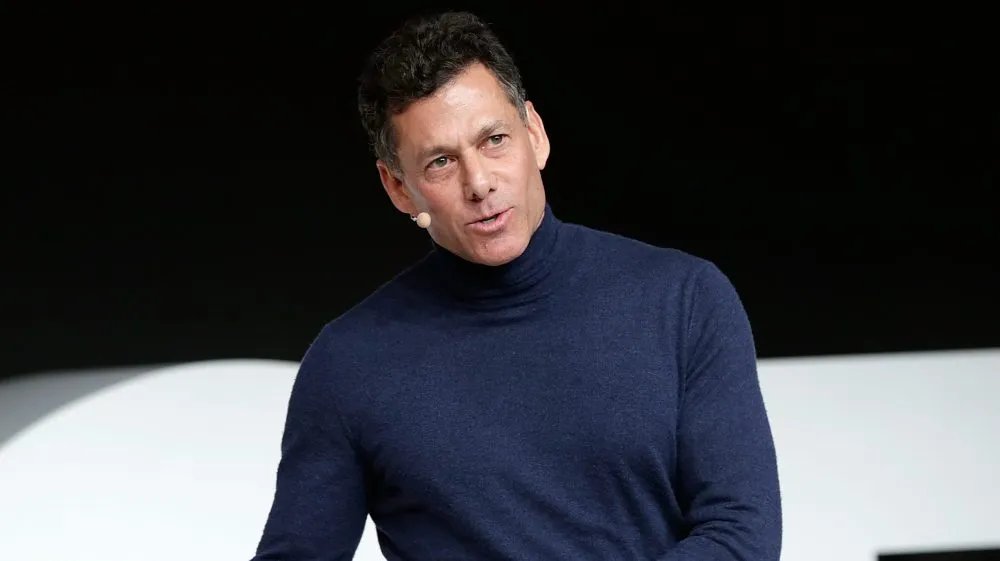
Take-Two Interactive CEO Strauss Zelnick admitted that he’s wrestling with some nervousness around the long-awaited launch of “Grand Theft Auto 6” in November. He also addressed the turnaround at Take-Two’s Zynga and the importance of investing in original properties during his conversation at the inaugural Interactive Innovation Conference in Las Vegas.
Zelnick spoke April 28 at the Fontainebleau Las Vegas with Jennifer Maas, Variety‘s senior business writer for TV and video games. Take-Two’s unveiling of “GTA 6” is expected to deliver a blockbuster performance to the company that operates a collection of major gaming labels including Rockstar Games, 2K and Zynga.
“We’re blessed that we have some of the greatest creative talent on earth working inside the four walls of Take-Two and all of our affiliates. And I’ve always felt like the way you create hits is to find the most talented people, encourage them to work within your system and then give them unlimited resources — financial, creative, technical and human — to pursue their passion,” Zelnick said. “When that happens and the team delivers a property, it’s in our job as a broader organization to do a better job with worldwide marketing and distribution than anyone else, and then to run a rational business that makes sound decisions with no drama and does it over and over again every day. And so creative independence is a hallmark of creative success.”
Rockstar Games’ “GTA 6” is the first new edition to the blockbuster franchise since the 2013 release of “GTA 5” set sales records for Take-Two and the industry. Zelnick acknowledged that the pressure is magnified with the upcoming title, but notes that he typically sweats out all the company’s big initiatives, for good reason.
“I run so scared with regard to all of our releases — just multiply it by a billion this time around,” Zelnick said. “And I think the minute you stop running scared, you better get a different job if you’re in the entertainment business. Because [if] you claim success before you have it — you will largely be wrong.”
Zelnick wouldn’t divulge any details on the price of the game, which Take-Two has yet to specify, other than to say that the company is mindful of the moment for consumers. “How do we deliver something amazing and how do we make sure that what people pay for it feels very reasonable,” Zelnick said of the considerations the company is weighing. He affirmed Maas’ query that news on the game’s pricing will come “soon.”
Take-Two has resisted the temptation to stock the “GTA” world with product placement and brand integration deals, despite the easy profit that could surely generate.
“We need to be true to the underlying intellectual property and we need to be true to our consumers,” he said. “It’s a fictional world and everything in it is fictional. So we’re not even at risk of doing brand partnerships because all the brands are made up. And I think that keeps us pure.”
But for other Take-Two games such as its NBA-related titles, “brands naturally exist within NBA. And as long as we present them in a natural way, in a way that’s consistent with what you’d experience at a basketball game, it’s great. It’s additive to the experience,” he explained.
The conversation also touched on the roller-coaster ride that Take-Two has had since its 2022 acquisition of mobile game factory Zynga. Zelnick, who became chairman of Take-Two in 2007 and CEO in 2011, was humble in detailing how he bought Zynga for $12.7 billion at the top of the market, just before demand for mobile gaming began to fall. And then the company hit a dry spell on new games.
“The hardest thing to do is to make mobile hits. Mobile has the lowest hit ratio in the interactive entertainment business,” Zelnick said. “We dug deep and we have a spectacular team at Zynga run by [president] Frank Gibeau. And we’d gotten to know each other for three years and we knew we were culturally aligned and we knew we were strategically aligned. We were heading in the same direction.”
In recent months, Zynga has rebounded into “a hit creating machine within mobile and has done other acquisitions, and has had enormous organic growth with games like ‘Match Factory,’ ‘Color Block Jam’ and many others,” Zelnick said. “It’s been a spectacular deal for us, but it wasn’t without its bumps in the road.”
Zelnick conceded that Zynga and other social casino game makers are facing new competitive heat from prediction markets such as Polymarket and Kalshi. “It’s hard to imagine that in the land of prediction markets eating the lunch of the fantasy-sports businesses, that somehow social casino [games] will be exempt from that pressure. I don’t see how it could be,” he said.
The costliest thing that Take-Two manages is the investment in developing new ideas and harnessing the potential of cutting-edge technology to deliver mind-blowing gaming experiences for fans. But without original ideas in the product pipeline, the company would wither on the vine despite its many long-running hits, Zelnick observed.
“It’s deeply frustrating when we invest in something over a long period of time and then it fails, but it would be more frustrating to be burning the furniture to keep the house warm. That doesn’t pan out well at all in the future,” he said.
To reinforce his point, Zelnick shared a story about how he pulled the plug on a planned sequel for one of Take-Two’s prominent franchises because he could feel the lack of passion for the project in the room.
“We had a greenlight meeting years ago, and it was about a sequel to one of our franchises. There was something in the room, some vibe in the room I wasn’t comfortable with,” he said. “So I said to the producer, ‘Listen, let’s pause. How excited are you about working on this title?’ And he said, ‘Well, I know we’re making this sequel and I feel good about making the sequel.’ I said, ‘You’re not answering the question. And how excited are you?’ And he said, ‘Well, candidly, I’m not all that excited about working on it.’ I said, ‘Well, let’s end the meeting right here. We’re just not doing that.’ So what would make us want to work again on legacy intellectual property would be because the team’s super-juiced about doing it.”