
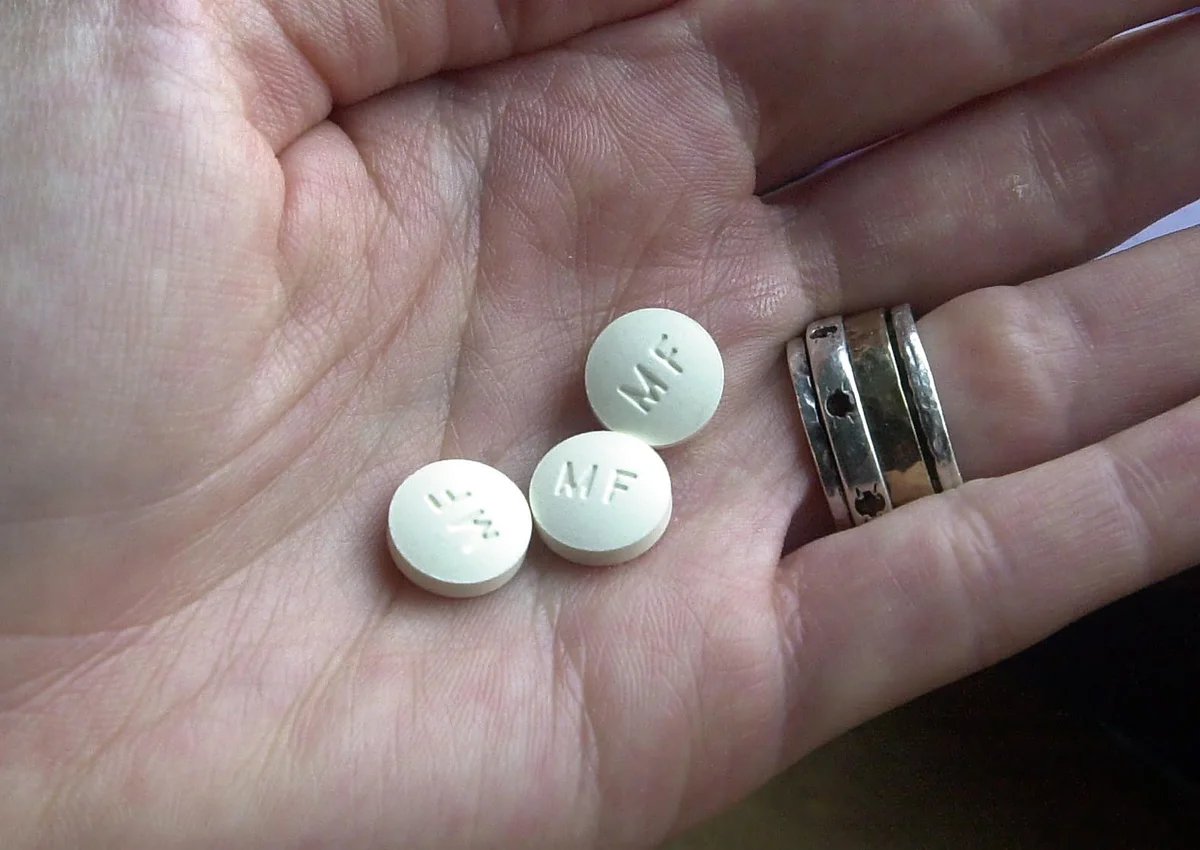
Supreme Court temporarily reinstates access to abortion drug mifepristone by mail
On Monday the Supreme Court paused a ruling by a federal appeals court that prevented health care providers from prescribing mifepristone by telemedicine, setting the stage for further action from the nation’s highest court
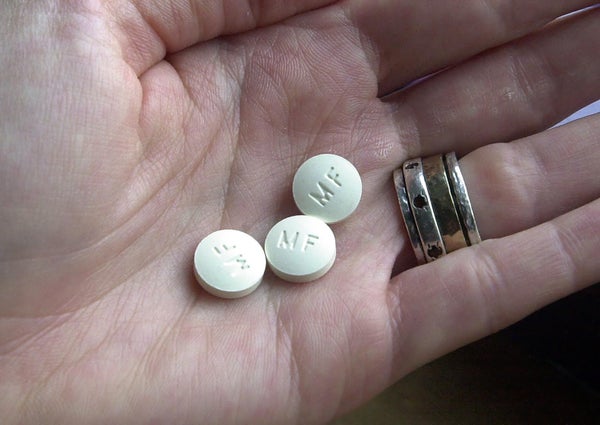
Bill Greenblatt/Liaison/Getty Images
On Monday the Supreme Court temporarily paused a lower court ruling that banned health care providers from remotely prescribing and shipping abortion medication by mail. The brief order issued by Justice Samuel Alito reinstates access to mifepristone by mail until at least May 11 and sets the stage for the nation’s highest court to consider whether the pills can be shipped to patients or not.
The case in question revolves around a lawsuit brought in 2025 by the state of Louisiana against the U.S. Food and Drug Administration over a Biden administration rule that allowed telehealth practitioners to prescribe the drug mifepristone, which is used to induce nonsurgical abortions, to people living anywhere in the country—including states with abortion bans. In April the suit was put on hold by a lower court while the FDA continued to conduct a review of mifepristone regulations. But Louisiana appealed that decision. And on May 1 an appeals court ruled to halt telehealth prescriptions while the review, which the FDA must give the court a status update on by no later than October 7, is under way.
The FDA approved mifepristone for medical abortions up to 49 days of gestation in 2000 and for 70 days of gestation in 2016. The agency has declared the drug safe, so long as it’s taken according to medical guidelines. According to the FDA, as of late December 2024, there have been 36 deaths among people who had taken mifepristone since its first approval in 2000, though, in two cases, the medication was taken during an ectopic pregnancy, which has not been advised. The agency has noted that no causal relation can definitively be declared in any reported adverse events, including the deaths, and that such reports are common for approved prescription drugs.
On supporting science journalism
If you’re enjoying this article, consider supporting our award-winning journalism by subscribing. By purchasing a subscription you are helping to ensure the future of impactful stories about the discoveries and ideas shaping our world today.
“This entire case and process is all unnecessary, because mifepristone has long, long, long, long been proven to be safe and effective in helping people manage their medication abortions,” says Aishat Olatunde, a board-certified obstetrician-gynecologist.
But Secretary of Health and Human Services Robert F. Kennedy, Jr., who ordered the FDA review of mifepristone, has expressed doubt about the drug’s safety, citing a paper from a conservative think tank.
One study from earlier this year reviewed thousands of pages of FDA documents concerning the agency’s approval of mifepristone and found that the FDA’s approach had been cautious and guided by scientific principles.
The Supreme Court’s new stay comes after drugmakers Danco and GenBioPro, which both make versions of mifepristone, filed emergency requests. It allows health care professionals to offer mifepristone by telemedicine for now. Alito requested that the case’s parties file legal briefs by 5 P.M. EDT on Thursday, after which the Court will decide what to do next.
“While this is a positive short-term development, no one can rest easy when our ability to get this safe, effective medication for abortion and miscarriage care still hangs in the balance,” said Julia Kaye, senior staff attorney for the Reproductive Freedom Project of the the American Civil Liberties Union, in a statement following the Supreme Court’s ruling. “The Supreme Court needs to put an end to this baseless attack on our reproductive freedom, once and for all.”
Olatunde expressed cautious optimism that the Supreme Court will recognize that, regardless of legality, people will still seek out abortions and that the Court will do what’s best for those seeking medical care.
“I know it can be frustrating to have the back and forth between the courts, because, ultimately, who suffers are patients, who are maybe getting mixed information when things are changing so quickly with very little notice,” she says. “The hope that is that this all works out in our favor and that mifepristone is able to be continued to be dispensed by mail and through pharmacies.”
Editor’s Note (5/4/26): This is a developing story and may be updated.
It’s Time to Stand Up for Science
If you enjoyed this article, I’d like to ask for your support. Scientific American has served as an advocate for science and industry for 180 years, and right now may be the most critical moment in that two-century history.
I’ve been a Scientific American subscriber since I was 12 years old, and it helped shape the way I look at the world. SciAm always educates and delights me, and inspires a sense of awe for our vast, beautiful universe. I hope it does that for you, too.
If you subscribe to Scientific American, you help ensure that our coverage is centered on meaningful research and discovery; that we have the resources to report on the decisions that threaten labs across the U.S.; and that we support both budding and working scientists at a time when the value of science itself too often goes unrecognized.
In return, you get essential news, captivating podcasts, brilliant infographics, can’t-miss newsletters, must-watch videos, challenging games, and the science world’s best writing and reporting. You can even gift someone a subscription.
There has never been a more important time for us to stand up and show why science matters. I hope you’ll support us in that mission.


