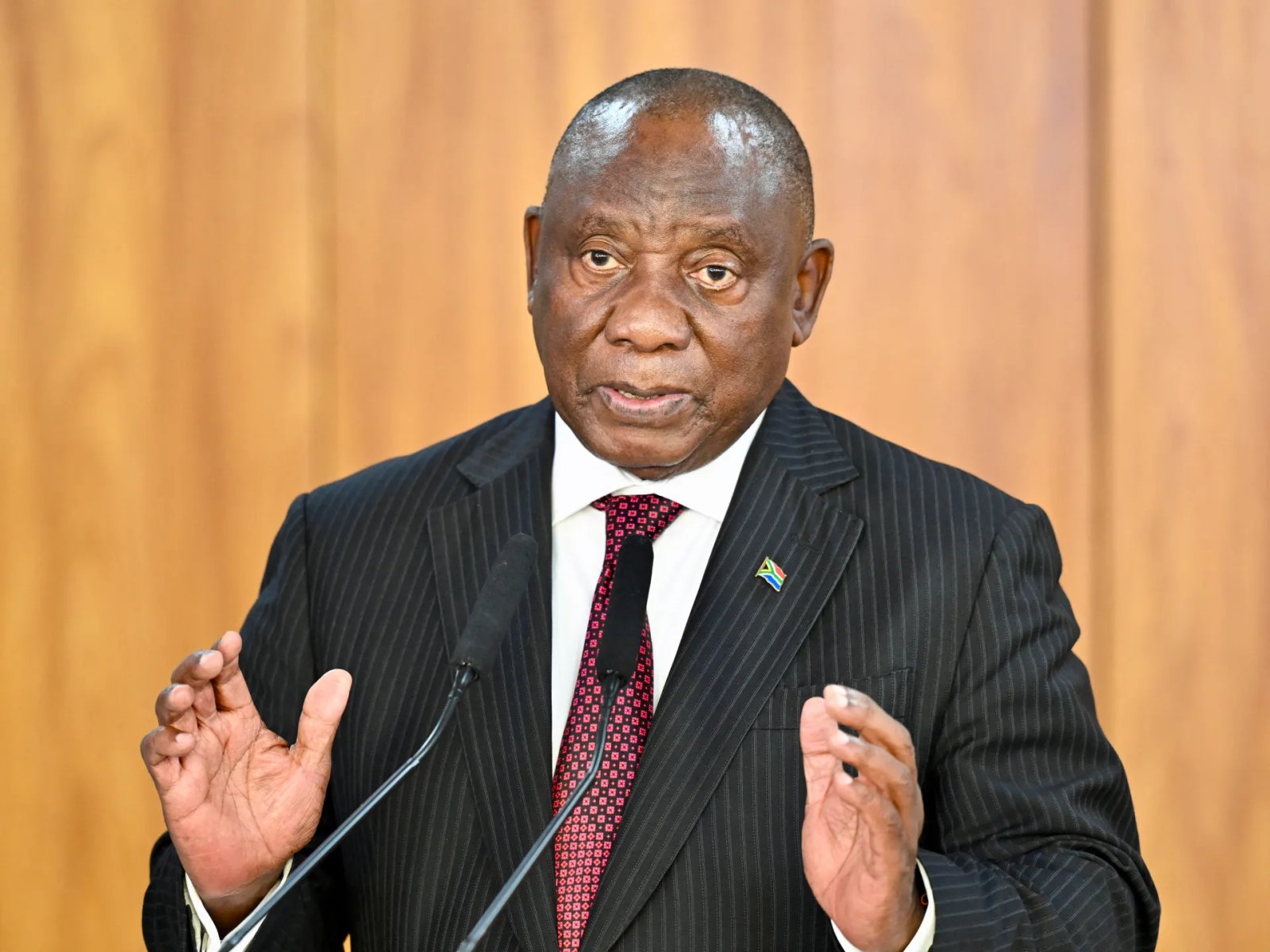
The country’s parliament says its speaker will begin the process of setting up the impeachment committee.
Published On 11 May 2026
South Africa’s parliament is set to establish an impeachment committee to probe allegations against President Cyril Ramaphosa in the “Farmgate” scandal.
The lower house of parliament said on Monday that its speaker will set up the body to investigate. The move was ordered by the country’s highest court last week as it revived impeachment proceedings against Ramaphosa.
Recommended Stories
list of 3 itemsend of list
The constitutional court on Friday said that parliament’s decision to block an inquiry four years ago into the scandal was inconsistent with the constitution.
The impeachment committee will review the evidence against Ramaphosa regarding the scandal, which centres on a large sum in foreign currency hidden in a sofa at a farm property owned by the president, before deciding whether to recommend formal proceedings.
It is expected to deliberate over the matter for several months.
The scandal centres on the 2020 theft of $4m in foreign cash that was stuffed in a sofa on Ramaphosa’s Phala Phala game farm.
Amid questions about how the president, who took to power on the promise of fighting corruption, acquired the money, whether he declared it, and why it was hidden in furniture rather than in a bank, Ramaphosa has denied wrongdoing.
He said last week that he respected the court’s judgement to revive impeachment proceedings.
However, in an address to the nation on Monday evening, he said that he will not resign, and that he plans to legally challenge an independent panel’s report that found preliminary evidence he had committed misconduct.
Ramaphosa’s African National Congress has called a meeting of its National Executive Committee on Tuesday to discuss what to do about the scandal, a party spokesperson said.
The case against Ramaphosa was brought by two opposition parties – the Economic Freedom Fighters (EFF) and the African Transformation Movement (ATM). The EFF has called on the president, who has been in power since 2018, to resign.
However, even if the impeachment committee’s findings are negative, the president would still likely survive a vote in the lower house of parliament, where a two-thirds majority is required to remove him from office.
The ANC retains more than one-third of the seats in the National Assembly, despite losing its majority in 2024.