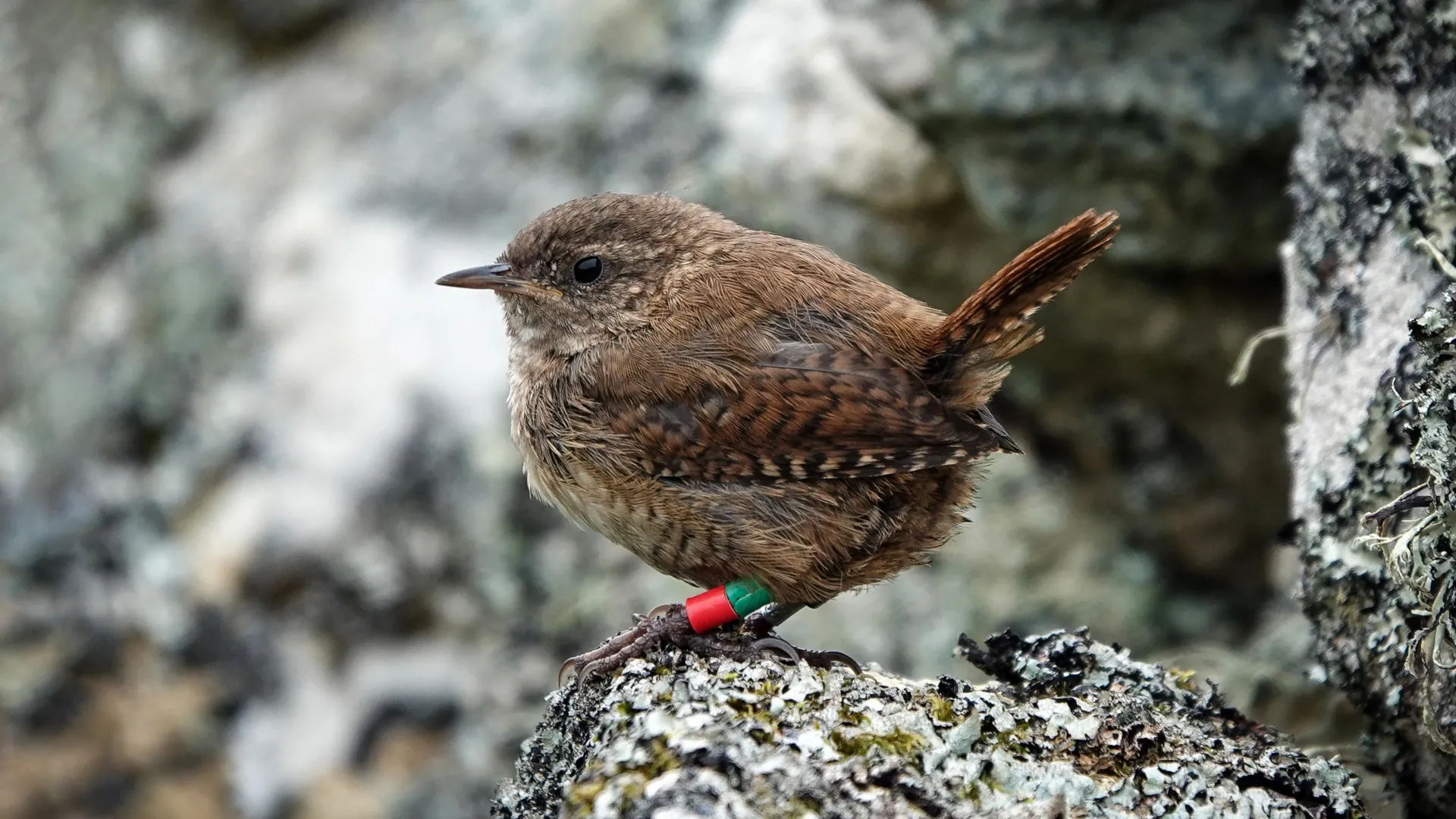
Tiny wrens living on remote Scottish islands are giving scientists a rare look at evolution in action. A new study led by researchers at the University of Birmingham found that several isolated island populations of wrens are evolving independently, with some growing dramatically larger than their mainland relatives.
The findings, published in the Evolutionary Journal of the Linnean Society, focus on four island subspecies found in Scotland: Shetland, Fair Isle, the Outer Hebrides, and St Kilda. Although these birds live in similar island environments, each population has followed its own evolutionary path.
Researchers discovered especially striking examples of “island gigantism” in wrens from Shetland and St Kilda. Island gigantism occurs when animals isolated on islands become much larger than related species on the mainland. Famous examples include the giant tortoises of the Galapagos and the extinct Dodo of Mauritius.
Giant Wrens on Remote Scottish Islands
The size differences uncovered in the study were dramatic. Wrens from mainland Britain typically weigh between 7 and 10 grams. On St Kilda, however, the birds weighed between 13 and 16 grams.
According to the researchers, the largest St Kilda wrens are more than twice the size of the smallest wrens found on mainland Great Britain. That places them among the top 25% of known cases of island gigantism in birds around the world.
Scientists also found little evidence that wrens from Shetland and St Kilda regularly interbreed with mainland populations. Their long isolation appears to have allowed them to develop unique physical traits, songs, and genetics.
Dr. Michał Jezierski, from the School of Geography, Earth and Environmental Sciences and lead author of the study, said: “We found that all four Scottish Wren subspecies are genetically distinct from the Wrens of mainland Britain; with the Wrens of Shetland and St Kilda being especially distinct in both appearance and song. Their genetic distinctiveness is so high, that it is likely they are on their way to becoming new species.”
How Scientists Studied the Island Wrens
To better understand how island evolution works, researchers compared the Scottish island birds with wrens from mainland Britain using body measurements, song recordings, and whole genome sequencing.
The study provided one of the most detailed investigations yet into the biological processes behind so called “island syndromes.” These evolutionary patterns are seen in many island species around the world and often include larger body size, longer lifespans, slower reproduction, and in birds, reduced flight ability.
Islands are home to an estimated 20% to 30% of Earth’s species and are well known for unusual wildlife, including Madagascan lemurs and Komodo dragons. Scientists believe island isolation, along with lower levels of predators and competition, creates conditions that can push evolution in unusual directions.
Will Smith, from the University of Nottingham and a co-author of the study said: “Our research suggests that islands with similar environments can produce similar evolutionary outcomes using different genetic pathways. The Wrens of Scotland provide us with a powerful case study to understand the mechanisms by which island biodiversity is generated worldwide.”
Parallel Evolution in Giant Scottish Wrens
Genome analysis revealed that each island population is genetically distinct and largely isolated from the others. Even though wrens from Shetland and St Kilda look physically similar, the genetic changes linked to their evolution are mostly different.
Researchers say this points to an example of “parallel evolution,” where similar environmental pressures produce similar outcomes independently.
Dr. Jezierski added: “Our genomic data indicates that Shetland and St Kilda Wrens are genetically distinct from each other, despite their similarities in physical appearance. This means that their island gigantism is a case of ‘parallel evolution’, where a similar original population (probably colonists from the British mainland) made it to each island archipelago, and then independently evolved to become island giants. In the process, their songs also became very different from those of ‘mainland’ British birds.”
Wrens from Fair Isle and the Outer Hebrides remained more genetically similar to mainland birds, showing that island evolution can vary significantly even across nearby islands.
A Rare Window Into Evolutionary Change
The larger body size seen in the giant wrens evolved alongside other island related traits, including differences in plumage, body proportions, and song patterns. Researchers say this supports the idea that island environments consistently shape evolution in predictable ways.
Even so, scientists still do not fully understand why island syndromes happen or how these traits help species adapt to island ecosystems. The team believes the Scottish wrens could become an important model for future research into the forces driving evolution on islands around the world.