Sam Levinson never much cared for high school. That’s not the thing you’d necessarily expect to hear from the creator of a massive Emmy-winning hit that originally was set in high school and firmly centered on teenagers.
“I was interested in the emotional state of being young and struggling with addiction and depression and relationships — that stuff,” the Euphoria showrunner says. “We used to get notes from HBO in the first season going, ‘Should they be doing more homework?’ ”
The third season of Euphoria offered Levinson the opportunity to move beyond adolescence. Delays in production led to a four-year gap between the second and third installments of the drama series, and Levinson, who writes and directs every episode, was ready for his show to grow up — and to evolve as a storyteller right alongside it. “I just thought that if I’m going to come back and we’re going to get everyone together, I’d like to explore what feels like the Wild West of adulthood,” he says. “As an audience, we know that they no longer have the safety net of being able to go home to their parents’ house. It’s the real world.”
Jacob Elordi’s Nate wards off an attacker
Eddy Chen/HBO
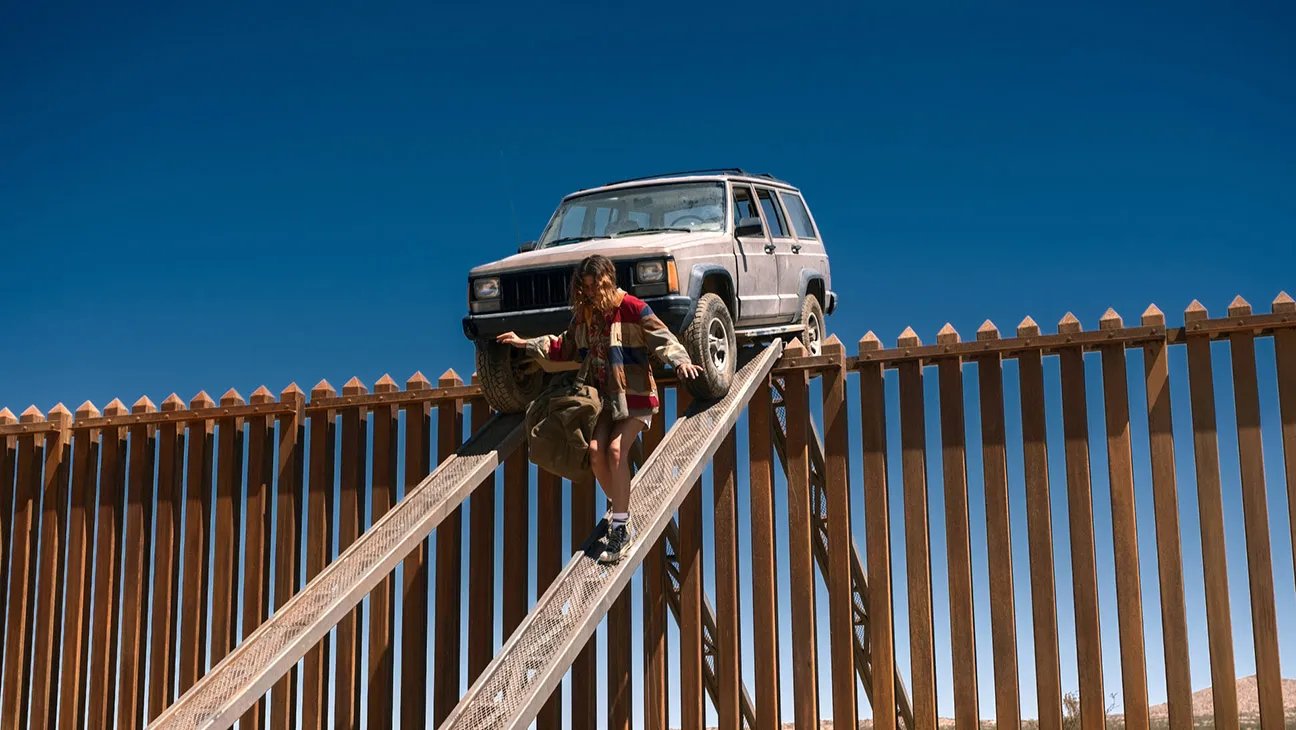
The first scene of the season reintroduces Rue (Zendaya) in her early 20s, running drugs across the Mexico-U.S. divide to pay off an enormous debt to a dangerous dealer she knew from high school. She’s driving on a makeshift ramp over the border fence only for the car to get stuck at the top, suspending her in midair — a bravura sequence inspired by an image seen in Levinson’s research at DEA headquarters. She has to figure her way out. The alternately suspenseful and silly scene nicely sets up the tone for this new season, which is infused with references to classic Westerns as much as screwball comedies.
“What’s so spectacular about Zendaya as an actor is the physicality that she has …and shooting it was just a blast because she’s able to play to the humor and the suspense of it at the same time,” Levinson says. “I always knew opening up this season that I wanted to do something that really just threw us into the middle of the action, but with a certain kind of absurdity to it. … It speaks to the larger themes of this season in terms of not just drugs and the fentanyl crisis and the amount of people we’re losing to it, but also Rue’s life. She’s teetering on the edge. It can go either way: She could figure everything out and live a happy life or she could fall back — and it’s over.”
The sequence was shot in the Mojave Desert, and here we also see Euphoria’s refined, retro color palette in action. Levinson and director of photography Marcell Rév mostly left the soundstages that defined the first two seasons for an expansive, on-location examination of Southern California, from Lancaster to Long Beach. “I wanted the scope and the romanticism of old-school Technicolor and to get something that felt as saturated and punchy as possible,” Levinson says. “I kept watching movies like North by Northwest and going, ‘With all of modern technology, why can’t we have colors like this?’ ”
To achieve this, Levinson and Rév went directly to Kodak and asked for Ektachrome film on 35mm. (They’d initially pivoted away from shooting on digital between seasons one and two.) The filmmakers were told this was not something that Kodak produced, which led them to offering to buy 1 million feet of it. “They went, ‘We might be able to work something out,’ ” Levinson cracks. Levinson then asked HBO if it could capture some of their wide shots on 65mm cameras. When they finally got a yes, he and Rév started pushing that format into the close-ups, too — bringing big-screen technique to the most intimate of stagings.
“Our dream was to premiere the episodes in theaters week to week, which didn’t happen, but hopefully someday it can be experienced on a big screen,” Levinson says. “I really wanted to tell an epic tale about young adulthood and what it means to be alive right now.”
In Levinson’s estimation, that modern portrait should feel pretty funny. Take the end of the season’s third episode, which finds Nate (Jacob Elordi) getting brutally beaten in his own home by the shady figures to whom he owes money — on the day of his wedding to Cassie (Sydney Sweeney), no less. As scripted, you’d probably imagine it reading as disturbing, tense and action-packed. Indeed, that’s how Levinson envisioned it. He hired a choreographer, figured out the sequence’s many complex beats and started shooting it accordingly. In his hotel room that night, Levinson felt doubt.
“It kept me up all night, and I’m thinking about it, and we get to set the next day, and I’m going, ‘We’re not making John Wick,’ ” he says. Then he got it: The blocking and choreography of the fight would be the same but move to the background, while the camera held tight on the deluded, self-absorbed Cassie, as she turns hysterical at the sight of a mere nosebleed. Now it plays like a comedy. “Her husband could literally be getting pummeled to death behind her — and it’s still about her,” Levinson says.
As with that premiere sequence centered on Zendaya, Levinson knows how to push things with his actors; after so many years, he can intuit what they can deliver and realize how they’ll fill in the missing piece.

Sydney Sweeney’s Cassie marries Nate in season three
Eddy Chen/HBO
“If you push it a little bit, [Sweeney] becomes brilliant — you just do a few more takes, and she can reach these levels that are very honest emotionally but also deeply funny,” Levinson says. “Knowing that she’s able to anchor the scene, with this kind of madness and chaos going on around her, is a dream as a director.”
This story first appeared in a June stand-alone issue of The Hollywood Reporter magazine. To receive the magazine, click here to subscribe.