
Published On 12 May 2026
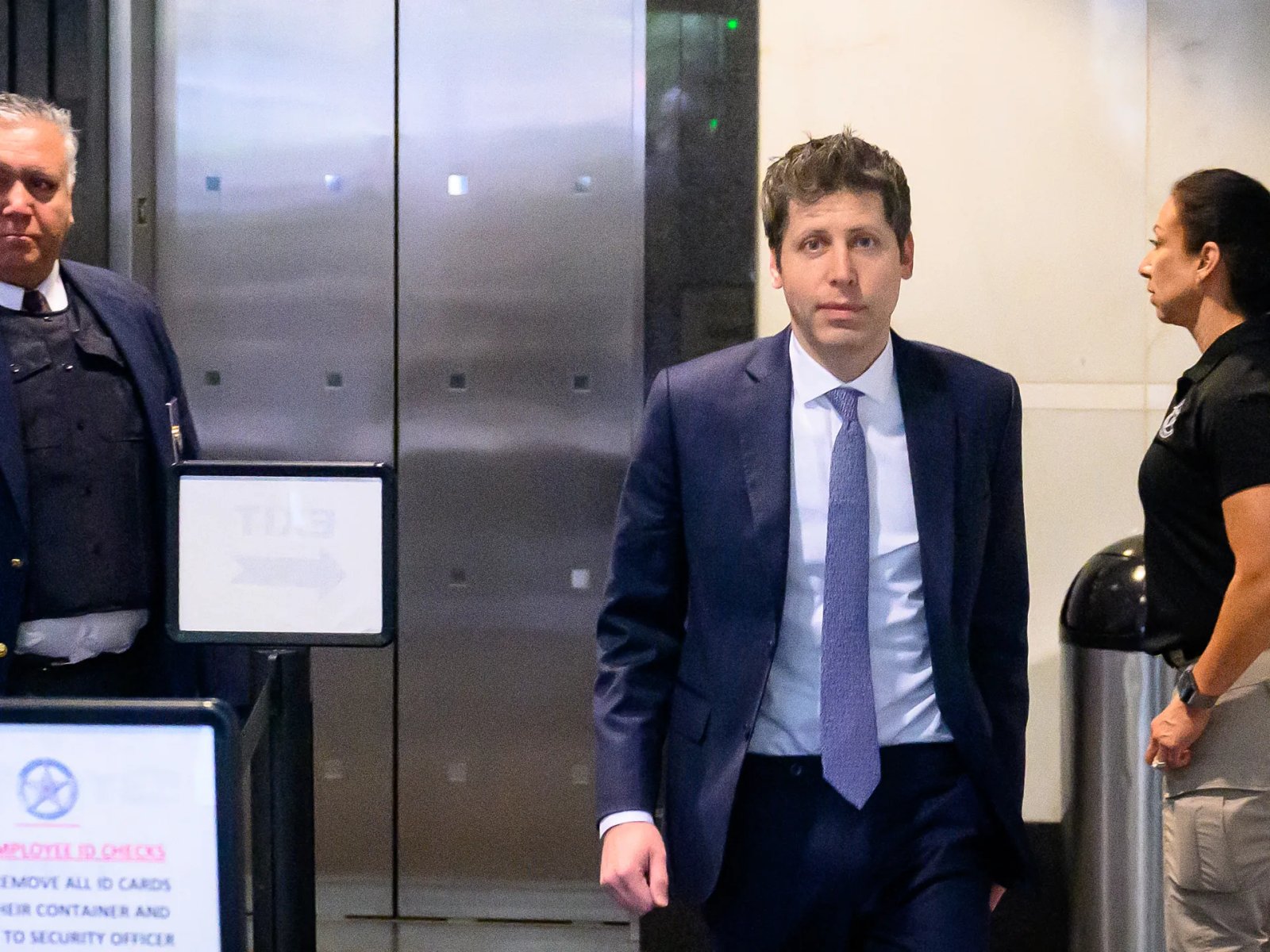
In a United States court, OpenAI chief executive Sam Altman has rejected claims from fellow tech mogul Elon Musk that he betrayed the artificial intelligence company’s original vision.
Tuesday marked the start of Altman’s testimony in a contentious trial unfolding in Oakland, California, between some of tech’s richest and most powerful titans.
Recommended Stories
list of 3 itemsend of list
Musk, the wealthiest man in the world, has sued Altman and OpenAI president Greg Brockman on the basis that they “stole a charity” by shifting its purpose.
He alleged that OpenAI’s leader persuaded him to invest $38bn, based on a goal of improving humanity, only to see the company pivot to a for-profit venture in 2019.
On the witness stand on Tuesday, Altman instead framed Musk as a competitor obsessed with exercising control over OpenAI.
“It does not fit with my conception of the words ‘stealing a charity’ to look at what has actually happened here,” Altman told the court.
The two men have long had an acrimonious relationship, driven in part by differing views about artificial intelligence.
Musk — a self-described free speech “absolutist” — currently runs his own AI chatbot, Grok, which has been accused of perpetuating right-wing conspiracy theories and offensive materials.
He is seeking $150bn in damages from OpenAI and Microsoft, one of its principal investors.
Altman’s testimony comes more than two weeks into the trial, which has seen him and Musk square off against each other.
In his testimony, Altman argued that Musk knew of the plans to develop OpenAI into a for-profit enterprise when he invested, and he asserted that Musk even petitioned to have a majority stake in the company.
“An early number that Mr Musk threw out was that he should have 90 percent of the equity to start,” Altman told the jury. “It then softened, but it always was a majority.”
The outcome of the trial could determine the future of OpenAI, its leadership, and products like ChatGPT. As part of his lawsuit, Musk is pushing for the removal of Altman and Brockman.
The trial comes as OpenAI prepares for a potential initial public offering that could see it valued at $1 trillion, a historically large sum.
During earlier testimony, Musk portrayed Altman as a liar who could not be trusted with the development of the technology.
“If you have someone who is not trustworthy in charge of AI, I think that’s a very big danger for the whole world,” Musk said.
Musk’s lawyer, Steven Molo, also sought to undermine Altman’s reliability during questioning on Tuesday.
“Have you misled people when you do business?” Molo asked Altman.
“I do not think so,” Altman replied.
Altman, meanwhile, sought to cast doubt on Musk’s leadership; Musk ultimately left OpenAI’s board in 2018 to pursue his own AI development.
“I don’t think Mr Musk understood how to run a good research lab,” Altman said. “He had demotivated some of our most key researchers.”
The US public, for its part, has been largely unconvinced by high-minded rhetoric about the transformative potential of AI.
A March 2026 poll by the Pew Research Center suggested that a majority of respondents in the US believe AI will worsen, rather than improve, the ability to think creatively, form meaningful relationships, make difficult decisions, and solve problems.
Just 10 percent of respondents said they were more excited than concerned about the increased use of AI in daily life.
But the industry has been quick to translate its substantial economic power into political influence as lawmakers consider how best to regulate the technology.
The use of AI has emerged as an election-season issue as the US midterms approach in November, and the administration of President Donald Trump has proposed a “national policy framework” for the technology to avoid a patchwork of state regulations.
The AI industry has become a driver of eye-watering investment in recent years, with the United Nations estimating that the global market could be worth $4.8 trillion by 2033.


