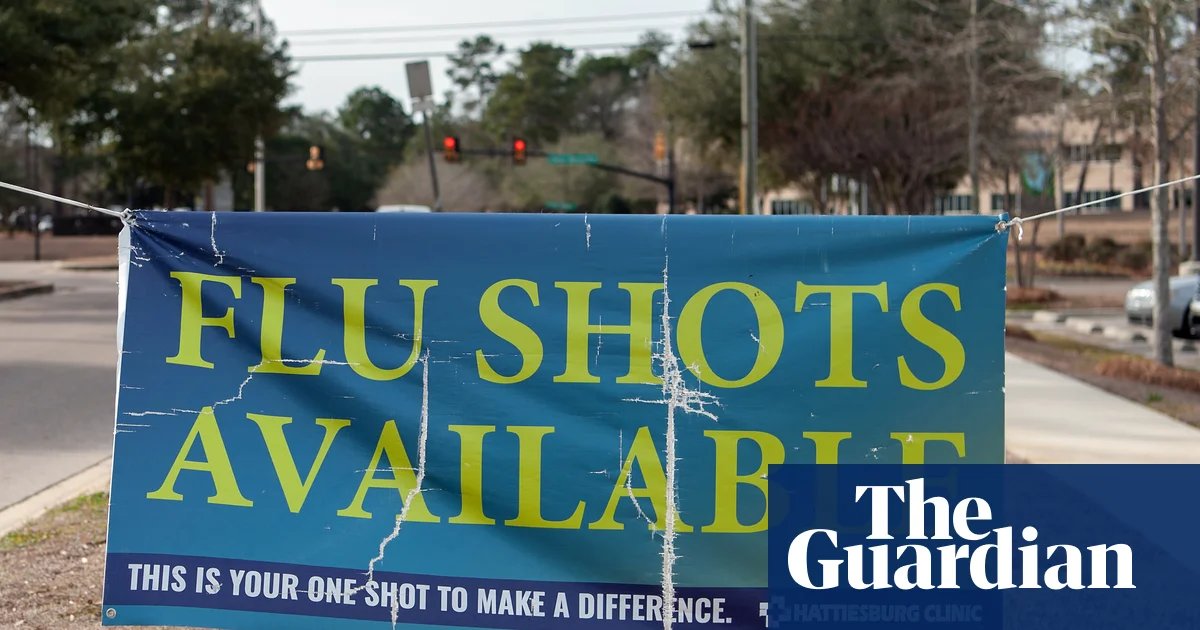
Growing Republican mistrust in the healthcare system has widened health disparities between liberals and conservatives, who are more likely to avoid vaccines and the medical system in general, according to a new study.
Neil O’Brian, a political science professor at the University of Carolina, Chapel Hill and one of the authors of the study published in Nature Human Behaviour, said that his team saw two phases to the phenomenon.
“Part one is this gap starts to emerge in the 2010s, and it seems like it’s a byproduct of education polarization,” O’Brian explained, “Folks without a college degree move to the right. Folks with a college degree move to the left. That happens for a variety of reasons. Education is a pretty strong predictor of health.”
The second phase began during the Covid-19 pandemic, when social determinants of health, including education, could no longer explain the expanding gap in health outcomes.
“This is a real puzzle,” O’Brian said. “We turn to the survey data and show that people on the right are less likely to trust, engage, or use medicines to treat chronic illness relative to the left.”
Past research has found that Republicans’ hesitation to vaccinate against Covid-19 has meant they suffered more death from the pandemic than Democrats. But O’Brian’s study showed that even different vaccination rates don’t completely explain the difference in health outcomes – a lack of overall trust in the medical system is also contributing.
The study relies on survey data collected in 2024 and O’Brian suspects that the health gap has only continued to worsen during the second Trump administration, which began in January 2025. Jay Van Bavel, a professor of psychology and neuroscience at New York University who has also studied polarization and health outcomes, agrees.
“What we’re seeing is a continuation and expansion of a lot of the dynamics that happened during the pandemic,” Van Bavel said, noting that “when you elevate someone like RFK Jr to oversee health decisions for the country, now you’re getting all of these things entrenched and embedded in national health policies around vaccination, and so you see a lot of this accelerating really quickly.”
During the pandemic, the anti-vaccination conversation revolved mostly around the newer Covid vaccines. Now, anti-vaccination attitudes have become much broader, says Van Bavel, and have led people to resist long established vaccines for dangerous conditions like measles. That hesitation is now enshrined in policy as more red states are striking down vaccine mandates and Robert F Kennedy Jr attempts to do so as well.
Ironically, even after he took office as one of the highest health authorities in government, Kennedy Jr has continued to insist that the “government actually lies to us” about health.
“There is this stream of populism that’s anti-elite and anti-authority that exists in both parties, but is very strong on the right and is really part of the identity of the Trump administration. Certainly RFK Jr is part of it, and they don’t seem to understand how that undercuts their own authority,” Van Bavel said.
Van Bavel also pointed out that RFK Jr and those who follow his advice frequently perform “mental gymnastics”. For example, followers resist vaccines based on the idea that they don’t want unknown chemicals in their body while also seeking unproven Covid-19 treatments like ivermectin.
O’Brian’s research shows that conservatives are avoiding the doctor for reasons beyond vaccines.
“Folks on the right have more hypertension [or high blood pressure] than the folks on the Left, and now people on the Right are less likely to go to their doctor, less likely to trust their doctor, less likely to think medicines to treat hypertension are safe and effective,” O’Brian explained. “Cardiovascular disease is the number one cause of death in the US, and if lots of people walk around with untreated hypertension, that’s really bad for the individual and for public health.”
Van Bavel noted that Republicans are more likely to suffer from long Covid, given that they’re less likely to have been vaccinated.
“What you’re also going to see, however, is that the segment of the society that is more likely to have long Covid because they didn’t get vaccinated is probably least likely to identify themselves as having long Covid or go to the doctor complaining about long Covid,” he said.
As this gap is likely to continue to grow, O’Brian says it’s important that medical researchers start tracking it more consistently. Large health surveys from the government and other organizations rarely include questions about politics; the National Longitudinal Study of Adolescent to Adult Health that O’Brian relied on is one of the few exceptions.
“One of the things that makes it remarkable for me as a political scientist is that it’s really the only study that does ask about people’s political beliefs,” O’Brian said.