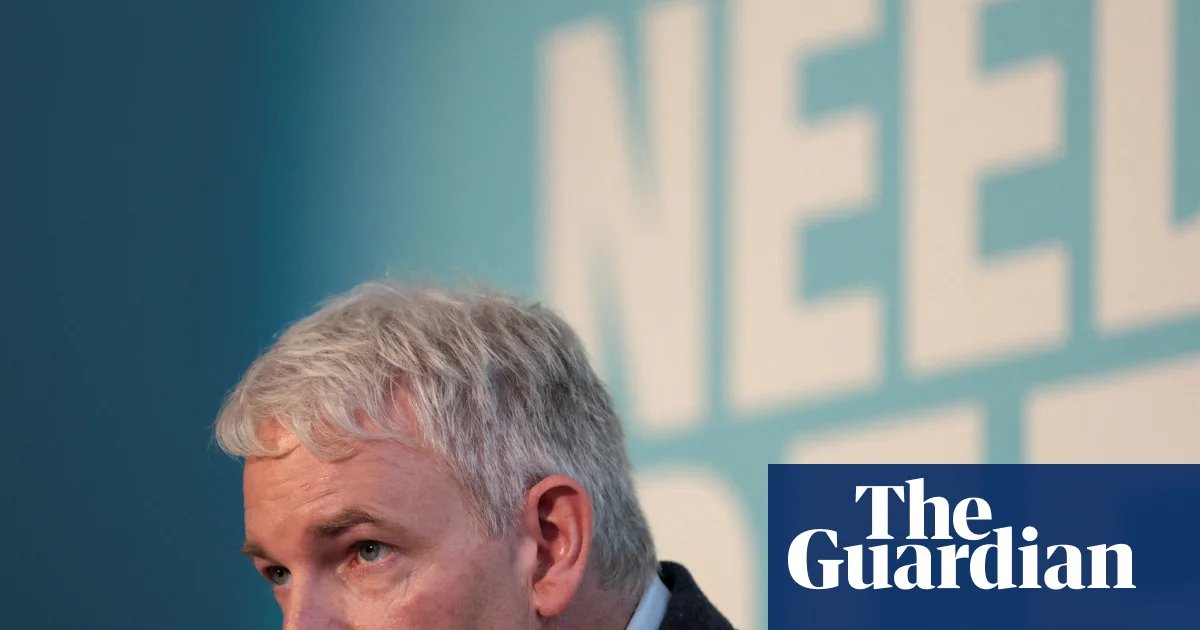
A senior Reform UK figure has refused to call on the party’s leader, Nigel Farage, to hand evidence to the UK’s security services to support his claim he was hacked by Russian agents.
Farage has come under mounting pressure to substantiate the claim that a state-sponsored Russian hack was behind the disclosure published by the Guardian last month of a £5m gift he had received from the crypto billionaire Christopher Harborne. Labour and the Conservatives have both stressed the threat to national security posed by the Russian state.
On Monday, Reform’s lead on preparing for government, Danny Kruger, claimed not to know the full details behind the hacking claim.
Asked if Farage had reported his concerns to the authorities, Kruger told BBC Radio 4’s Today programme: “I don’t know … I’m not privy to that conversation and I don’t feel I can comment.”
Asked if Farage should report any evidence he had, Kruger said: “I really am not the person to discuss the ins and outs of what’s being done in terms of the investigation.”
He claimed the matter was private, adding: “There does need to be some kind of investigation into that. I’m not sure how he would want to do it. The whole point of this is that it’s a private matter.”
A Reform source quoted by the Mail on Sunday said Farage had privately commissioned “counter-espionage experts” to analyse his phone – and that they had concluded it had almost certainly been compromised by Russian agents. No evidence was provided, and the experts were not named.
Farage’s spokesperson has not responded to questions from the Guardian on whom he reported the alleged hack to and whether evidence was handed over, or to requests for details of the analysis of his phone.
A Guardian spokesperson described Farage’s claim as “an attempt to deflect attention from legitimate scrutiny of his financial affairs”. They added: “Nigel Farage is once again hiding behind a baseless attack on the media rather than facing up to scrutiny from journalists and politicians.”
The spokesperson said it was absurd for Farage to suggest the Guardian had found out about the gift from a Russian hack.
Kruger also sought to defend Reform’s candidate in the Makerfield byelection, after scrutiny of comments he appeared to have made online. The party has sought to portray Robert Kenyon, a plumber and army reservist, as a local champion taking on a professional politician who is using the seat for his own advantage.
But archives show Kenyon has publicly made lewd comments about female public figures, cast doubt on the efficacy of a vaccine and interacted with the far right on a now-deleted social media account.
Asked if Kenyon was the sort of person Reform believed should be representing the British public, Kruger said many people spoke on social media as if they were in a private setting – and that he was “not going to judge people” for comments they make there. “Clearly, that’s not the sort of thing you would want an elected politician to [say]. Quite rightly, clearly, he’s deleted that post and regrets it.”