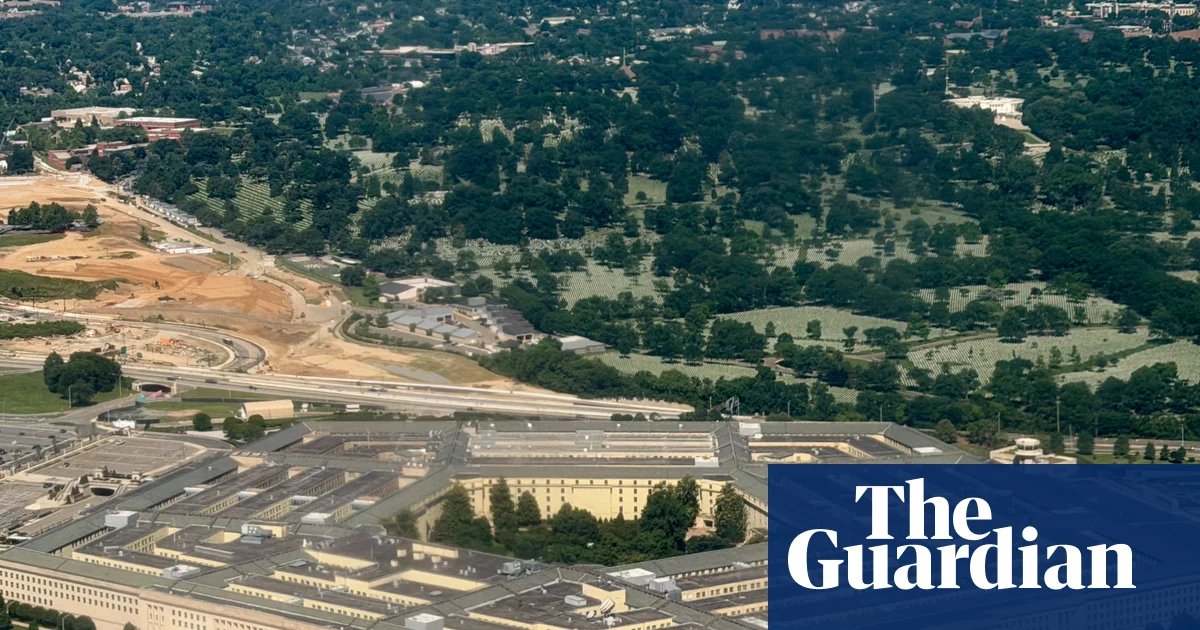
Journalists may no longer enter the Pentagon’s press office, which has been designated as a classified space amid growing moves to restrict press access to the defense department.
“This is the most transparent war department in history. No amount of spin from the Fake News media will change that,” Jose Valdez, the acting defense department press secretary, said in a social media post. “The Pentagon Press Office has been redesignated as a Sensitive Compartmented Information Facility due to speechwriters from the Office of the Secretary of War sharing the facility.”
Valdez added that, because speechwriters handle classified material, “journalists will no longer be permitted to enter the office space”.
The move was first reported by the Washington Post, and later confirmed by Valdez on social media.
The defense department, which the Trump administration prefers to call the war department, began rolling out new restrictions to press access in September, when the military demanded journalists pledge not to gather any information – including unclassified documents – that had not been authorized for release or else risk revocation of their press passes.
Credentialed journalists have long had broad access to the Pentagon, but after the defense department announced sweeping restrictions to their work in October, many longtime reporters refused to agree and began turning over their press passes. That month, the department announced a “next generation of the Pentagon press corps” featuring 60 journalists from far-right outlets. The New York Times sued the Pentagon over those policies, which designated journalists as “security risks”, and a federal judge found in the Times’s favor in March.
In response, the defense department issued an interim policy barring journalists from visiting the Pentagon without an official escort. A district judge ruled that that interim policy violated his order, but it remained in place when an appeals court stayed part of the ruling to allow the government time to appeal. In May, the New York Times sued the Pentagon again over that policy a second time, arguing that it constituted “an unconstitutional attempt by the Pentagon to prevent independent reporting on military affairs”.