Olly Robbins refused to hand Peter Mandelson’s vetting summary to the Cabinet Office, the civil servant who leads the department has said.
The summary – which would have revealed that Robbins, the now-sacked Foreign Office head, had granted Mandelson clearance against the advice of security officials – was instead provided to Cat Little by UK Security Vetting (UKSV), she said.
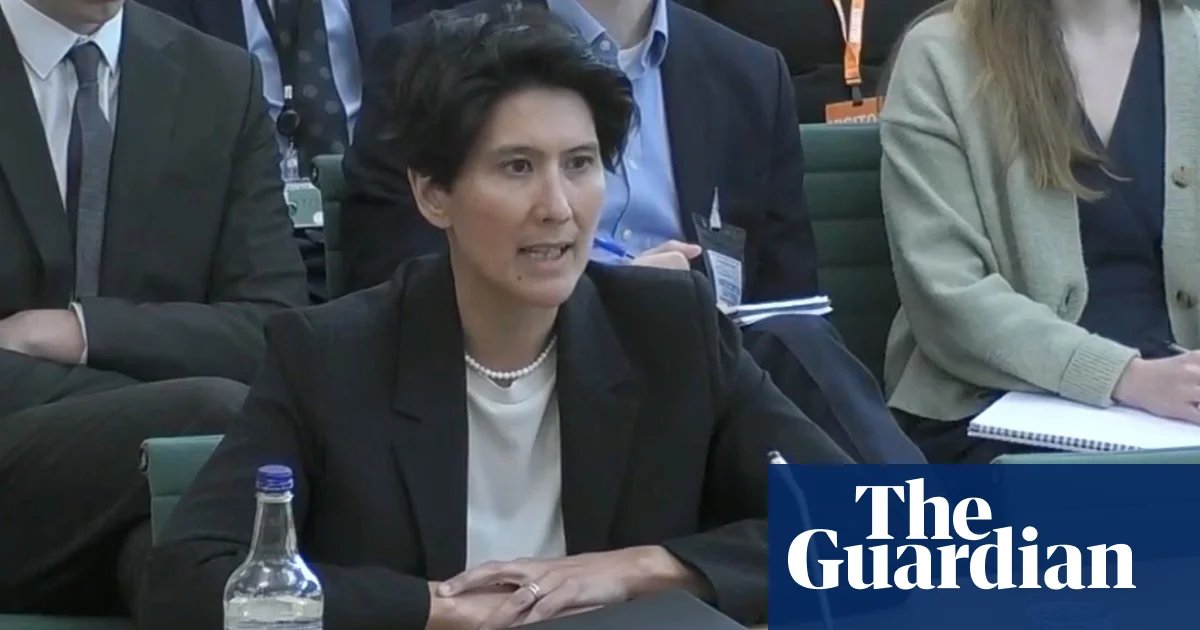
Giving evidence to the Commons foreign affairs committee, Little, the permanent secretary at the Cabinet Office, disputed the claim by Robbins that her department had suggest Mandelson might not need vetting at all.
Citing “a number of emails” that she had reviewed, she said it had actually been the Foreign Office that raised the possibility of Mandelson not needing to be vetted given he was a member of the House of Lords.
Questioned by Emily Thornberry, the committee chair, Little confirmed evidence from Robbins on Tuesday that there had been internal debate about whether to release vetting documents about Mandelson to the Cabinet Office.
Little’s department has been gathering documents connected to Mandelson’s appointment as the UK’s ambassador to the US, in response to a Commons “humble address” motion forcing their release.
As part of this, she told the committee, Robbins – who was dismissed as Foreign Office permanent secretary after it emerged that Downing Street was not told Mandelson was initially refused security clearance – resisted her department seeing vetting documents.
There was, she explained, “lots of debate and discussion about how to treat vetting information”, which included a meeting in mid-March with Robbins and his team, after being told about the existence of a summary as to why Mandelson was refused vetting.
“I specifically asked to see this document in any decision-making audit trail around those judgments,” she said. “At the time, it was made clear to me that that information would not be forthcoming.”
In response, Little said, she “took the very unusual judgment” to go directly to UKSV, the department that sits within the Cabinet Office, so she would be able to comply with the Commons motion to provide all the information about Mandelson.
This was, she said, “a responsibility unique to me, and I take very seriously. I felt that I needed to see some relevant documentation so that I could advise the prime minister as to whether we had fully complied [with the Commons motion] and gathered the information that was available and within scope.”
This included, she said, commissioning legal advice “on the treatment of that document and its relevance to the scope of the humble address”.
Questioned on the claim that the idea of Mandelson not needing to be vetted at all had been suggested, Little said this was suggested by the Foreign Office.
Emails she had seen, she said, “set out … a very reasonable policy conversation between security officials whereby the Foreign Office personnel security team get in touch with UKSV and the government security group in the Cabinet Office and ask the question: could they get some advice?
“Because the presumption had been that given Peter Mandelson had been a member of the House of Lords, that the longstanding convention that he didn’t require developed vetting was assumed, and they wanted to get proper policy advice from experts on whether that was the case.”
The response, she said, was that this was a decision for the Foreign Office, but that vetting was needed.
Asked about the delay between her first knowing in late March that Mandelson had been initially blocked and Keir Starmer being told on 14 April, Little rejected the idea that there had been an undue delay, saying she had to first seek advice.
She said: “I believe I have a responsibility to handle that sensitive information within the framework of both the law and the guidance that I am subject to, and I did not feel that I could share that information until I understood the consequences and the authority that I had to share the information.”
While this took time, it was “the professional and appropriate thing to do when dealing with such sensitive information that is so important to be protected as part of our overall national security framework”.
She added: “It took the time between 25 March and telling the prime minister on 14 April, and I truly believe that I acted as swiftly and effectively and appropriately as I could.”