Rachel Feltman: For Scientific American’s Science Quickly, I’m Rachel Feltman.
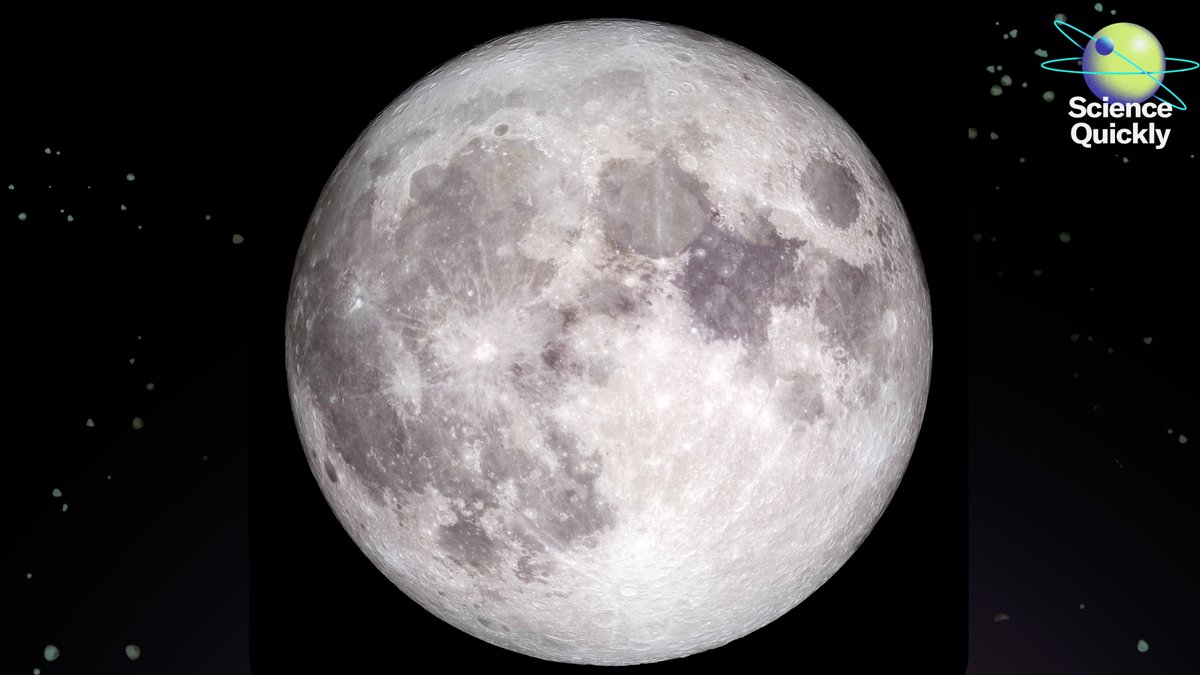
Last August U.S. Secretary of Transportation Sean Duffy, who at the time was also the acting administrator of NASA, announced his intention to see a nuclear reactor placed on the moon by 2030. You don’t have to be an expert in nuclear physics or spaceflight to know that his plan is, shall we say, ambitious. But the idea of popping a nuclear power plant on the lunar surface isn’t necessarily the sci-fi disaster movie plotline you might be envisioning. Plenty of experts say it actually makes perfect sense—as long as we take our time.
Here to tell us more is Robin George Andrews. He’s a volcanologist turned science journalist who writes about the earth, space and planetary sciences. He’s also the author of a feature in Scientific American’s June 2026 issue all about the dream of going nuclear on the moon.
On supporting science journalism
If you’re enjoying this article, consider supporting our award-winning journalism by subscribing. By purchasing a subscription you are helping to ensure the future of impactful stories about the discoveries and ideas shaping our world today.
Thank you so much for coming on to chat today.
Robin George Andrews: Thanks for inviting me! It’s such a weird thing to chat about. [Laughs.]
Feltman: For a layperson I think there are probably a couple of things that feel weird and surprising about this. The very concept of a nuclear reactor on the moon might surprise people, and then also the timeline seems very fast, and we’ll dig into all that. But let’s start with the first one because this isn’t actually a fringe idea, right? Nuclear power on the moon might kind of be inevitable. Could you tell us more about that?
George Andrews: Yeah, so solar power has been the way things have gone in space, and that’s been the idea for the moon for quite a while. But the problem is the sun doesn’t shine universally on the moon, just like it doesn’t on Earth, but the lunar south pole, where you have 14-day-long nights, solar power is not gonna be great for keeping astronauts alive, for powering machinery, doing research.
For decades people have said, like, “Well, you’re gonna need nuclear power.” I mean, it powers deep-space spacecraft, you know, essentially. And it doesn’t need to rely on the sun. So yeah, the concept of having this, like, thing you can hold in your hand, although it’s not recommended, and you could power a small village on the moon for 10, 20, 30 years, you know, seems like kind of a no-brainer, really.
Feltman: Right. I think a lot of people have a lot of misconceptions about the level of risk and sort of the actual mechanics of nuclear power. Could you give us just a brief overview of, you know, what this actually looks like and why it’s maybe not so inherently frightening?
George Andrews: Nuclear power obviously can sound a bit scary. I mean, radiation is the thing we all think about or something like Chernobyl, which is, like, a really specific and hopefully once-in-a-century or longer kind of disaster. But, like, things are more radioactive than we think.
I think, like, there’s this statistic: if you eat a single banana, you get as much radiation as if you lived next to a nuclear power plant for a year ’cause potassium is radioactive. I mean, you’d have to eat, like, so many bananas that you would die of something more, you know, digestive [Laughs] than anything radioactive, but radiation’s kind of everywhere. There’s, like, acceptable doses of it.
Having a nuclear power plant on the moon is, in many ways, maybe safer than it is having it on Earth because you don’t have just living things everywhere that could get harmed by it, and the amount of power you’d need on the moon is considerably less than you’d need on Earth, and it’s been through decades and decades of sort of safety tests and regulations.
I think the perception of nuclear power as this, like, super sketchy, dangerous thing that’s just waiting to explode is definitely overblown, I’d say. And I think it’s just we have these, like, biases when we think of, like, nuclear disasters and things like Chernobyl. So it’s got a PR problem, I think. [Laughs.]
Feltman: Well, like you said, because the moon is apart from us, in some ways this is safer. But that being said, you know, even though I think a lot of people tend to sort of think of the moon as this inert rock in the sky, it’s a very dynamic place. And so what are some of the specific challenges to putting a nuclear reactor on the moon?
George Andrews: Yeah, so one of the main problems with the moon is that it has a sixth of Earth’s gravity, which means that the main coolant they use for nuclear power plants on Earth, which is water, would not operate in the same way. Also, it has wild temperature swings of hundreds of degrees from day to night because there is no atmosphere to, like, mediate this.
So that’s this huge challenge, so they’d probably have to use air that they would have to, obviously, ship from Earth, which is maybe a nontrivial thing. I mean, it’s a very weird thing to think to ship away. That would be used as a slightly less efficient way of transferring the heat.
Also, nuclear reactors produce so much heat. I mean, they produce so much of it, they actually need to get rid of a lot of it as, like, excess heat. If you don’t get rid of the excess heat, you melt your nuclear reactor. It’s what a—kind of what a meltdown is. And you don’t want one of those on anywhere.
Normally, you’d use water or something like that, or you at least have an atmosphere to kind of radiate the heat into, but the moon doesn’t have an atmosphere, so you’d need these giant fins, these big sails, which would, like, radiate the heat into space. It’s really the only way you can do it. That’s a bit tricky to do.
You also have meteorite impacts, and I don’t mean, like, the really big meteorites that could kind of, like, take out—like, hundreds of meters across, which is a problem for Earth as well, but Earth’s atmosphere, like, filters out these, like, one-, two-, three-meter-sized asteroids pretty easily. They’re basically big shooting stars. But the moon has no atmosphere, again, so this will just hit the ground with the force of, like, several tons of TNT. Even small, like, centimeter-sized ones can go through it like bullets, so you’d need to shield your nuclear power plant in a way. You could put it in a lava tube, maybe.
And also, the moon occasionally quakes. You have moonquakes. They’re not as strong as Earth’s, but they last for, like, tens of minutes. It’s not a great idea to just shake a nuclear power plant for tens and tens of minutes. There are nuclear power plants, basically, in nuclear submarines, which get jostled about quite a bit, but it’s not quite the same as the whole environment you’re on just being vibrated for 10 minutes.
There are a lot of things that no one’s tried to design around before. Putting a nuclear power plant on the moon has some challenges that are hard to test on Earth, for sure. So it’s not trivial.
Feltman: And then, of course, getting all of the materials you need up there, and it sounds like that wouldn’t necessarily be sort of a, a one-and-done mission either. We might need to be bringing some air up there as well.
George Andrews: I don’t think they’ve quite worked out, like, how many things you’d need to kind of build it. I think the most critical bit is obviously getting the nuclear fuel there and contained in a way that—you don’t wanna crash-land on the moon and spray that stuff everywhere.
And yeah, I’m sure we’ll talk about the launch as well, but I think that would be the bit that makes most people nervous. Once it’s in space they’re like, “Well,” you know? The risk is lower. But actually launching nuclear material into space sounds a bit sketchy [Laughs], you know, ’cause it hasn’t been done that much.
Feltman: Well, and that brings us to kind of the part of this announcement that is actually really wacky, which is the timeline, which is faster than even Russia and China are aspiring to accomplish this as a joint venture. So what are you hearing from experts about the U.S. goals here?
George Andrews: Basically, like, sometime last year China, in partnership with Russia, said, “Hey, we’re gonna put a nuclear reactor on the moon by 2035.” And almost immediately, kind of hilariously, the now-not head of NASA’s like, “Well, we’re gonna do it by 2030.”
Feltman: I think there’s an episode of Veep with a really similar plotline. [Laughs.]
George Andrews: [Laughs.] Yeah, I mean, is parody possible anymore? I’m not really sure. But, like, it’s just about being the first to do it, basically, set the norms and things like that.
So 2030, to put a nuclear reactor on the moon of any sort, has been described by people I’ve spoken to in those sort of, like, terms that sort of imply a little madness. Like, these timelines are “aggressive.” They’re “very ambitious.” They’re “aspirational.” I don’t think anyone seriously thinks that 2030 is gonna be the right date for putting a nuclear reactor on the moon.
I know some people who are working on building the nuclear reactor that’s gonna go on that interplanetary spacecraft that they are wedged in between putting one on the moon and now, the 2028, and they’re like, “Yeah, it can be done.” But they would have to say that ’cause they’re probably building it. [Laughs.]
So I don’t know if it’s gonna be that quick. You wanna do it safely, right? You know, being first, sure, but you’re, like—one of my favorite quotes I’ve ever got from someone was a nuclear materials professor in Wales who said, “If you do this wrong, it could be, like, a—basically, a monumental shit show.” How embarrassing would it be to just spill radioactive waste on the moon, or anywhere? [Laughs.] You know, that’s not a first you want, so.
Instead of just going smaller, like, a 20-kilowatt nuclear reactor—so 20 kilowatt is like—oh, man, it’s 50,000 times less powerful than a typical nuclear power plant on Earth, so really small. But people are like, “Hey, you should do this as a test first.” There’s a, basically, a call now to make it 100 kilowatts straight away, and most experts think, like, “Okay, but why?” You know, there’s not really gonna be anything up there that needs that power at that point. Why not just start smaller and then work your way up, just to see how it works? Why run before you can stand up?
Feltman: So obviously, having ambitious, aspirational timelines is all well and good, as long as things are done safely. You know, I think many people worry that this means they won’t be done safely. So with that in mind, sort of worst-case scenarios here, where does it leave us if we spill radioactive material on the moon or if we have a meltdown on the moon? What does that look like?
George Andrews: I guess one of the things to point out is, like, the launch bit, which I think people on Earth would be like, “Hey, that sounds scary,” nuclear material’s been launched into space before, largely without incident, except that one time. A nuclear reactor basically becomes dangerous when you switch it on. Before you switch it on the uranium inside, despite what it intuitively feels like, isn’t that dangerous in the way it is. So if you literally had a rocket explode in the atmosphere and you had the uranium land in the sea or on land, like, you would have to pick it up and eat it for it to cause you a problem. Like, it wouldn’t actually be dangerous otherwise.
But when you get into space and switch the nuclear reactor on and it starts producing those waste products, that’s when it becomes dangerous if that gets let loose. So say you get there, say you manage to land on the moon, say you either—nuclear reactor’s on and you have a meltdown. And a meltdown is basically, like, the nuclear reactor has gone out of control. It’s producing way too much heat. It literally melts the reactor itself. It’s a pleasingly literal term. I really, genuinely didn’t know this until a few years ago, and I was like, “Oh, it literally means it melts.” [Laughs.]
And the worst that can happen is that your astronauts die but not from the radiation. Because the way they’d set it up is you’d have the power plant, which is about the size of a car, basically. Like, a kilometer—I think everyone agrees: you put it a kilometer away from the astronauts so they barely have to interact with it. So if it melts down, they won’t get, like, sprayed with radiation. In fact, a lot of it might just get sucked into the vacuum of space. But you would permanently graffiti a part of the moon in radioactive material that no one is gonna wanna go and pick up. Like, how would you even do that? Like, what—how does that work in space?
It also—like, imagine you’ve set it up near, like, a reserve of water ice, this precious thing, the reason that everyone’s going to the south pole—to get water for astronauts, crops, to make rocket fuel. You just make that water source unusable forever, basically. It would just be incredibly embarrassing as the first nation that, like, really trashed this part of the moon. But it would be contained to a small area.
The biggest risk is, like, if the astronauts are relying on this—say you’ve got a moon base, and they’re relying on nuclear power—you wouldn’t have solar power in the lunar night. If it gets cut off, they might freeze to death. So, like, that’s the real issue, is that if it’s relied on in that way and malfunctions, you’ve graffitied the moon with radioactive stuff and then your astronauts die, which I think we can all agree would be very embarrassing, at minimum.
Feltman: Yeah, so if this is done well, what do experts say the timeline looks like, and what’s sort of, like, the optimistic view of this? Like, could it be awesome for us and for people being on the moon?
George Andrews: Yeah, it genuinely could be awesome. I’m, like, genuinely quite hyped about the idea of it after speaking to so many people about, like, why you would do this. It is literally, like, a handful of this uranium could power, like, basically, like, a decent-sized moon base for a decade or more, which means you’re not constantly supplying stuff from Earth. You become basically a bit more self-sufficient.
And that means you could power anything from, like, all these—you know, the Lunar Terrain Vehicles that NASA’s still kind of trying to decide on, these, like, largely autonomous, like, moon buggies but way—with the, like, sophistication of, like, the sort of Mars rovers, you know, way more autonomous things that could, like, help build bases, help build scientific outposts, even when the astronauts aren’t there. They could just go plug themselves into this nuclear power, then just keep going.
You could power—a lot of people want to do lunar astronomy, you know, the farside of the moon is great for that, to see, like, the moments just after the big bang that you can’t see from Earth, basically. You could power this without worrying about, you know, relying on the sun. Eventually, you’re gonna have to grow crops on the moon, to, like, feed astronauts, you know, grow in lunar soil, use hydroponics and stuff. You could have, like, nuclear-powered greenhouses, which is almost—is a weird thing to think about. But, like, it’s just—not being reliant on the sun means it’s a lot safer on the moon.
You can have small nuclear—like, basically the size of batteries that you’d bring up— but just nuclear power plants the size of, like, big batteries. You could just much more easily set up, like, prospecting campaigns. You know, maybe all that helium-3 you want to mine on the moon or the water—you could just power anything you want with very, very small reactors, basically.
And if it’s demonstrated that it works there, it would also really demonstrate it will work [somewhere]—say, on Mars, which has an atmosphere and is a bit kind of nicer in a way to set up, like, a little base. But you also have dust that covers solar panels and things like that, and it’s very far from Earth. So if you can set up a nuclear-powered base on the moon, for whatever reason you wanna use it for, you could definitely do the same thing on Mars.
So it bodes well for general humanity’s exploration of the solar system with astronauts sort of thing, so it’s pretty cool. It’s—and it’s an old technology, weirdly. It’s sort of like we’re just catching up to the ambitions that they had in, like, the ’60s again. Better late than never.
Feltman: Yeah. [Laughs.] Well, thank you so much for coming on to chat about this. It’s been great.
George Andrews: Well, thanks for having me.
Feltman: That’s all for today’s episode. Check out the latest print issue of Scientific American to read Robin’s full story. You can also find it online at ScientificAmerican.com.
We’ll be back on Friday to talk about one of many reasons why you shouldn’t rely on AI chatbots for medical advice: it turns out it’s pretty easy to convince them that fake diseases are real.
Science Quickly is produced by me, Rachel Feltman, along with Fonda Mwangi, Sushmita Pathak and Jeff DelViscio. This episode was edited by Alex Sugiura. Shayna Posses and Aaron Shattuck fact-check our show. Our theme music was composed by Dominic Smith. Subscribe to Scientific American for more up-to-date and in-depth science news.
For Scientific American, this is Rachel Feltman. See you next time!