NASA needs nuclear power for its moon base. Here’s the White House plan to get it
If the U.S. is ever to set up a permanent outpost on the moon, it will need nuclear power. The White House just released a road map to get it as soon as 2028
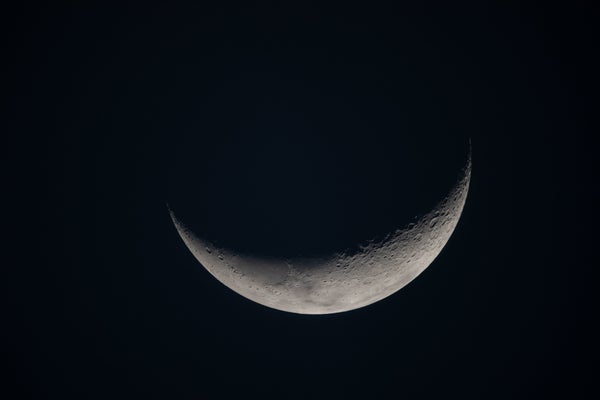
NASA’s Artemis II mission sent four humans to the moon for the first time in more than half a century. And it is just the beginning. In a speech at a space policy event on Tuesday, NASA chief Jared Isaacman said that the mission was an “opening act” for a new era of human space exploration and, eventually, a permanently staffed moon base. But for NASA to make that ambition a reality, the agency will need nuclear power—and the White House just laid out a plan for how to get it.
The plan, released on April 14, orders NASA, the Pentagon and the Department of Energy to ready a moon-orbiting nuclear power system for launch as soon as 2028. The new directive follows an executive order issued by President Donald Trump late last year that also set out plans for nuclear reactors on the moon.
A nuclear reactor uses fission to produce energy: a nuclear chain reaction splits atomic nuclei of a particular radioactive element and releases massive amounts of heat. Such a reactor would be necessary for any lengthy stay on the moon because each lunar day and each lunar night lasts about 14 Earth days. That means any moon base will experience two weeks of darkness followed by two weeks of light, ruling out solar power as a reliable and permanent source of energy. There are (obviously) no fossil fuels, wind or flowing water on the moon to otherwise generate power, so nuclear it is.
On supporting science journalism
If you’re enjoying this article, consider supporting our award-winning journalism by subscribing. By purchasing a subscription you are helping to ensure the future of impactful stories about the discoveries and ideas shaping our world today.
The new White House policy directs the Pentagon, NASA and the DOE to run design competitions “to enable near-term demonstration and use of low- to mid-power space reactors in orbit and on the lunar surface.” Ultimately, the White House wants “high-power reactors” on the moon as soon as the next decade.
Under the plan, NASA would start building a “mid-power” space reactor that would generate at least 20 kilowatts of electrical power and could operate on the moon. The space agency would also work with outside companies to develop smaller reactors with the goal of launching them to the moon as soon as 2030. Eventually, these mini reactors would be scaled up, the plan states.
Meanwhile the Pentagon has been ordered to brief the White House in 90 days on possible uses and payloads for nuclear systems that can function in space. It will also support NASA’s nuclear reactor work and run its own design competition, according to the plan. The DOE is to provide knowledge and expertise in nuclear power, as well as doing its own research and development.
The new policy comes about a month after NASA chief Isaacman laid out the space agency’s plans to develop nuclear power for its upcoming missions, including flights to Mars. “The clarity of nuclear power and propulsion policy in space is essential, because we want to ensure superiority even beyond the moon, when we get to Mars someday,” Isaacman said at the Tuesday event, noting that, over the past several decades, the agency has spent billions on nuclear power projects that haven’t gone anywhere.
Nevertheless, the space agency’s vision for its moon base is taking shape. NASA released a “user’s guide” that sets out three phases during which the agency will develop the capabilities, infrastructure and resources needed for a moon base. Ultimately, the goal is to set up the moon as a jumping-off point for an eventual Mars mission. “The Moon Base will empower NASA to develop, test, and demonstrate needed technologies, capabilities, systems, and operational paradigms for future human missions to Mars,” the guide states. “Realizing a continuous presence on the lunar surface will also provide experts with data needed to understand the impacts of long-duration spaceflight missions on human explorers.”
It’s Time to Stand Up for Science
If you enjoyed this article, I’d like to ask for your support. Scientific American has served as an advocate for science and industry for 180 years, and right now may be the most critical moment in that two-century history.
I’ve been a Scientific American subscriber since I was 12 years old, and it helped shape the way I look at the world. SciAm always educates and delights me, and inspires a sense of awe for our vast, beautiful universe. I hope it does that for you, too.
If you subscribe to Scientific American, you help ensure that our coverage is centered on meaningful research and discovery; that we have the resources to report on the decisions that threaten labs across the U.S.; and that we support both budding and working scientists at a time when the value of science itself too often goes unrecognized.
In return, you get essential news, captivating podcasts, brilliant infographics, can’t-miss newsletters, must-watch videos, challenging games, and the science world’s best writing and reporting. You can even gift someone a subscription.
There has never been a more important time for us to stand up and show why science matters. I hope you’ll support us in that mission.