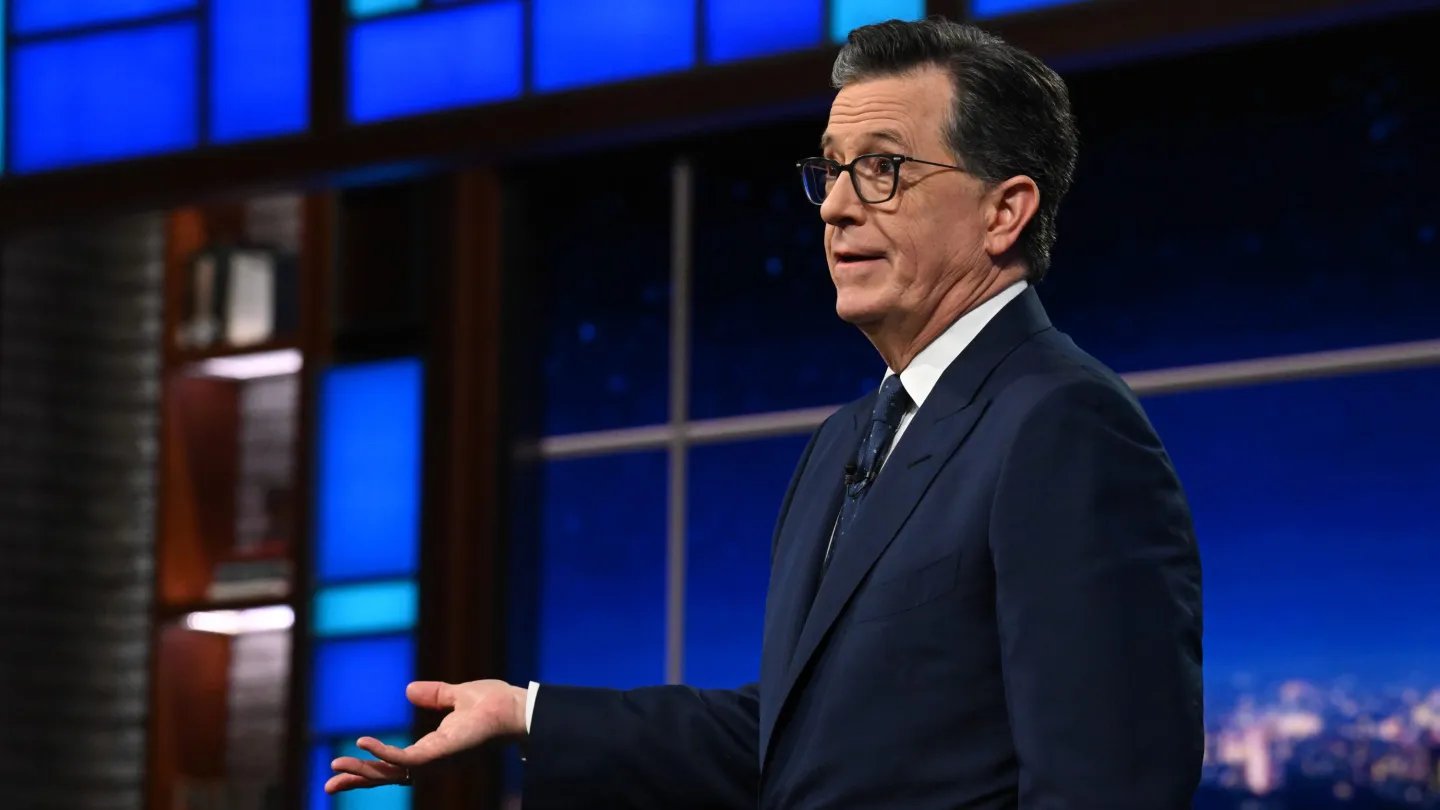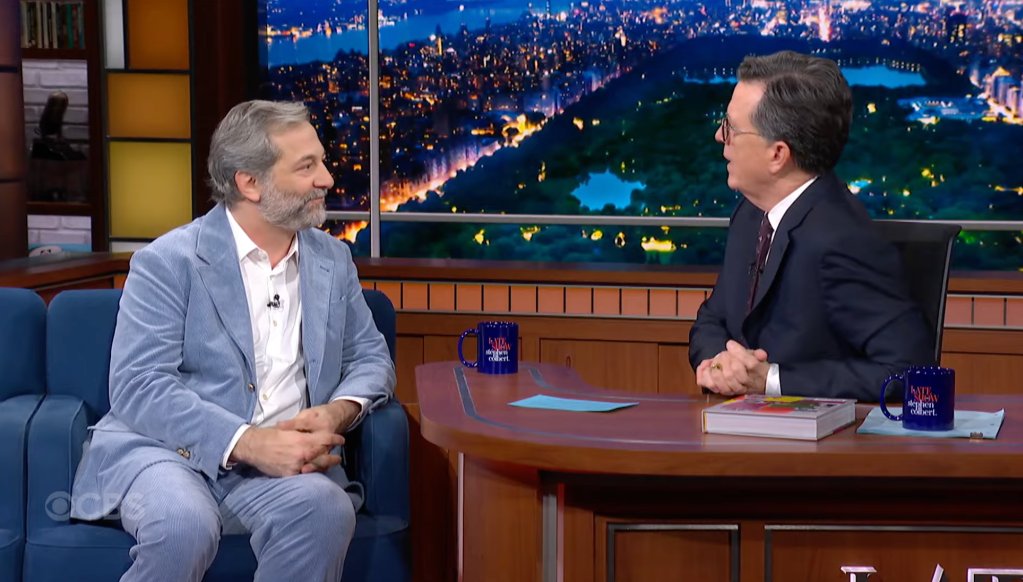
Writer, producer and director Judd Apatow penned an earnest essay about the importance of late-night television — and safeguarding it in the American consciousness — as last week saw the shuttering of The Late Show with Stephen Colbert and end of the CBS franchise begun by David Letterman.
In a tribute for Rolling Stone, the Freaks and Geeks developer outlined his love for late-night as an institution, which was born out of hours spent watching a plethora of hosts throughout middle school and high school.
“Probably the highlight of my career was working for Garry Shandling on his talk-show satire The Larry Sanders Show,” he wrote. “Garry had observed all of the backstage machinations of that workplace, and he thought it was the perfect metaphor for life. The curtain and what’s behind the curtain, the way we all put on a face and present ourselves one way when we’re actually feeling something completely different inside. It was a way to talk about human frailty in a hilarious manner.”
Apatow — himself a late-night interview staple, from his first appearance on The Dennis Miller Show to later stints on The Tonight Show Starring Jimmy Fallon and Jimmy Kimmel Live! — enumerated the service comics provide commentating on current events.
“We watched Letterman talk about 9/11. We went through political events through the eyes of these people,” he said. “I’m amazed at the way talk-show hosts are able to write jokes that allow us to laugh at something that is dark and troubling. You can’t give enough credit to people like Kimmel and Colbert and Fallon and Seth Meyers for the Herculean feat that is. Imagine it was your job to wake up in the morning and look at what happened in the Iran War and know you have to go do an 11-minute monologue about it. It’s almost unbelievable that they pull it off, ever.”
The three-time Emmy winner also referenced Kimmel’s suspension, the ensuing backlash and consumers rallying behind him, adding that the remaining hosts “are going to fight until their last breath to be allowed to express themselves.”
“Some people say late-night is dying out, but I hope not. I love the host with the desk, with the band, doing the monologue. I love it when the monologue works. I love it when it doesn’t. I hope one day our country is stable enough that some of the monologues don’t have to be about all the horrifying things that happened that day. But when almost everything that happens is horrifying, you really do need to gather and talk about it,” Apatow concluded. “So I pray that when all of the entertainment industry is owned by one man in the future — some bizarro creature who’s half man, half robot, who makes all decisions for us in our surveillance state — that he likes talk shows. And even if it doesn’t make economic sense, I hope he lets at least one stay on the air.”
Colbert’s final episode bowed May 21, to the tune of 6.74M live + same-day viewers, per preliminary panel only data from Nielsen, making it the most-watched weeknight episode in the show’s history. The following day, the comedian surprised local Michigan audiences when he filled in as guest host on Only in Monroe, joking: “It’s been an excruciating 23 hours without being on TV, so I’m grateful to be here on Monroe Community Media, before they also get acquired by Paramount.”
The Late Show was axed three weeks before David Ellison officially took control of Paramount, with the network stressing that it was “purely a financial decision against a challenging backdrop in late night” and “is not related in any way to the show’s performance, content or other matters happening at Paramount.” However, as the cancellation came days after Colbert called Paramount Global’s $16 million settlement of Donald Trump’s lawsuit a “big fat bribe,” folks have found it difficult to reconcile the conglomerate’s reasoning with the decision’s timing.