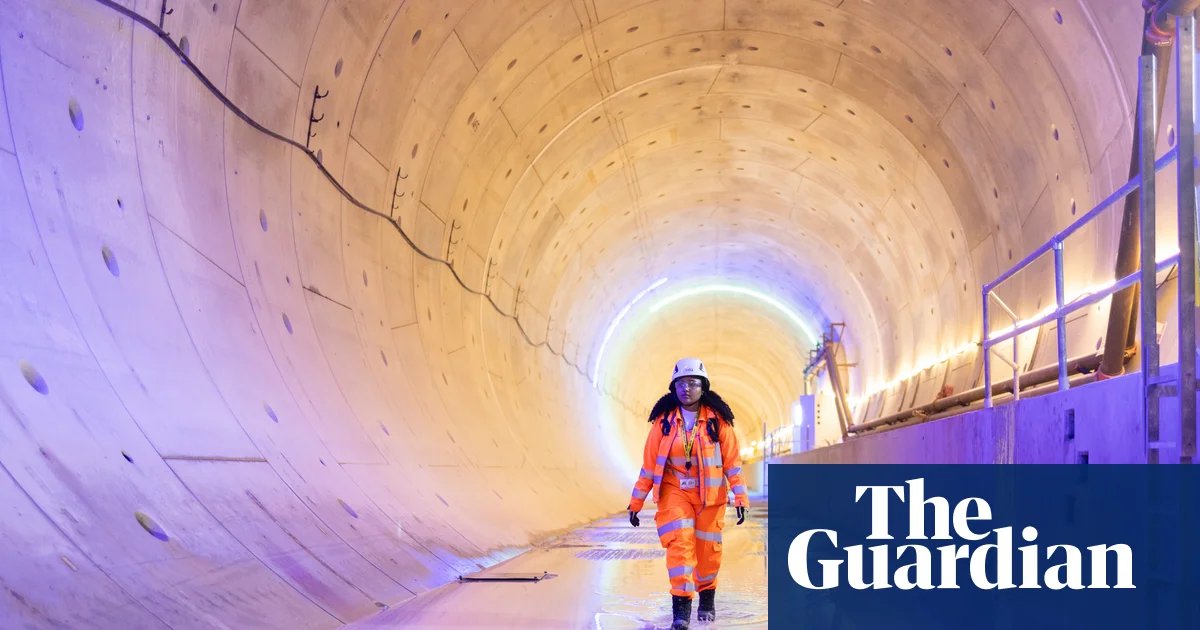
The HS2 high-speed railway will now cost up to £102.7bn and trains will not start running between London and Birmingham until as late as 2039, the government has admitted – £70bn more and 13 years later than originally promised.
The transport secretary, Heidi Alexander, said that the truncated railway would not be entirely completed until as late as 2043.
The figure is the first official estimate of HS2’s budget in 2026 prices. Alexander said the total cost would range between £87.7bn and £102.7bn, with only a third of the rise owing to inflation.
The first trains running from Old Oak Common in west London to Birmingham will now run between 2036 and 2039, with the full railway running from London Euston to join the West Coast main line in Staffordshire scheduled to be completed between 2040 and 2043.
Alexander said that the forecasts were now “built on solid foundations with credible estimates as ranges”.
She blamed the Conservative government for standing by and watching “the world’s most expensive slow-motion car crash”, saying that Labour had inherited a “litany of failure”.
Alexander added: “I can confirm that the previous government spent most of HS2’s budget without laying a single mile of track. That is the shocking legacy.”
She added: “If it seems like an obscene increase in times and costs, that is because it is. And if it seems like I’m angry, I am.”
She said that the government had considered cancelling the entire project, but that “it could cost almost as much to cancel the line as finish it”.
Alexander promised: “We will deliver HS2 to completion.”
However, she said that trains would be operated at lower speeds, to save about £2.5bn, reducing the top speed from nearly 200 mph to about 225 mph (320 km/h-360 km/h) , in line with most international standards. The original design, she said, had been “a massively overspecced folly … If we were a country the size of China I could understand it.”
Plans to build the line with automatic train operation will also be reconsidered, a system normally only used on the busiest metropolitan rail lines with high-frequency services.
She said that HS2 Ltd chief executive, Mark Wild, and its chair, Mark Brown, “have an almost impossible task on their hands” to turn the project around, but would be managing contracts properly with improved oversight.
The project was first approved by the coalition government in January 2012 with a £32.7bn budget to build a Y-shaped high-speed track as far as Manchester and Leeds, and scheduled to be in operation by 2026.