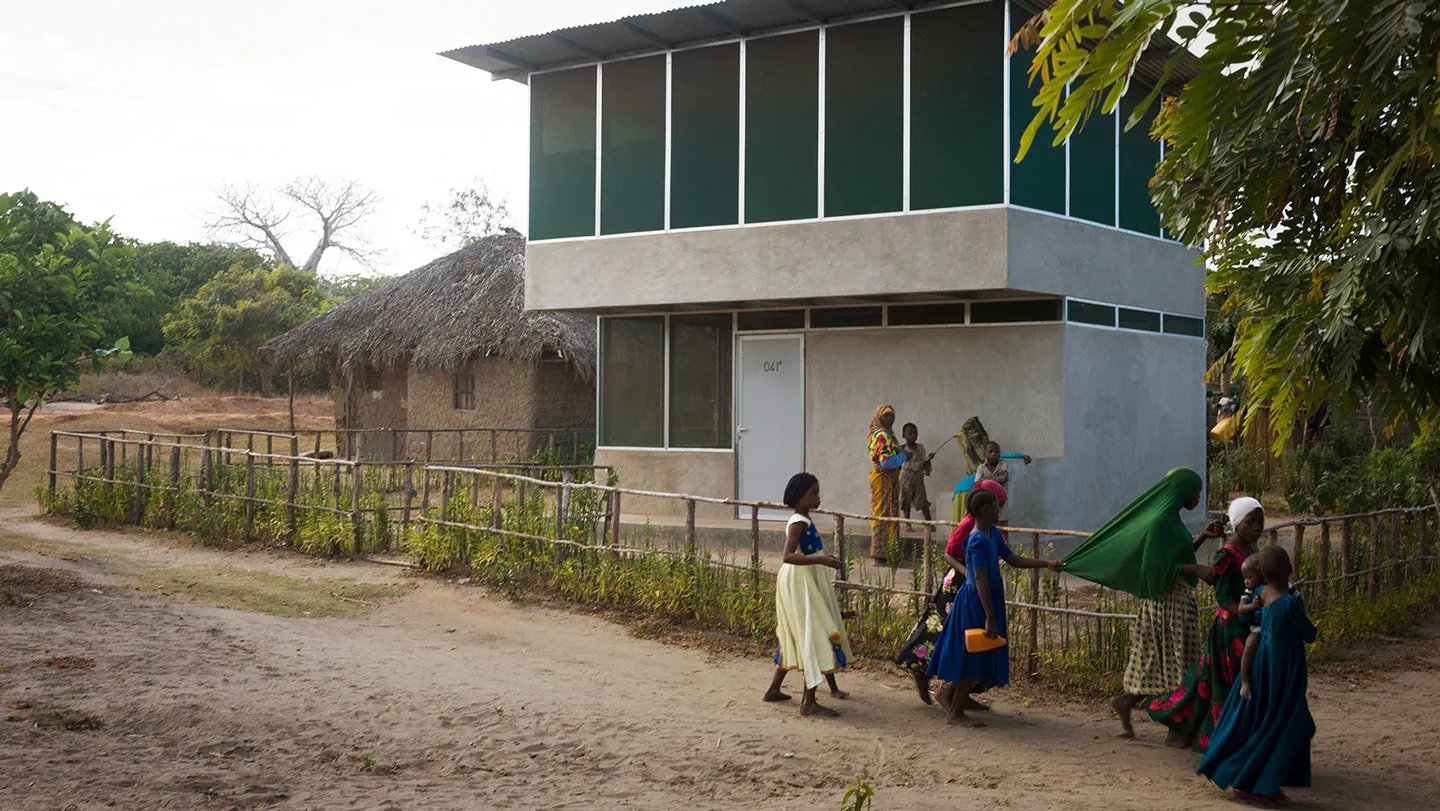
Houses with screens, rainwater-collection systems and cement floors could be a powerful tool in the fight against childhood diseases in Africa.
Children living in these specially designed houses in Tanzania had fewer cases of malaria, diarrhea and respiratory diseases than those in traditional mud and thatched homes, researchers report April 21 in Nature Medicine.
“Small improvements in design, such as cross-ventilation, mosquito screening, self-closing doors, clean water harvesting, improved pit latrines are likely to make a major health impact,” the researchers write.
About 2.5 million children in sub-Saharan Africa die each year before turning 5. Data from the United Nations Children’s Fund indicate that malaria, diarrhea and lower respiratory infections such as pneumonia are the leading causes of mortality among children ages 1 month to 5 years in the region.
Researchers wondered if housing could make a difference.
Most housing in rural Africa consists of dwellings with thatched roofs and walls built out of poles and mud. Floors usually do not have concrete slabs. Such designs that do not separate cooking, sleeping and sanitation areas can expose children to indoor air pollution, contaminated surfaces and infectious droplets, the team notes.
Experimental two-story houses, called Star Homes, incorporate traditional fixtures — such as a Swahili sitting bench — along with new design elements geared toward reducing entry of disease-carrying mosquitoes and limiting the spread of infections.
Screens cover openings, and lightweight and durable roofs have partially closed eaves. Clean rainwater is collected from the rooftop, a fly-proof latrine is set up outside the house, and plastic net walls maximize ventilation. The bench, usually outside, sits inside the house away from mosquitoes.
Researchers initially tracked 247 children under age 13 in 110 Star Homes and 936 in traditional homes over 36 months, though those numbers grew during the study period.
The team recorded the incidences of malaria, diarrhea and respiratory infections during weekly visits to the homes, says Salum Mshamu, a Tanzania-based researcher with the University of Oxford’s Center for Tropical Medicine and Global Health. Telltale symptoms included fever, three or more loose stools over a 24-hour period or difficulty breathing.
Overall, the incidence of malaria in children living in the Star Homes was 44 percent lower than in children living in traditional homes, the team reports. Its calculations showed that for every 1,000 feverish children tested for malaria, 6.4 living in traditional housing would test positive. That’s compared with 3.6 children in Star Homes, says Mavuto Mukaka, an epidemiology statistician also with Oxford.
The incidence of diarrhea and respiratory infections was also lower by 30 percent and 18 percent, respectively.
The housing design improvements helped to curb “risks of intestinal- and soil-transmitted infections” that cause diarrhea and reduce exposure to malaria-transmitting mosquitoes, Oxford epidemiologist Lorenz Von Seidlein says. Other improvements included a “raised concrete ground floor which can be easily cleaned” and increases hygiene within households, he says.
However, not every aspect of the new Star Homes was used. The houses have smokeless stoves to reduce air pollution. “This was a bit different from their traditional open cooking areas the Tanzanian communities are used to,” Mshamu says.
Participating families instead preferred to use the traditional cooking arrangement: three equal height stones that hold a cooking pot above an open fire. “They opted to just cook outside or building small standalone kitchens outside,” Mshamu says. That increased exposure to mosquitoes.
Each Star Home unit cost about $8,800, a fortune by African income standards. Still, the researchers hope that these Star Homes can be a model for how housing design can be effective in curbing childhood infections in Africa.
Given the fight against malaria in Africa, the findings “are timely and highly relevant,” says Tiaan de Jager. He’s an environmental scientist with the Institute for Sustainable Malaria Control at the University of Pretoria in South Africa who was not involved in the research. The results come at a time of surging malaria in parts of Southern Africa and reductions in international funding for health initiatives, he says.
Housing improvements can help address the underlying social factors influencing health rather than focusing solutions on the immediate causes of disease, he says. Further studies can help boost “understanding how communities adopt and adapt” to new housing designs.
The seeds to that understanding may already be planted. Families that participated in the study continue to live in the Star Homes. And those in traditional houses received construction material to build their own customized versions of the Star Homes.