Hidden copy of the oldest known poem in the English language leaves researchers ‘speechless’
Researchers discovered the copy of the 1,300-year-old poem lurking inside a historical text in an Italian library
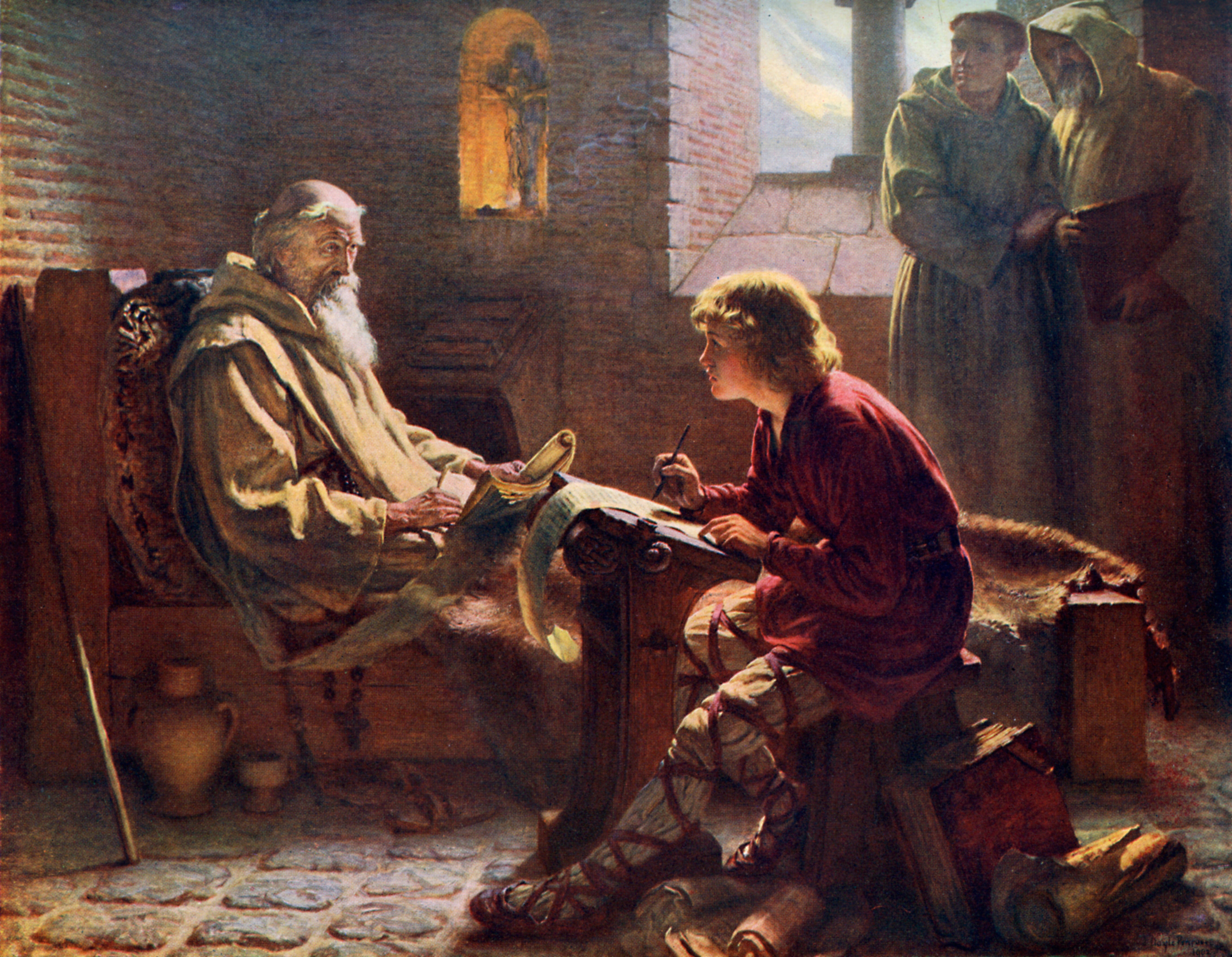
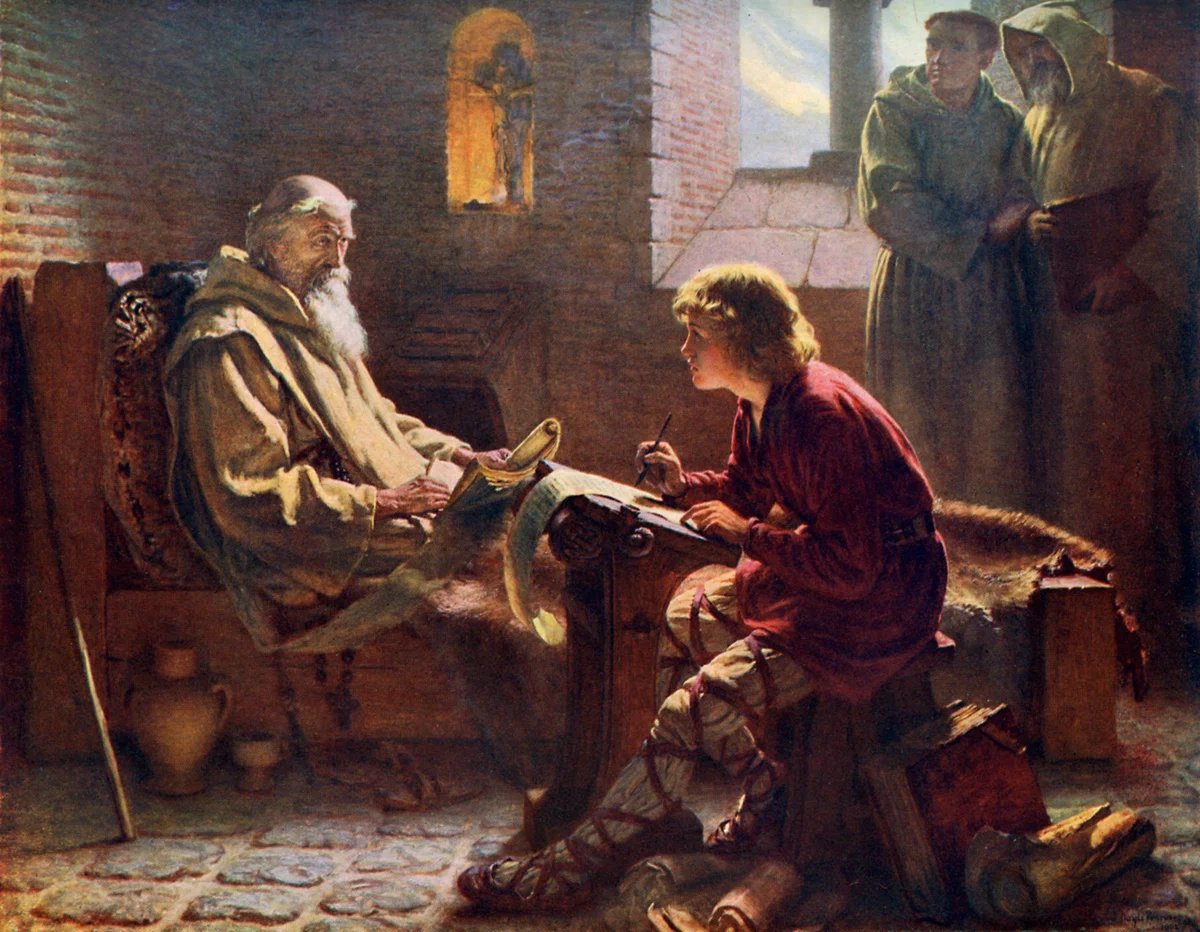
The Venerable Bede translating the last chapter of St John. From An Outline of Christianity, The Story of Our Civilization, Volume 2: The Builders of the Church, 1926.
Print Collector/Getty Images
The oldest known poem in the English language was composed by a farm worker in Whitby, England, some 1,300 years ago. Known as Caedmon’s Hymn, it now has left researchers “speechless” at the chance discovery of a previously unknown copy of the poem—written in the original Old English—inside a ninth-century book kept in an Italian library.
The hymn itself is nine lines long. It’s attributed to a cowherd named Caedmon, who is thought to have composed the poem in a burst of inspiration following a religious dream. Translated into modern English, the poem celebrates a “Maker” and “eternal Lord” who created Earth for humankind. “As the oldest known poem in Old English it is today celebrated as the beginning of English literature,” said Mark Faulkner, one of the researchers behind the new discovery and a professor at Trinity College Dublin, in a statement.
There’s no record of Caedmon jotting the poem down himself—but records of it can be found in copies of a history of Christianity in England written by the Venerable Bede, an English monk and scholar, called the Ecclesiastical History of the English People. These copies primarily include a version of the poem in Latin, with the Old English translation sometimes added later.
On supporting science journalism
If you’re enjoying this article, consider supporting our award-winning journalism by subscribing. By purchasing a subscription you are helping to ensure the future of impactful stories about the discoveries and ideas shaping our world today.
The new version of the poem, however, found in a digitized version of the Ecclesiastical History held at the National Central Library of Rome, includes Caedmon’s Hymn in Old English—and appears to be part of the manuscript’s main text, not added in later.
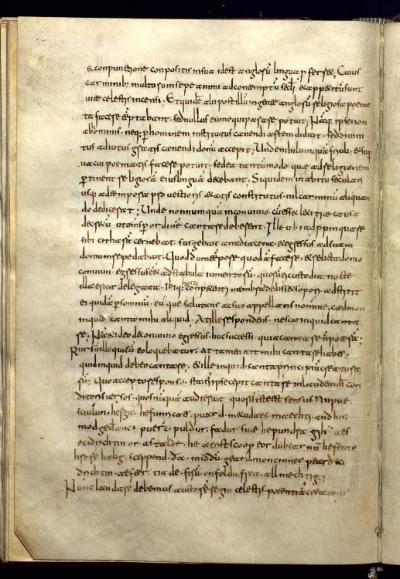
Rome, National Central Library, MS. Vitt. Em. 1452, f. 122v.
“We were extremely surprised. We were speechless,” Elisabetta Magnanti, a visiting research fellow at Trinity College Dublin who helped lead the work, told the Associated Press. “We couldn’t believe our eyes when we first saw that.” The discovery was recently published in the journal Early Medieval England and its Neighbours.
Old English was a precursor to modern English and was spoken in England during the early Middle Ages. Most other known Old English texts date to the 10th and 11th centuries, Faulkner said in the same statement.
“Unearthing a new early medieval copy of the poem has significant implications for our understanding of Old English and how it was valued. Bede chose not include the original Old English poem in his History, but to translate it into Latin,” he said. “This manuscript shows that the original Old English poem was reinserted into the Latin within 100 years of Bede finishing his History. It is a sign of how much early readers valued English poetry.”
Read Caedmon’s Hymn in Old English here and translated into modern English by Old English scholar Roy Liuzz below:
Now let us praise Heaven-Kingdom’s guardian,
the Maker’s might and his mind’s thoughts,
the work of the glory-father—of every wonder,
eternal Lord. He established a beginning.
He first shaped for men’s sons
Heaven as a roof, the holy Creator;
then middle-earth mankind’s guardian,
eternal Lord, afterwards prepared
the earth for men, the Lord almighty.
It’s Time to Stand Up for Science
If you enjoyed this article, I’d like to ask for your support. Scientific American has served as an advocate for science and industry for 180 years, and right now may be the most critical moment in that two-century history.
I’ve been a Scientific American subscriber since I was 12 years old, and it helped shape the way I look at the world. SciAm always educates and delights me, and inspires a sense of awe for our vast, beautiful universe. I hope it does that for you, too.
If you subscribe to Scientific American, you help ensure that our coverage is centered on meaningful research and discovery; that we have the resources to report on the decisions that threaten labs across the U.S.; and that we support both budding and working scientists at a time when the value of science itself too often goes unrecognized.
In return, you get essential news, captivating podcasts, brilliant infographics, can’t-miss newsletters, must-watch videos, challenging games, and the science world’s best writing and reporting. You can even gift someone a subscription.
There has never been a more important time for us to stand up and show why science matters. I hope you’ll support us in that mission.