Good morning.
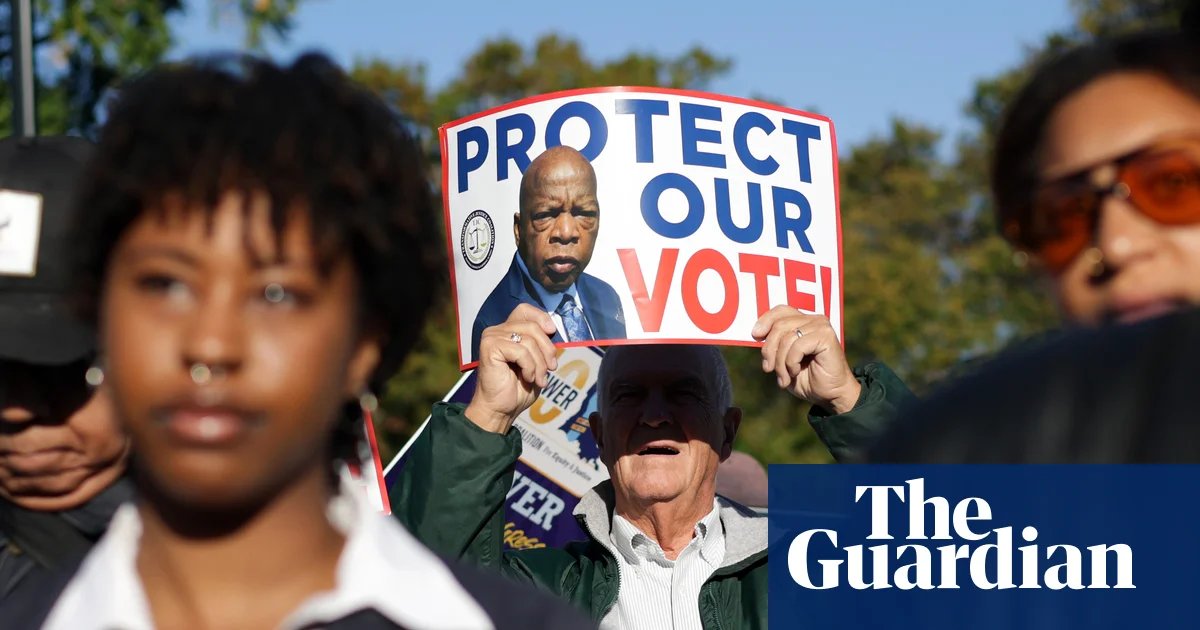
The US supreme court has gutted a major section of the Voting Rights Act through a landmark decision on Louisiana’s congressional map, in a major upheaval in US civil rights law that threatens to weaken the voting power of minorities.
In a 6-3 decision along partisan lines, the court demolished section 2 of the Voting Rights Act, the last remaining powerful provision of the 1965 civil rights law that prevents racial discrimination in voting. Section 2 has long been used to ensure minority voters are treated fairly in redistricting.
The supreme court found that Louisiana’s congressional maps violated the equal protection clause. Writing for the majority, the supreme court justice Samuel Alito maintained that section 2, which has been used for decades to challenge maps producing racially discriminatory results, does not require states to draw majority-minority districts.
-
How could midterm maps be changed by redistricting? While the supreme court decision leaves little time to redraw maps before the midterms, here is what midterm maps could look like if both parties achieve all their current redistricting ambitions.
Trump threatens to reduce troop numbers in Germany after Merz’s Iran war criticism
Donald Trump has threatened to reduce the troop numbers of US troops deployed in Germany, days after the country’s chancellor said the US was being “humiliated” by Iran.
In a Truth Social post, the president said his administration was “studying and reviewing the possible reduction of troops in Germany, with a determination to be made over the next short period of time”.
Merz sought to downplay the situation on Wednesday, but Trump’s threat is likely to cause concern in Berlin and Europe, coming on the back of his intensifying threats to quit the Nato alliance.
Combative Elon Musk grilled over battle with Sam Altman
After a dramatic first day of opening statements and testimony from the Tesla CEO, Elon Musk, in his case against Sam Altman and OpenAI, the trial continued on Wednesday with a cross-examination of the world’s richest man.
Musk repeated his accusation that Altman “stole a charity” and would endanger humanity with AI – allegations OpenAI’s lawyers pressed him on, resulting in fraught exchanges and interventions from the judge. Musk often refused to give yes or no answers and at one point told OpenAI’s attorneys: “Your questions are not simple – they are designed to trick me, essentially.”
-
What is Musk’s side arguing? He accuses his OpenAI co-founders Altman and Greg Brockman of violating the founding agreement of the company to build AI to benefit humanity, changing the non-profit to a for-profit structure and unjustly enriching themselves.
-
What about OpenAI? It has rejected Musk’s claims as “motivated by jealousy”, stating that he was always aware of plans for the business and that he left OpenAI in 2018 only after a failed bid to take it over.
In other news …
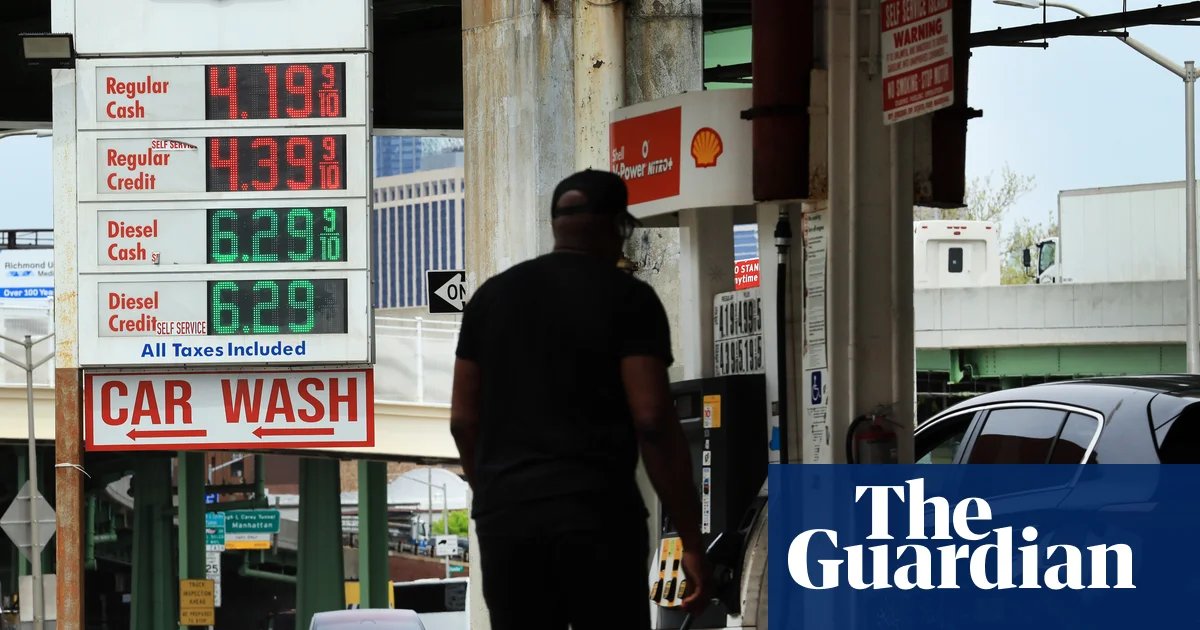
Stat of the day: Oil price rises above $126 a barrel to reach highest price since 2022
The price of Brent oil jumped more than 13% in 24 hours to climb above $126 a barrel on Wednesday, reaching its highest level since 2022. The surge came after Donald Trump said the US blockade of Iranian ports could last months, amid the stalling of peace talks.
The Filter recommends: Ultra-light yet indestructible, our favorite cast-iron pan is finally on sale
If you’re in the market for a cast-iron pan, now might be a good time to invest: former Bon Appétit food writer Karen Yuan’s favorite cast-iron pan is on sale. She describes it as a “rare cast-iron pan that feels nimble” and having “fixed everything I hated about cast iron”. Strike while the iron is hot!
Don’t miss this: How one New York gym built a pipeline away from prison
By the age of 27, Coss Marte, a former drug dealer, had been incarcerated for seven years. But after developing a workout in prison, he came up with a business plan for a gym run entirely by former felons. Debra Granik’s new documentary series, which she likens to an “urban novel”, charts the arbitrary hurdles and prejudices from investors that Marte and his business faced: “The hardest thing that we’re going to face as a society is to embrace the willingness to change, in prison reform and rehabilitation,” he says.
Climate check: British ad firm’s billion-dollar greenwash of US oil industry uncovered
The UK-based advertising corporation WPP helped the oil companies ExxonMobil, Chevron, Shell and BP spend an estimated $1.5bn on ads in the US since the 2015 Paris climate agreement, an analysis shows. Over the last decade, these companies used “deceptive and misleading” communications strategies to obstruct policies designed to curb the reliance on planet-heating fossil fuels, a congressional investigation concluded in April 2024.
Last Thing: The Rendlesham Forest mystery: ‘It’s the perfect storm of a UFO case’
In 1980, two US airmen reported a suspected extraterrestrial sighting near a military base in England. What they really saw remains a mystery – one that Daniel Lavelle traveled to the US to try to get to the bottom of. “Maybe it boils down to nothing more than a group of easily excitable Americans getting spooked by a deer, a lighthouse and some stars,” writes Lavelle – but he doesn’t really think so …
Sign up
Sign up for the US morning briefing
First Thing is delivered to thousands of inboxes every weekday. If you’re not already signed up, subscribe now.
Get in touch
If you have any questions or comments about any of our newsletters please email newsletters@theguardian.com