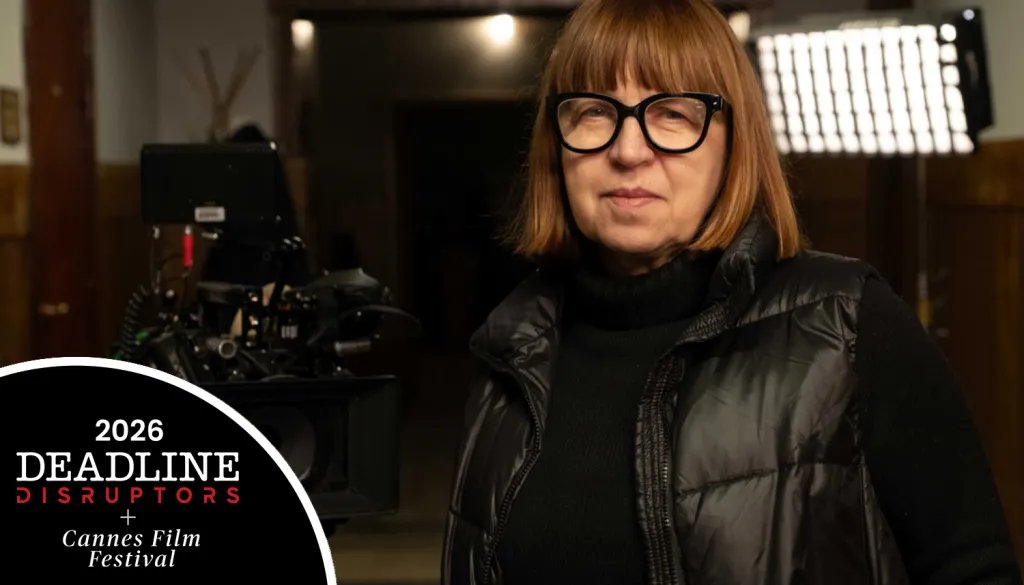
Polish producer Ewa Puszczyńska has long been one of the country’s most recognized film producers who has steadily built a reputation for supporting some of the most ambitious cinema to come out of Europe across the last decade. She’s worked with directors such as Paweł Pawlikowski, David Lynch, Jonathan Glazer, Jesse Eisenberg and Agnieszka Smoczyńska to name a few but it’s her partnership with Pawlikowski that propelled her career to international status.
She first worked with the Polish filmmaker on his 2013 BAFTA and Oscar-winning film Ida and has since produced his triple Oscar-nominated film Cold War as well as this year’s Cannes competition title Fatherland, which is Pawlikowski’s first film in eight years. The title, which stars Hanns Zischler and Sandra Hüller, premiered at the Grand Théâtre Lumière on May 14 and received a six-minute ovation while Deadline’s review called the film “a masterclass in artistic discipline.”
Speaking in advance of the festival, Puszczyńska admits she and Pawlikowski now have established a creative shorthand and key to their ongoing collaboration has been “finding a common ground.”
“You have to be on the same level with the artistic work you are doing because you are going on this artistic journey together,” she says. “There can be tough moments when tensions are high, so you have to be unified towards the same goal.”
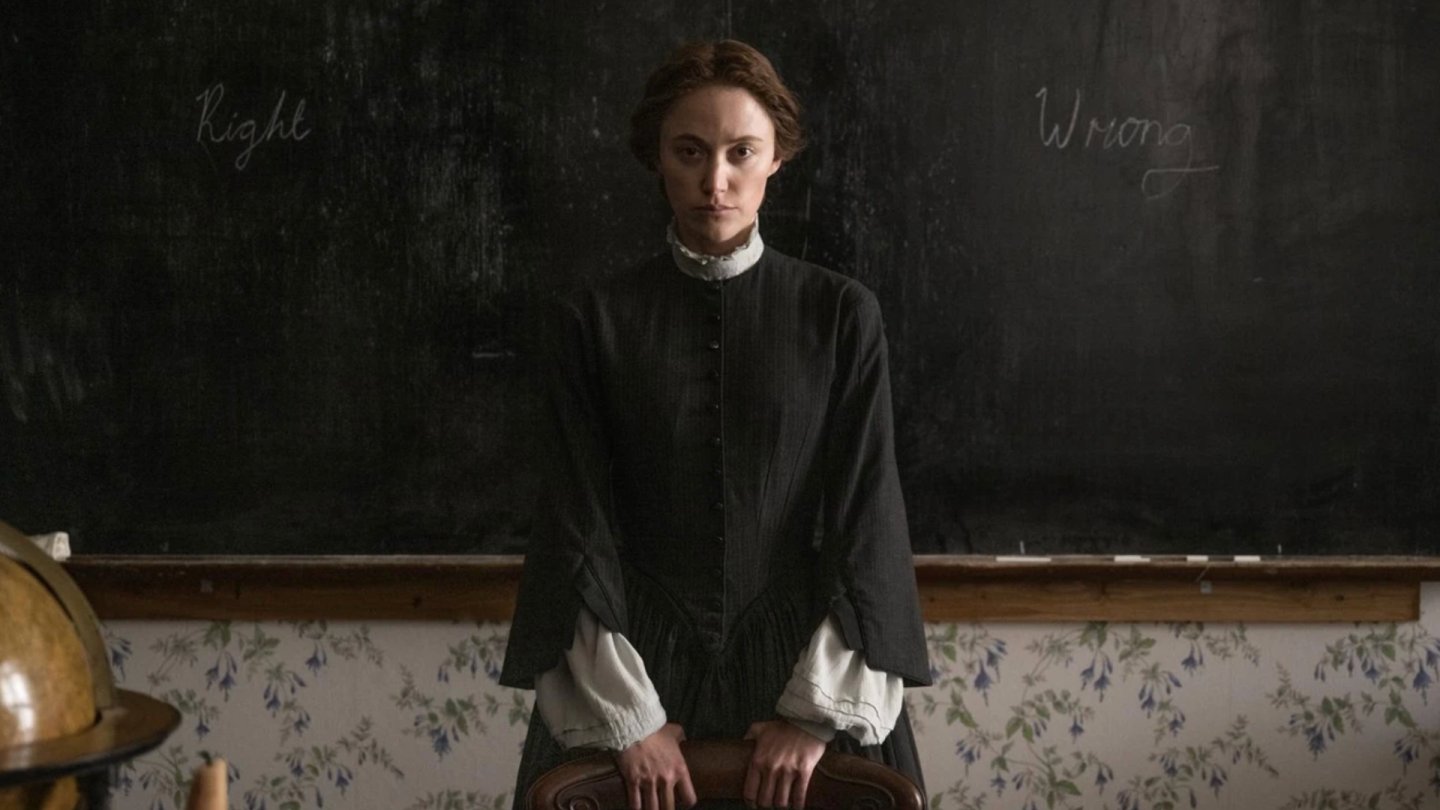
Fatherland, which Pawlikowski directs from a screenplay he co-wrote with Hendrik Handloegten, centers on the relationship between the Nobel Prize-winning writer Thomas Mann (Zischler) and his daughter Erika (Hüller). Set in the summer of 1949, at the height of the Cold War, the two embark on a challenging and emotional road trip in a black Buick, taking them across a Germany in ruins from U.S.-dominated Frankfurt to Soviet controlled Weimar. Returning home after 16 years of exile in the U.S., Mann has to face not only a divided fatherland, but also a deep fracture within his own family.
“It was a very fast-moving production,’ says Puszczyńska of the German-language film. “And it was quite a long-process of shooting because we were shooting across so many locations scattered across two regions of Poland and Germany. It was a lot of jumping from place to place because, as much as we could, the process was chronological. It was challenging.”
‘Fatherland’
Agata Grzybowska.
She credits her Polish crew as being “really well organized,” ensuring the 39-day shoot when as smoothly as possible. Fatherland had the same team and HoDs who worked across Ida and Cold War, and that, she says, was integral to getting such an ambitious project across the line. “It was like coming back to the family and coming back to the people who know Paweł,” she says. “It was really nice and I think everybody appreciated the way we work.”
Pawlikowski is multilingual Puszczyńska says this film really put the Polish director in his element. “Everybody was amazed that he was talking to the actors in German and then to the crew in Polish and constantly switching languages,” she says. “He goes into so much detail. It’s very woven and each element is in place. Everything is consistent and Paweł takes care of every single detail. Even when he writes the script, he puts links to music in the script so we can listen in the script and in the film later. He’s that kind of creator. He takes care of everything, and you can only be happy that you were a part of it and that you did your tiny job to make it happen.”
Throughout her wide-ranging and open conversation with Deadline, Puszczyńska is incredibly modest, often saying how “luck” has played a big part during her career. She credits the Polish Film Institute as being integral to building the nation’s infrastructure with its generous 30% tax credit. “They’ve really helped Polish producers go from minority productions to international ones,” she says.
She’s also optimistic about the growth in the local production industry, citing a surge of younger producers, such as Lava Films’ Mariusz Wlodarski (The Girl with the Needle), as key to the growth Poland’s production landscape.
But with a credit list that includes Lynch’s Inland Empire, Glazer’s Oscar-winning The Zone of Interest, and Eisenberg’s A Real Pain, which also earned two Oscars, it’s hard to feel like Puszczyńska’s career is down to just luck.
“I choose projects that deal with subjects that are important for me as a human being, and as a woman,” she says. “It needs to grab me in my gut. Even if it’s not perfectly written yet and there’s time to develop it, I think, ‘Let’s go on this journey together.’”
She continues: “It doesn’t matter which language, whether it’s German or Polish or English. Fatherland is a Polish film but it’s a subject that is very contemporary and can translate to what’s going on now in the world. Even if it’s German language, it speaks to me and it speaks to people and it’s part of European culture. Thomas Mann is part of European culture, and he has a lot of admirers in Poland, so language doesn’t matter.
“But what I don’t like is foreign projects that come to me at the very last stage and are just missing some money. I like to be a real partner and work together.”
First steps & what’s next
Puszczyńska knew from a young age that she wanted to work in the creative sector and recalls often putting photos and illustrations alongside her essays in school. She became skilled in languages and before landing a job at renowned Polish outfit Opus Film, she worked for a translation company that was responsible for putting subtitles and voiceovers to projects. “It was a really interesting job because I watched a lot of films and then had to figure out how to put the English into Polish so that people could understand, so it was a very good exercise.”

Kieran Culkin and Jesse Eisenberg in ‘A Real Pain’
Searchlight
She spent some time translating on international shoots coming into Poland from before she was brought aboard a commercial job for BMW North America which Opus Film was producing for the company locally. Initially, the plan was for cars to drive across the frozen lakes in Poland but because the winter had been mild, the lakes weren’t frozen enough for the shoot.
“We were on the verge of losing this job,” she says. “And I liked this job. So, I said, ‘Let’s subcontract this job with our supervision somewhere up in Northern Europe.”
The project ultimately ended shooting in Finland, which she oversaw during a brutally cold winter, and that savvy approach landed her a full-time job at Opus Film, where she spent nearly two decades of her career. She cut her teeth as a line producer on Lynch’s 2006 title Inland Empire after the late director, who was a frequent attendee at Poland’s Camerimage Film Festival, decided to shoot part of the film in the country.
“It was winter and it was very cold, but it was beautiful,” she recalls. “There was no script and he was scribbling something on paper the night before and I was begging him to give me something, so I had time to prepare. It was really challenging but it was a great challenge.”
She produced Pawilkowski’s Ida and Cold War through Opus before leaving the outfit 10 years ago to set up her own shingle Extreme Emotions. Since then, she has built a reputation for supporting a variety of international directors who explore complex and human stories, often rooted in history and identity such as The Zone of Interest and A Real Pain. She’s just coming off the back of producing Polish HBO series Women’s Hell, directed by Anna Maliszewska and also produced Ido Fluk’s German music-drama Köln 75, which premiered at Berlinale last year.
“I’m very lucky to work with great directors and watch their talents and the way they work,” she says. “But our focus is always to be honest with ourselves, honest with the film and really deliver the best we can and the best coming out from our talents.”
Up next, Puszczyńska has two titles she’s hoping to get off the ground: A Japanese-Polish-Canadian co-production dubbed Idiot Son, inspired by the life of Japan’s Nobel Prize-winning novelist and essayist Kenzaburō Ōe, and a yet-unnamed Yiddish-language project that is at script stage.
“I’m very careful and picky about the projects I chose because when I choose them, I really give my time and heart to work on them,” she says. “I can’t just treat it like another film – I give it my all and this really the only way to go.”