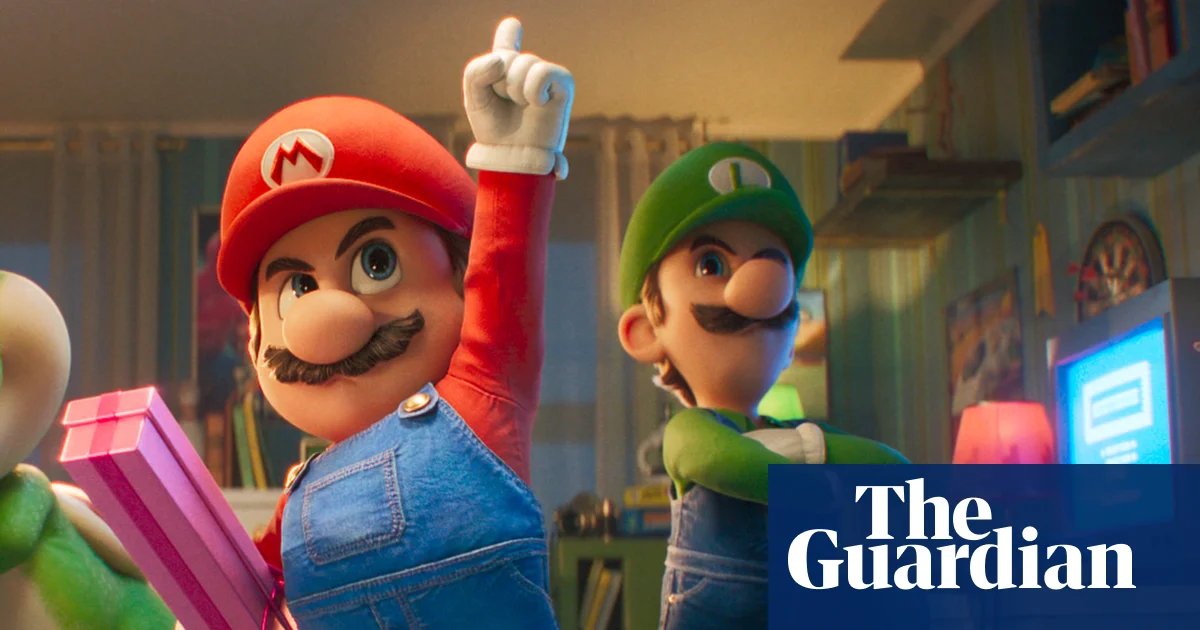
The Washington state businessman who inspired Nintendo to give the name Mario to its mustachioed, superhero plumber did not have a brother named Luigi like the fictional video game star famously does.
But it has only just been determined that Nintendo may have unknowingly named its mascot’s brother after another of the real-life Mario’s close relatives: his father, Luigi, whose biography evokes that of millions of 20th-century US immigrants from Italy.
A senior researcher with the genealogy service MyHeritage, Elisabeth Zetland, made that discovery while recently exploring the ancestral background of the late Mario Arnold Segale. And, as far as she can tell, “it’s just a coincidence” – though potentially one of the biggest in video game industry history, she told the Guardian in an interview.
Segale, as gaming enthusiasts have known for years, was Nintendo of America’s landlord in the 1980s in Tukwila, Washington. And the company based Super Mario’s moniker off Segale – along with aspects of the businessman’s appearance, reportedly – before a series of video games tied to the Italian-American character went on to sell hundreds of millions of copies across various platforms.
Decidedly less is known, however, about the inspiration for Super Mario’s loyal if skittish sidekick and brother, Luigi. The Japanese creator of the Super Mario franchise, Shigeru Miyamoto, has said the series’ original game required two characters who were relatively alike – and Nintendo chose Luigi for the sidekick because the popular Italian name rhymes with Japan’s word for “similar”.
Others have theorized he may have gotten his name from a pizza parlor near Nintendo’s Washington office at the time that was dubbed Mario & Luigi’s.
Nintendo did not immediately respond to a request for comment about whether it realized Segale’s father was named Luigi. Whatever the case, it was amid such uncertainty that Zetland entered the picture. She had decided to use the occasion of The Super Mario Galaxy Movie – which has dominated the box office since its release in early April – to compile Segale’s familial history.
And the France-born Zetland, who is of Italian descent herself, said it quickly became clear that a father named Luigi was a figure who loomed largely in the authentic Mario’s life, citing the birth, marriage, census, immigration and other historical records she consulted.
Luigi Maria Segale was born in 1886 to Italy’s community of Favale di Malvaro, near Genoa, to a family whose patriarch was a bricklayer. In 1909, Zetland learned, Luigi and his brother, Giuseppe, sailed aboard the steamship Prinzess Irene to Ellis Island, New York, and headed to the Pacific north-west – settling around Tukwila, Washington, south of Seattle.
Zetland located US military records which showed Luigi – who adopted the anglicized first name Louis – served his new country’s armed forces beginning in 1918 during the first world war. He was honorably discharged a year later and subsequently made a living as an independent farmer, a journey that echoed those of 4 million Italians grappling with economic hardship and political upheaval who immigrated to the US over a 35-year period beginning in 1880.
By 1940, Luigi and his wife, Rina, had a six-year-old son named Mario, and census records demonstrate that his family had attained financial stability through their farm, where they grew produce such as tomatoes, lettuce and onions – and then trucked them to Seattle’s urban markets to sell.
Other documents which Zetland encountered and cited in a 13-page report about her findings provided glimpses into the upbringing of the man who would one day inspire Super Mario.
Mario’s parents feted him on his 12th birthday in 1946 with a meal and cake prepared in the culinary style of the Ligurian region that includes Genoa, according to a social column in their local La Gazzetta Italiana. An accordion – or fisarmonica – performer played along as guests spent the afternoon singing together at a home in Seattle that the Segales had just bought at the beginning of the US’s post-second world war housing boom, a symbol of the prosperity they had managed to achieve after immigrating.
Louis and Rina Segale later earned recognition from the Catholic Northwest Progress newspaper for their support of children enrolled in the Archdiocese of Seattle’s foster program.
“It’s really a legacy of Italian dreams and American opportunity,” Zetland said.
The couple has since died. Meanwhile, before his own death in 2018, their son Mario embarked on a successful construction and real estate career in and around Tukwila. Among his various building tenants were Nintendo, whose staff was struggling to come up with a name for a squat, red-capped, high-jumping character who had debuted in the arcade classic Donkey Kong.
The company arrived at Super Mario one day when Segale marched into its offices and upbraided one of its officials because the group’s rent was overdue, as author David Sheff wrote in Game Over: How Nintendo Conquered the World.
Segale was evidently not humored by his link to Super Mario. In one of his few comments on the matter in 1993, shortly after the publication of Game Over, the infamously press shy Segale told the Seattle Times: “You might say I’m still waiting for my royalty checks.”
His 2018 obituary added that he “always ducked the notoriety” that came with Super Mario’s namesake and “wanted to be known instead for what he accomplished in his life”.
Louis Segale’s thoughts about sharing a name with Super Mario’s brother are lost to time. He passed away in 1981, or five years before the Nintendo Entertainment System title Super Mario Bros introduced Luigi to the gaming public.