
Kendra Pierre-Louis: For Scientific American’s Science Quickly, I’m Kendra Pierre-Louis, in for…
Rachel Feltman: Wait…
Pierre-Louis: Oh hey Rachel!
On supporting science journalism
If you’re enjoying this article, consider supporting our award-winning journalism by subscribing. By purchasing a subscription you are helping to ensure the future of impactful stories about the discoveries and ideas shaping our world today.
Feltman: Oh hey Kendra, thanks so much for filling in but I got this.
For Scientific American’s Science Quickly, I’m Rachel Feltman. You’re listening to our weekly science news roundup.
Yes, the rumors are true: I’m back from parental leave and settling back in here at Science Quickly. I’m thrilled to be back in your feed, so let’s dive right into today’s episode.
We’ll start with some health news. As the available treatments for HIV have improved, so have the number of people living into middle and old age with HIV. In the U.S., more than half of people with HIV are now age 50 or older, and 4.2 million people in that cohort are living with HIV worldwide. But while people with HIV can now live longer lives with the help of medication, researchers have noted that they seem to develop age-associated conditions—things like bone density loss, heart and kidney disease, cognitive decline and certain cancers—at an earlier age than their HIV-negative peers. Some studies looking at epigenetic measures of aging, or the changes in your DNA that accumulate over time, suggest that HIV infections can accelerate a person’s biological aging process by several years. While we don’t yet know for sure what factors might intersect to fuel this process, we do know that chronic inflammation is associated with accelerated aging. We also know that HIV causes chronic inflammation, because the immune system is always “turned on” and on high alert due to the presence of the infection.
Today, researchers at the annual meeting of The European Society of Clinical Microbiology and Infectious Diseases presented their latest findings on this problem. Their preprint paper suggests antiretroviral therapy, or ART—the standard course of treatment for people with HIV—does work to combat some of the virus’s potential to speed up aging, bringing the average difference between biological and actual, chronological age from 10 years to about 4 after just around a year and a half of treatment.
To come to these findings, the researchers developed a tool called a plasma proteomic ageing clock, or PAC. Using the Swiss HIV Cohort Study, which has followed people living with HIV in Switzerland since 1988, they trained the PAC to analyze 416 different proteins found in the blood and associated with aging. They used the tool on a subset of study subjects who had supplied blood samples for several years after an HIV diagnosis before actually starting ART. When they looked at those subjects they were able to track how biological aging accelerated with infection—and then slowed or even reversed with treatment. In a press release, the study authors called for other researchers to use the tool on more diverse populations to see if the results held up.
Speaking of inflammation and health, an article in Scientific American’s latest print issue dives into how this immune response can also drive heart disease. I’ll let SciAm’s chief newsletter editor Andrea Gawrylewski jump in to tell you more.
Andrea Gawrylewski: Hey, Rachel. Yeah, for decades, cardiologists have really focused on four big risk factors for heart disease, high blood pressure, smoking, high levels of bad LDL cholesterol and type 2 diabetes.
But nearly a quarter of all people who die from heart disease or cardiac illness do not have one of these four risks. So this has really baffled researchers for many years.
Scientists are now starting to pay attention to a new factor that they suspect is contributing to heart disease, and that is chronic inflammation.
Inflammation is the body’s built-in alarm system. It activates when the immune system senses it’s something untoward happening. For instance, when the body detects a virus or bacteria, it recruits immune cells to the scene, where those cells launch an all-out attack against that bacteria or virus and the cells it infected.
But sometimes this process doesn’t cool down or shut off, and instead it starts harming the body’s healthy tissues. Such chronic inflammation, as it’s called, it turns out, may accelerate cardiovascular problems.
In the case of the heart, when cholesterol builds up in the arteries, it can form these jagged needlelike crystals, and they tear the artery walls and trigger this inflammatory response. Prolonged inflammation actually can start to degrade heart function.
So now researchers are testing potential drugs for their ability to lower inflammation. One of these is a drug that’s been around a while to treat gout, which is a disease of inflammation. That drug, called colchicine, was approved by the FDA in 2023 to treat heart disease. Those study results of colchicine have been mixed.
One clinical trial showed that those who took it had 30% less chance of cardiac incidents, especially when combined with statins. And there are several other drugs that target inflammation that are also in the pipeline.
To stay updated on this story and to get the inside track on other science news, subscribe to my newsletter, Today in Science.
Thanks Rachel!
Feltman: Thanks, Andrea! Listeners, don’t forget to sign up for Today in Science to get SciAm’s best stories sent straight to your inbox. You can find the link to do that in our show notes.
Now for something completely different: bees. Bees? Bees! Like… a lot of bees.
According to a study published last week, there could be nearly 5.6 million bees living beneath the earth in Ithaca, New York’s East Lawn Cemetery. While news of such a great abundance of bees buzzing around underground and in a graveyard no less might put you on edge, this isn’t some zombie horror story: Andrena regularis is a species of ground-nesting bee. Like some 70% of all bee species found in the U.S., these pollinators burrow underground instead of building hives. They’re known for being solitary—nesting alone instead of in big colonies—but as this new study shows, that doesn’t mean they’re thin on the ground or under the ground as it were. The study authors watched for bees coming out of the ground to mate and forage for food during the spring of 2023, and they estimate that 5.56 million individuals call the cemetery home.
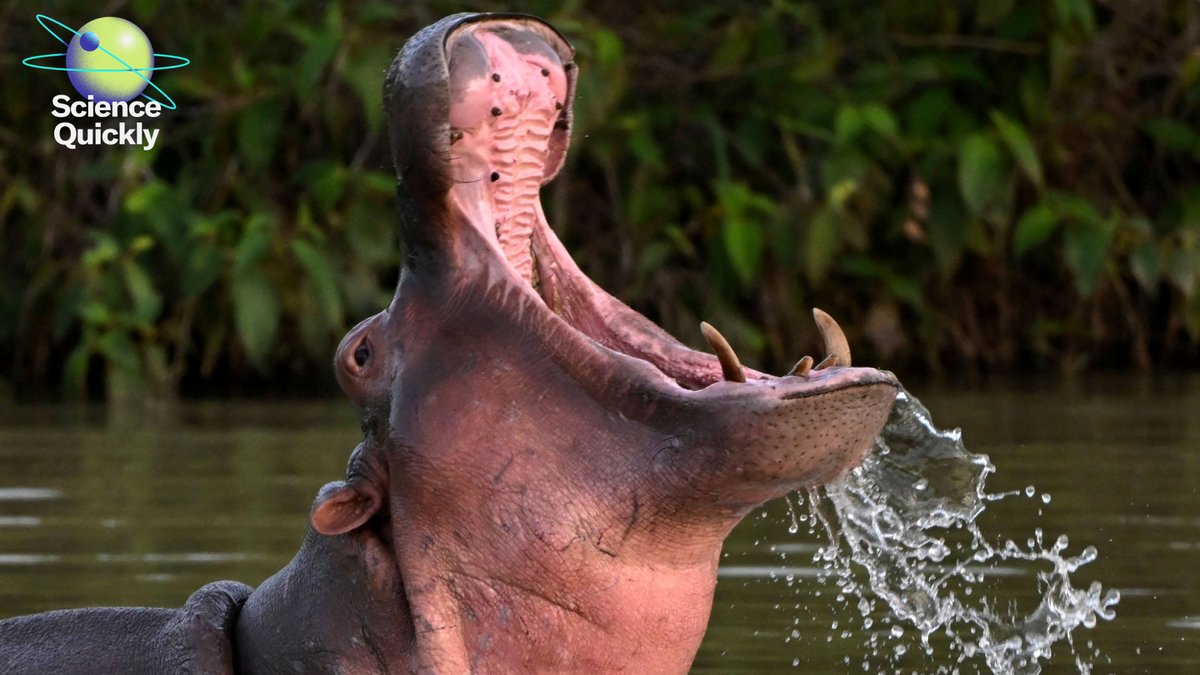
We’ll end with some sad news for cocaine hippo fans. If you’re just tuning in now, so to speak, the hippopotami or hippopotamuses commonly known as “cocaine hippos” were once owned by the late drug trafficker Pablo Escobar. He had four of the animals brought to his estate in the Antioquia region—quite illegally, I might add—in 1981, and they’ve been feral since his death in 1993. Hippos are big, dangerous, hungry animals, so the presence of this growing hippo population has posed more and more of a threat to local people, plants, animals and waterways. And these hungry hungry hippos have been busy.
By 2022, there were an estimated 200 or so cocaine hippo descendents on the loose, and the Colombian government started efforts to sterilize them—a slow, expensive process that quite literally puts human lives on the line—they also started talking about relocating as many of them as possible. Unfortunately last week, with at least 169 hippos still alive and kicking, the government announced plans to euthanize 80 of them. It seems that the sterilization efforts are no match for the cocaine hippo’s rate of reproduction, and that none of the countries or zoos Colombia reached out to have opted to take any hippos off their hands.
If this news upsets you I totally get it ‘cause hippos are very cute from a distance. But, there are a few key things to keep in mind. For starters, hippos eat an average of 88 pounds of plant matter a day, so just from eating alone they can have a huge impact on their ecosystems and Colombia is not a place they are native to. They also poop around 20 pounds of poop every day, and even in areas where they’re not invasive, that excrement can choke up waterways and kill fish. And not for nothing hippos, while they may look cute again from a distance, are also the deadliest large land mammal on the planet, with a body count of around 500 humans per year. They’re super territorial and have a tendency to charge and sink boats, or even outright attack people with their extremely sharp teeth. So, while it would obviously be ideal if no hippos had to cross the rainbow bridge, you really can’t blame the Colombian government for deciding that the cocaine hippo era should finally come to an end.
That’s all for this week’s news roundup. We’ll be back on Wednesday with a special episode for Earth Day—and a surprisingly optimistic one, at that.
Science Quickly is produced by me, Rachel Feltman, along with Fonda Mwangi, Sushmita Pathak and Jeff DelViscio. Thanks again to Kendra Pierre-Louis for being a marvelous host in my absence. This episode was edited by Alex Sugiura. Emily Makowski, Shayna Posses and Aaron Shattuck fact-check our show. Our theme music was composed by Dominic Smith. Subscribe to Scientific American for more up-to-date and in-depth science news.
For Scientific American, this is Rachel Feltman. See you next time!


