A Chicago-born teen who advocated for his parents’ release from US immigration authorities’ custody while fighting terminal cancer has died shortly after reuniting with them in Mexico, his family has told media outlets.
The parents of 18-year-old Kevin González had been taken into Immigration and Customs Enforcement (ICE) custody in Arizona in mid-April after they crossed the US border from Mexico without permission in an attempt to see him in Chicago as his health waned. González since then traveled to be with relatives in Mexico, and in recent days he had publicly pleaded for them to be released from ICE custody so they could be with him as he battled metastatic stage four colon cancer.
A federal judge ordered the release of Isidro González Avilés, 48, and Norma Anabel Ramírez Amaya, 43, on Thursday, as the Spanish-language US news network Telemundo reported. And, as Telemundo also noted, they had been able to be back with Kevin at his maternal grandmother’s house in Durango, Mexico, on Saturday afternoon.
Kevin’s brother, Jovany Ramírez, and an aunt of his then reportedly told the network that he had died late Sunday afternoon.
In an interview with the network at that house during Kevin’s final hours, González Avilés described kneeling at his son’s feet, asking for forgiveness if he had ever let him down in anything and telling him he loved him very much.
“I don’t think he deserved the suffering he had,” a weeping González Avilés said on video.
Democratic US congressman Jesús “Chuy” García of Chicago issued a statement Sunday saying the Gonzalezes “should have had more time together”.
The statement from García, who was born in Durango himself before his family immigrated to the US, added that he would “honor Kevin and his family by vowing to continue fighting for a humane immigration system that treats everyone with dignity”.
Kevin, a US citizen who was born in Chicago but raised in Mexico, received his terminal diagnosis in January. He was visiting relatives in Chicago and had fallen ill at the time of his diagnosis, and he began undergoing treatment there.
After Kevin stopped responding to medical treatment, González Avilés and Ramírez Amaya sought permission to travel to the US to see their son. But the US Department of Homeland Security (DHS), ICE’s parent agency, said the pair were denied due to “previous unlawful presence and entries into the United States”.
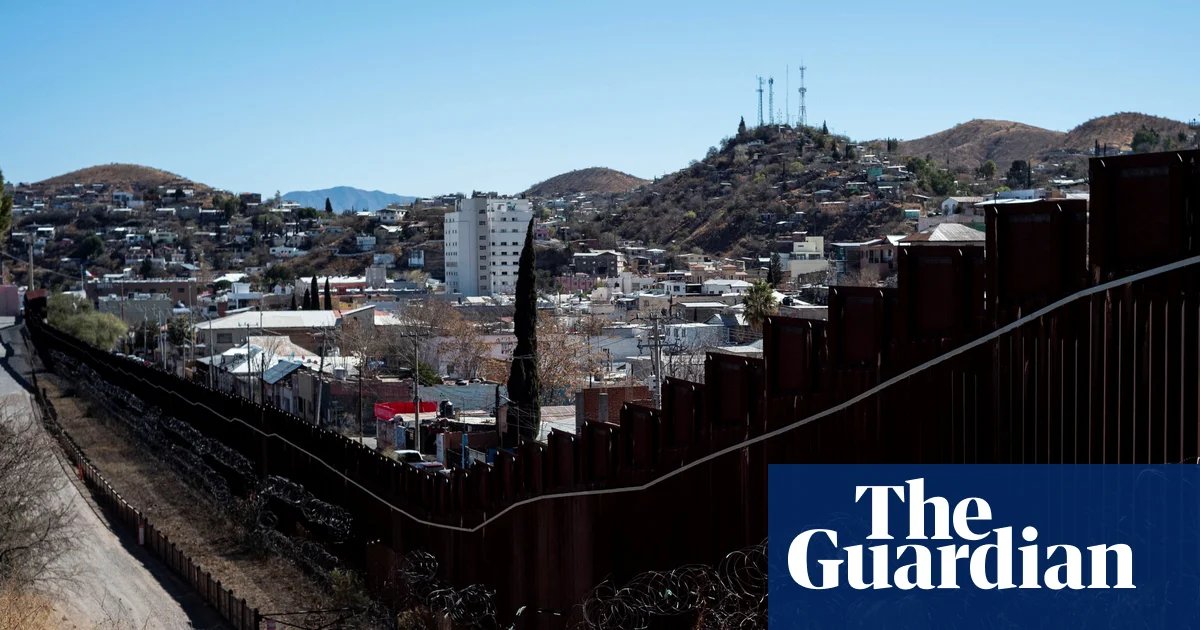
González Avilés and Ramírez Amaya then tried to enter the US without permission, but ICE arrested the two near Douglas, Arizona, on 14 April and sent them to a detention center.
ICE made those arrests while at the forefront of a mass immigration detention and deportation campaign that the US embarked on after the start of Donald Trump’s second presidency in early 2025.
A document from a doctor who was treating Kevin at the University of Chicago medical center recounted how Kevin ultimately decided to return to Mexico to be with family. That 28 April document, reported on by Telemundo, requested a “compassionate release” for at least Ramírez Amaya so that she could be with Kevin, who was “no expected to survive long”.
Kevin later appeared in a Telemundo story published online on 6 May, asking that “everything possible be done” for his parents to be released and for him to spend “the last days with them”.
One day later, a US district judge in Tucson, Arizona, ordered Kevin’s parents to be released from custody and for their deportations to be expedited. They were then deported to Mexico on Friday and got to see Kevin on Saturday, one day before his death.
Ramírez Amaya, once in Mexico, told Telemundo it was grueling for her to see her son’s deteriorated condition. “I never imagined seeing him like this – no,” she remarked while weeping. “It’s very sad.”
Aspects of Kevin’s case called to mind that of Ofelia Torres, a 16-year-old Chicago girl who died in February from cancer after pushing for her father’s release from ICE custody.
Cases such as hers and Kevin’s have highlighted the human effects of the Trump administration’s immigration crackdown.