The Vancouver Canucks didn’t have to go far for a new head coach.
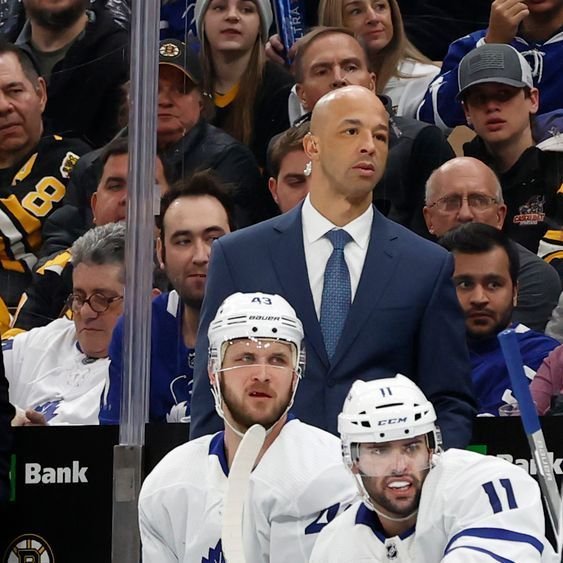
Manny Malhotra, who has spent the past two seasons as coach of the Canucks’ AHL affiliate, was promoted to lead the NHL team on Monday. Malhotra, whose father is from India, is believed to be the first head coach of South Asian descent in league history.
Promoting Malhotra, who also played three seasons for the Canucks, is the latest personnel move for an organization that has elected to look inward for help during one of the most challenging periods in the club’s history.
Malhotra, 46, got his first coaching job in 2016 with the Canucks as a development coach for one season before being promoted to an assistant coach for three seasons. He left the Canucks to spend three seasons as a Toronto Maple Leafs assistant and returned in 2024 to take over the Abbotsford Canucks.
Malhotra guided Abbotsford to consecutive playoff appearances and captured the league championship, the Calder Cup, in 2025. It was the first time that the Canucks had an AHL affiliate winning the Calder Cup.
Hiring Malhotra comes more than two weeks after the Canucks promoted Ryan Johnson to general manager. Johnson, who had been with the Canucks since 2013-14, had served as the team’s assistant GM over the past two seasons.
“Manny and I have been in the battle together before, so I know firsthand what a good teacher, leader, and quality person he is,” Johnson said in a statement. “Connection, consistency and putting in place the proper foundation will be key for our group moving forward. Manny is a great coach who has the right skillset and mentality to help players develop and get better each day.”
In addition to promoting Johnson, the Canucks also named Daniel and Henrik Sedin co-presidents of hockey operations. The identical twins, who spent their entire playing careers with the Canucks, replaced Jim Rutherford — who remains with the franchise as an adviser and alternate governor.
That quartet is tasked with turning around a franchise that went from being a game out of the Western Conference finals to finishing last over a span of 18 months.
The upheaval began during the 2024-25 season — a campaign derailed by injuries and inconsistency. There were also internal issues between J.T. Miller and Elias Pettersson that became public, leading to Miller being traded in January 2025 to the New York Rangers. Pettersson, meanwhile, remains with the Canucks after he agreed to an eight-year contract worth $92.8 million in March 2024.
Vancouver was forced to find a new head coach when Rick Tocchet, who had them a win away from the conference finals the year before, left to become the head coach of the Philadelphia Flyers. Tocchet would lead the Flyers to the second round of the playoffs in his first season.
He was replaced by assistant Adam Foote ahead of a campaign that would come to be one of the worst in team history.
Their struggles were further compounded by the fact that more players could be leaving. It’s a process that began in December when they traded Norris Trophy winner and captain Quinn Hughes to the Minnesota Wild for Zeev Buium, Liam Ohgren, Marco Rossi and a 2026 first-round pick
It was just the start, with the Canucks eventually moving on from David Kampf, Tyler Myers, Lukas Reichel and Kiefer Sherwood ahead of the NHL trade deadline.
Vancouver finished with the worst record in the NHL, and it fired Foote days after Johnson was promoted.
The last-place finish did mean the Canucks had the strongest odds to win the draft lottery, but they fell to pick No. 3.
Rebuilding through the draft is one way the Canucks will seek to add more around a core featuring Brock Boeser, Jake DeBrusk, Thatcher Demko, Filip Hronek, Kevin Lankinen, Marcus Pettersson and Pettersson.
PuckPedia projects the Canucks will have $21.9 million in cap space to address a roster that allowed the most goals per game while also having the worst penalty kill last season. Although the Canucks were above the league average in power-play success rates, they were tied for the second-lowest goals per game in the NHL.