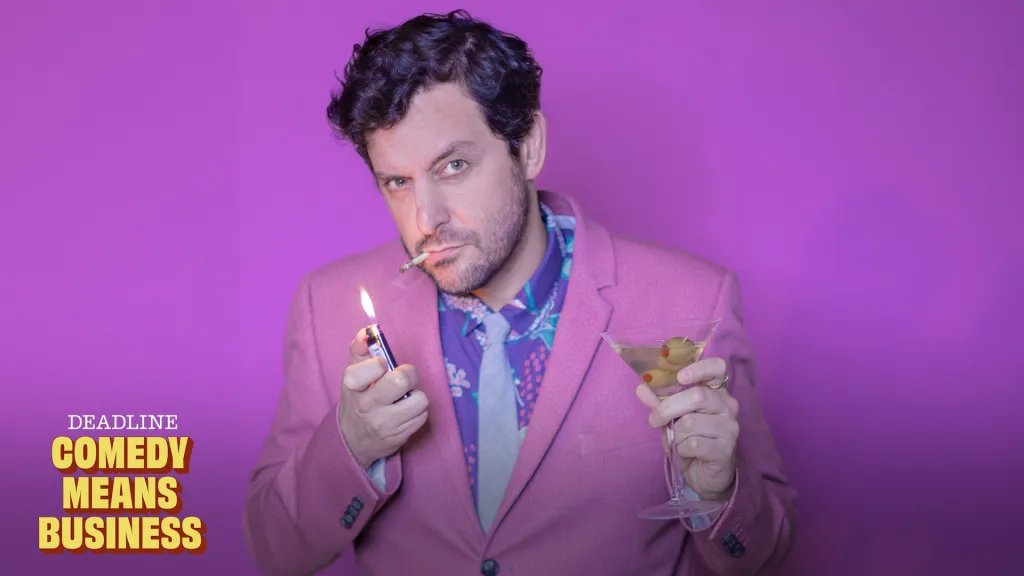
With late-night at a crossroads, Ben Gleib is forging a new path.
On May 28, just a week after the permanent shuttering of The Late Show, Gleib is set to launch Good Night with Ben Gleib, the world’s first late-night talk show built specifically for YouTube.
It’s a bet rooted in the belief that late-night as a format is as vital as ever — even if the infrastructure that gave rise to it is crumbling.
Between exorbitant production costs and the continual erosion of linear television audiences, traditional late-night talk shows have been under mounting pressure for years, increasingly consumed via short-form clips scattered across social media rather than live and in full. In the past year, growing political and corporate pressures surrounding both The Late Show and Jimmy Kimmel Live! have only intensified questions around the long-term sustainability of the format on broadcast television.
For Gleib, the solution to late-night’s problems is not reinventing the wheel, per se — although his show does feature a number of novel elements, including a virtual audience section at tapings and a post-show after-party experience. Rather, it’s embracing the reality of how content is consumed today — adopting YouTube as a new home base rather than a mere promotional arm.
With Black Eyed Peas drummer Keith Harris serving as band leader and Stewart Bailey (The Daily Show, Last Call with Carson Daly) as showrunner, Gleib’s show most importantly boasts a dramatically leaner footprint than a traditional network talk show.
The crazy part? He’s taping shows from his home in Los Angeles, producing a first season of 42 episodes, plus 42 post-show episodes, for around $1.5 million.
For Gleib, a self-described night owl who became obsessed with late-night as a child, Good Night with Ben Gleib represents the culmination of a lifelong ambition — and something he’s been actively building toward since college. While attending UC San Diego in the late ’90s, he created and hosted The Gleib Show, a talk show serving as his honors thesis, which later ran on the National Lampoon College Network. Gleib’s work there led to a Fox pilot produced by Lorne Michaels’ Broadway Video — an early brush with traditional TV that ultimately did not move forward to series.
In the years since, Gleib has built an unusually eclectic career spanning stand-up, television hosting, podcasting, and even a presidential run. All the while, he’s kept his eye on the prize of his own late-night talk show. And he now brings his wealth of experience as a “jack of all trades” to the project he’s best suited for.
Gleib envisions Good Night scaling to become a “multi-hundred million dollar brand,” between ad revenue, tickets sold to be part of the show’s virtual audience, spinoffs, live touring extensions, merch, and much more. In today’s episode of Comedy Means Business, he discusses the years-long road to bringing the show to life, and the business plan behind the gamble.
Watch the entire conversation above.