Parenthood may put you off date night, but not necessarily for good
Elena Odareeva / Alamy
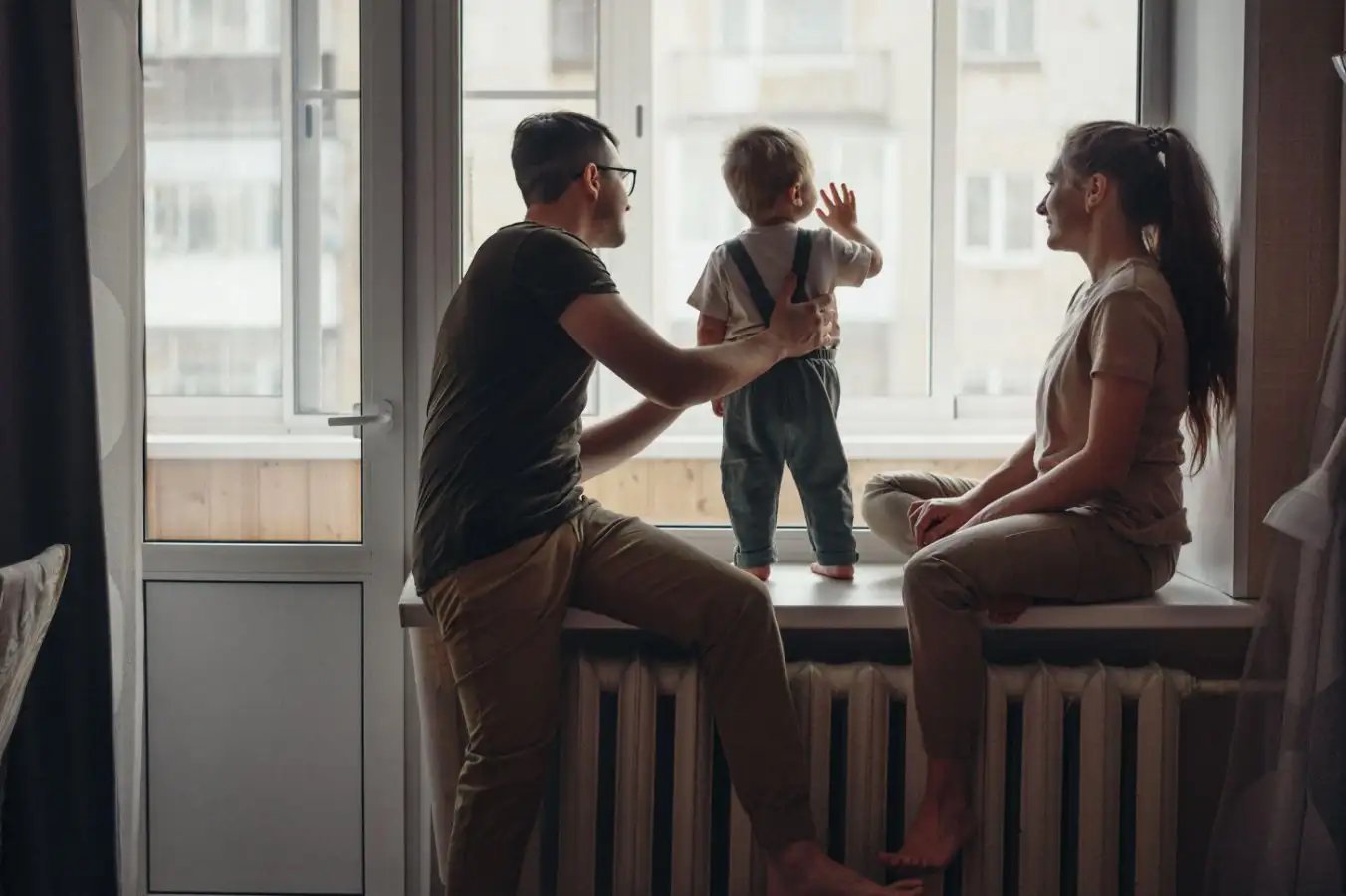
It may feel like the exhaustion of caring for a newborn leaves little room for romance. Now, researchers have found that people really do seem to love their partner less in the first year of parenthood – but there are ways to buffer against this.
Prior studies suggest that relationship satisfaction tends to decline in the two years after having a baby, but these rarely account for the state of things before pregnancy. When Agnieszka Sorokowska at the University of Wrocław, Poland, started a family, she wanted to know how her relationship was set to change. “I got pregnant, and then I wrote the grant proposal to look at this,” she says.
With her colleagues, Sorokowska recruited nearly 300 heterosexual couples without children who had been together for at least two years. Every six months, for at least two years, the participants completed surveys – independently of their partner – in which they ranked on a scale from 0 to 6 how much they loved their partner and how committed they were.
The researchers analysed results from 71 of these couples who had a baby during the study and found that pregnancy itself had no impact. But – in line with the prior evidence – the participants reported loving their partners less and being less committed to maintaining the relationship within one year after childbirth. There was no change in this time among the couples who remained without children.
Sorokowska – who presented the results at the Love, Actually and in Theory meeting in Edinburgh, UK, last month – plans to continue surveying these couples until their children reach adulthood, to determine whether the effects are long-lasting. But prior research suggests that things gradually improve. “There’s a steep decline in [relationship satisfaction] in the first year, only a small decline from year one to two, and then it seems to slowly recover [several years later],” says Valentina Rauch-Anderegg, an independent psychologist in Zurich, Switzerland.
The researchers didn’t measure how these initial changes impacted the new parents’ well-being, but Rauch-Anderegg doubts they cause substantial distress. “It’s not that we can say all these couples have relationship distress that means they need to see a therapist, but they certainly can notice something changed in their relationship,” she says.
Some of the factors that may be responsible include the physical and hormonal turmoil of pregnancy, and new parents feeling overwhelmed by childcare duties. “Simply sitting on a couch to Netflix-and-chill with your partner, or going for a walk, [often] becomes impossible,” says Rauch-Anderegg.
To prevent this, or bring some of the magic back, Rauch-Anderegg recommends asking loved ones for help and sharing any concerns with your partner. “You can make sure you’re communicating clearly about your vision for having a kid – what is the core of your relationship that you want to maintain even if there is a baby? Whether it’s a hike once a year or 20 minutes of partner time a week.”
Topics: