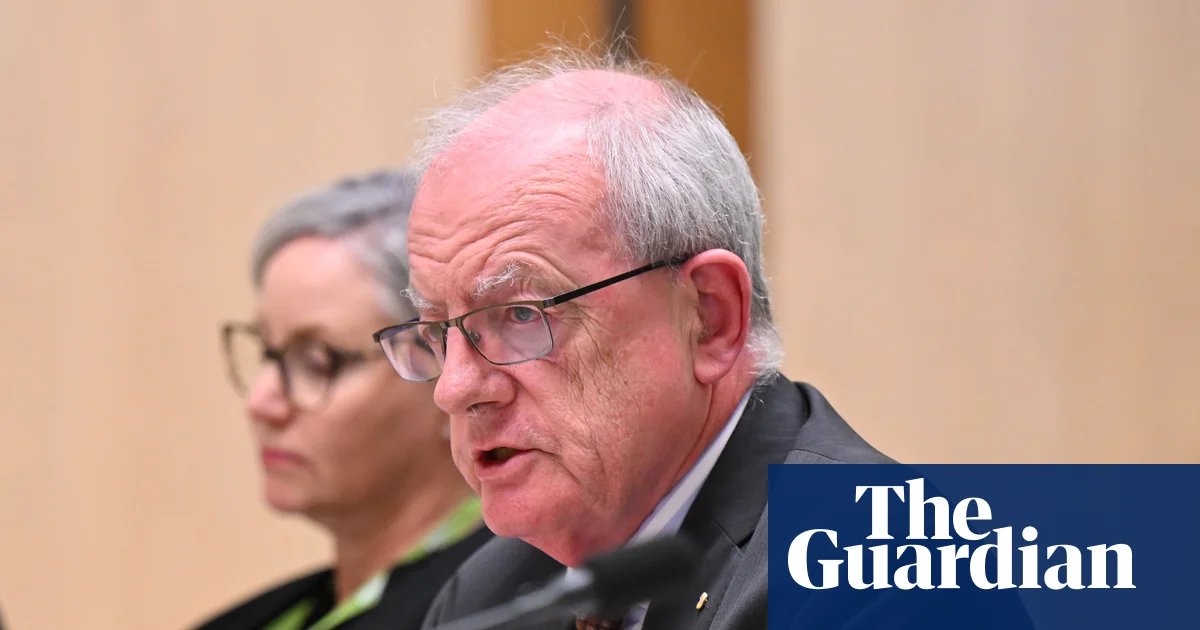
Australia’s federal anti-corruption body is filled with staff “terrified of making any mistake of fact or law”, the outgoing commissioner claims.
Paul Brereton, the National Anti-Corruption Commissioner, also defended his actions and decisions as the watchdog’s first head explaining his resignation was due to “distractions”, including two ongoing investigations into his conduct.
In a tense Senate estimates hearing on Tuesday night, Brereton said he decided to leave his post three years into a five-year term because the continued “distraction” of investigations was not in his or the institution’s best interests.
“So the fact of having been under investigation and being distracted from doing the job that I wanted to do as commissioner by the need to defend myself and by the NACC needing to defend myself, that’s why I decided to resign,” he said.
“We now have a commission in which staff are terrified of making any mistake of fact or law, because they fear they will be visited with a finding of officer misconduct.”
Gail Furness, the Nacc inspector who oversees complaints about the Nacc’s conduct, revealed on Tuesday night that she is undertaking a second investigation into the commissioner but did not reveal the nature of the complaint.
The first of the ongoing investigations is related to Brereton’s consulting work for his previous employer – the inspector general of the Australian defence force (IGADF) – while serving as the Nacc’s commissioner.
An incomplete draft report for that investigation had been handed to Brereton, and is expected to be completed soon though a timeframe was not announced.
The second investigation is into an unrelated complaint.
Furness said the investigations could continue despite Brereton’s resignation.
Brereton’s work for the IGADF related to his former position leading an inquiry into alleged war crimes involving Australian troops in Afghanistan. In a letter to the attorney general last October, he described the work as “ongoing, very modest informal assistance”.
Asked whether his conduct fell below what is expected of an anti-corruption commissioner, Brereton said: “I have said earlier that I accept that I have in some way contributed to this outcome, but I do not accept that my standards have in any way fallen below an appropriate standard.”
The Nacc’s chief executive, Philip Reed, defended Brereton, saying he had been treated “very poorly” by parliamentarians and commentators.
The deputy commissioner, Nicole Rose, announced she would resign from her role earlier in May, with her last day on 6 July. Rose told senators it was due to a personal decision.
“They will be sadly missed. I think that the commissioner has been dealt with very poorly, by, partly this parliament, partly commentators out there,” Reed said.
Brereton and the Nacc was also heavily criticised after an initial decision in 2024 to not investigate the six people referred to it by the robodebt royal commission. It subsequently reversed the decision the next year.
Furness, who received more than 1,000 complaints, found that the initial decision was “affected by apprehended bias”, after determining Brereton had not removed himself from the decision-making process despite declaring a perceived conflict of interest with one of the six individuals.
But the report also noted there was “no finding of intentional wrongdoing or other impropriety”.
A Nacc report into the referrals was eventually released earlier this year, which found two of the public servants referred by the royal commission had engaged in serious corrupt conduct.