A team of researchers in South Korea has uncovered evidence that could shed new light on how Earth’s atmosphere first became rich in oxygen, one of the most important turning points in the planet’s history.
Scientists from the Korea Institute of Geoscience and Mineral Resources (KIGAM) discovered stromatolites, layered rock structures created by ancient microbial communities, inside the Hapcheon impact crater. The site is the only confirmed asteroid impact crater on the Korean Peninsula. Their findings were published in Communications Earth & Environment, a Nature Portfolio journal.
Asteroid Impacts May Have Created Habitats for Early Life
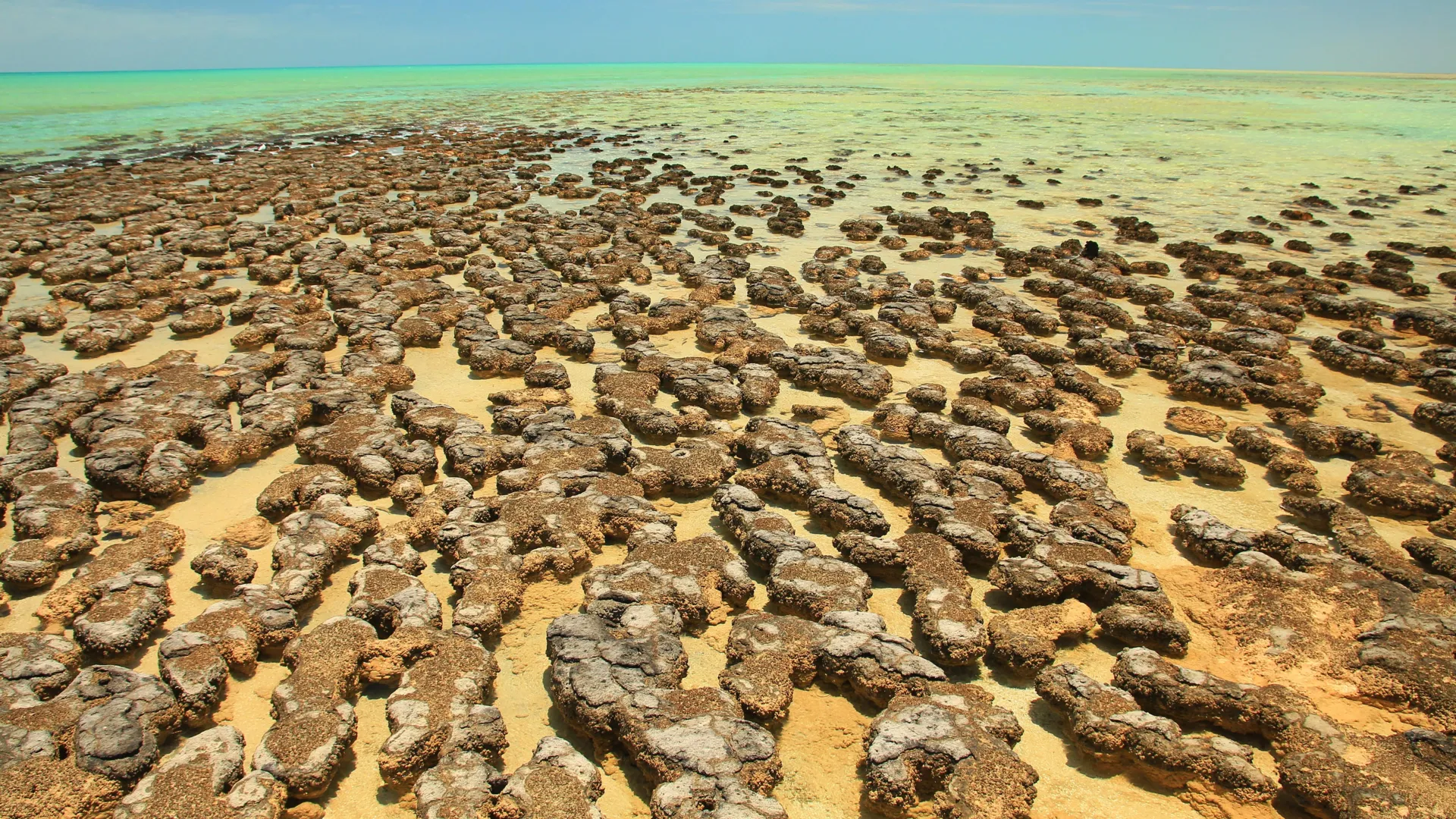
According to the researchers, the stromatolites likely formed in a hydrothermal lake that developed after an asteroid strike. The impact would have generated intense heat, melting surrounding rock and warming the water for long periods of time. Those warm, mineral rich conditions may have provided an ideal environment for ancient microbes to survive and grow.
Stromatolites are considered some of the oldest known evidence of life on Earth. They are produced by microorganisms such as cyanobacteria, which release oxygen through photosynthesis. Fossils of stromatolites date back at least 3.5 billion years.
The research team found several stromatolites in the northwestern area of the Hapcheon crater. Each structure measured roughly 10 to 20 centimeters in diameter. This is the first time stromatolites have been identified at the site.
New Clues About Earth’s Great Oxidation Event
The discovery could also help scientists better understand the Great Oxidation Event (GOE), which occurred about 2.4 billion years ago when oxygen levels in Earth’s atmosphere rose dramatically.
Researchers suggest that hydrothermal lakes formed by asteroid impacts may have acted as isolated environments where oxygen producing microbes could thrive. These crater lakes may have functioned as localized “oxygen oases” before oxygen became widespread across the planet.
Chemical Evidence Supports Hydrothermal Lake Theory
Geochemical testing of the stromatolites revealed signs of both extraterrestrial material and nearby bedrock, along with evidence that the structures were altered by hot water.
The inner portions of the stromatolites showed stronger hydrothermal signatures, indicating they likely formed during an earlier and hotter stage of the crater lake’s history.
Taken together, the findings support the idea that the stromatolites developed inside a hydrothermal lake created after the asteroid impact and continued forming as the environment gradually cooled.
Possible Implications for Mars
The findings may also have implications beyond Earth.
Scientists believe early Mars once contained water filled impact craters similar to those on ancient Earth. Because of this, the researchers say impact crater environments on Mars could be promising places to search for signs of past microbial life.
Building on Earlier Research
The new study expands on previous work published in Gondwana Research in 2021, when KIGAM scientists first confirmed the existence of the Hapcheon impact crater. The latest research adds possible biological evidence, including stromatolites, within the crater environment.
“This is the first comprehensive evidence suggesting that stromatolites could form in hydrothermal lakes created by asteroid impacts,” said Dr. Jaesoo Lim, lead author of the study. “Such environments may have provided favorable conditions for early microbial ecosystems.”
The Korea Institute of Geoscience and Mineral Resources (KIGAM) is a government funded research institute focused on geoscience, natural resources, and Earth system science.