For 18 months, the family of Eid Nael Abu Shaar, a Palestinian man from Gaza, believed this eldest son was dead.
They had scoured Gaza for his body, obtained a death certificate and erected a tent to mourn his loss, but then an unexpected phone call from a lawyer confirmed he was alive and being held in Israel’s Ofer Prison.
It ended an agonising year-and-a-half search for Eid, but the revelation highlights the devastating plight of thousands of other families in the Gaza Strip who still await news about their missing relatives.
Their fates remain unclear with families not knowing if their loved ones lie under rubble, are buried in unidentified mass graves or are being held in Israeli detention centres, such as Ofer, where torture is commonplace and Palestinians face indefinite internment.
A desperate search among the dead
Eid went missing on December 15, 2024, while looking for work to support his family close to central Gaza’s Netzarim Corridor, also known as the “Axis of Death”. Israel carved out and occupied this strip of land that separated northern Gaza from the south and became a place where hundreds of Palestinians, including children, were killed or went missing.
His father, Nael Abu Shaar, said the search for Eid pushed the family to the brink of despair.
“I slept at the doors of the morgues and hospitals,” he told Al Jazeera. “Whenever they announced an unidentified body or a martyr, I would run day and night. I searched Al-Aqsa, al-Awda and Nuseirat hospitals. I would open the morgue refrigerators with my own hands, looking for any trace of him or his clothes but found nothing.”
The family reached out to the International Committee of the Red Cross (ICRC) and human rights groups to try to find their son, but time after time, they reached a dead end. With no record of his detention, the family eventually bowed to the weight of evidence, opened a mourning tent and obtained official documents from the Ministry of Health classifying him as dead.
A miracle celebrated with sweets
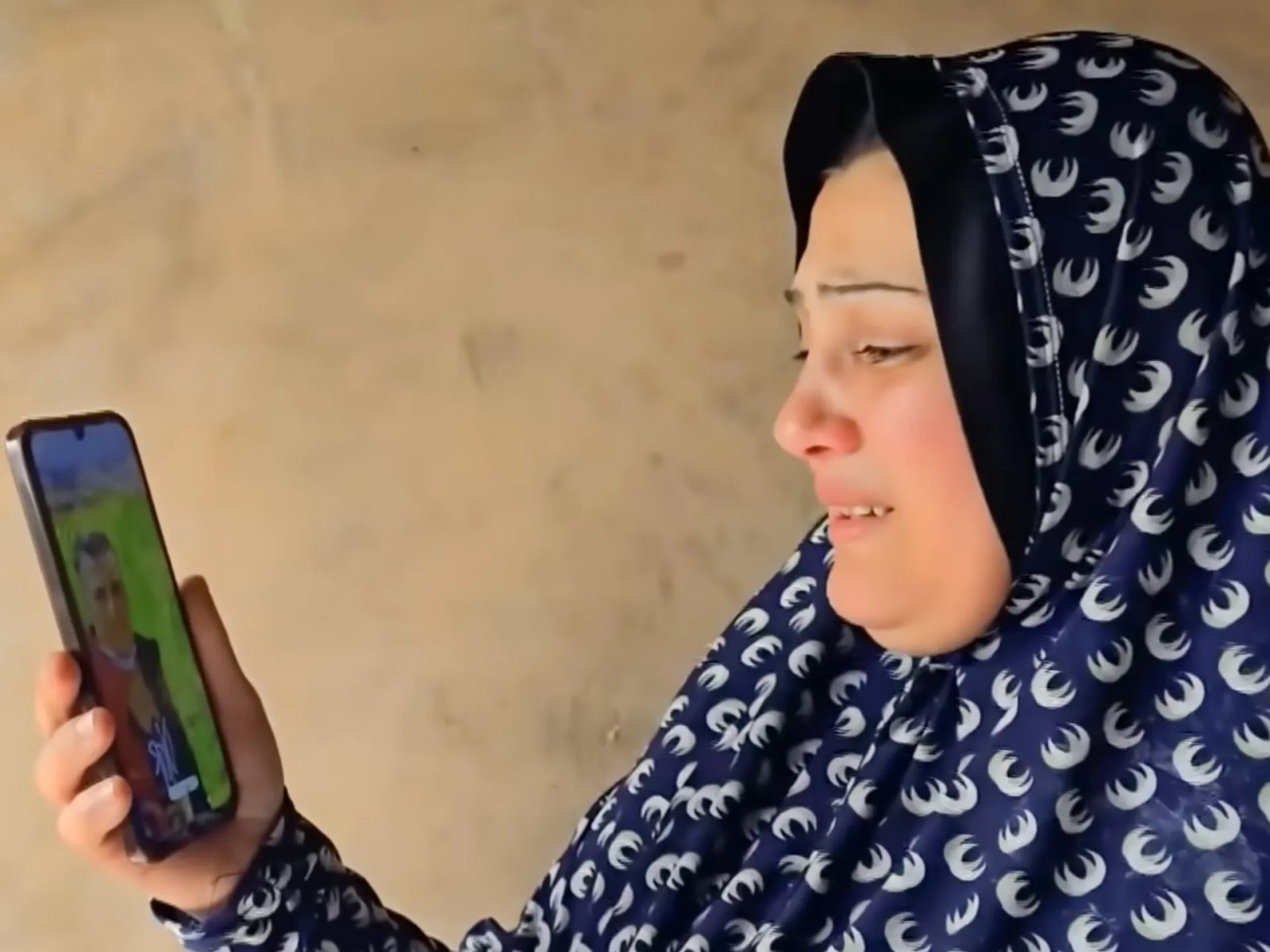
Still, Eid’s mother never lost hope that her son was still alive. “Everyone told me we needed to perform the absentee funeral prayer, but I refused. My heart told me Eid was alive,” Maha Abu Shaar said.
Then a glimmer of hope emerged a month ago when a released detainee said he had encountered a man named Eid Abu Shaar in prison. The story was finally confirmed on Monday by a lawyer, sparking a wave of celebration across Gaza. Al Jazeera broadcast scenes of the Abu Shaar family and their neighbours distributing sweets in their simple homes, turning a site of mourning into a celebration of a “miracle”.
Systematic concealment
Eid’s story is providing a rare bit of good news during a humanitarian catastrophe, but Nada Nabil, director of the Palestinian Center for the Missing and Forcibly Disappeared, said many more families are stuck in limbo. “The case of Eid Abu Shaar is part of a much larger pattern,” he told Al Jazeera. “We estimate that between 7,000 and 8,000 Palestinians are currently missing due to the war, with approximately 1,500 of them believed to be forcibly disappeared inside Israeli prisons.”
Israel’s denial of information regarding detainees like Eid is not an administrative oversight but a deliberate military tactic to prolong the pain of Palestinian families, Nabil said. “The occupation intentionally adopts a policy of total secrecy to deepen the suffering and pain of Gaza’s families,” he explained. “It is an easy procedure to issue lists of detainees or allow the ICRC access, but they choose concealment as a form of psychological torture and collective punishment.”
The burden of ‘suspended grief’
The situation has led families to experience a phenomenon known by psychologists as “suspended grief” or “ambiguous loss”, which paralyses the lives of thousands of families who have missing loved ones. Families who have buried their relatives often find a way to move forward, but those who have no information about their loved ones’ fates remain locked in a “continuous cycle between hope and despair”, Nabil said.
“This impact isn’t just psychological. It’s social and legal,” Nabil added. “Wives do not know if they are widows or still married, affecting issues [such as] remarriage and inheritance. Furthermore, in the harsh conditions of displacement in Gaza, where every hand is needed to fetch water or set up tents, the loss of a young man like Eid places an immense physical and economic burden on the remaining family members.”
International paralysis and fear
Nabil described the “total failure” of international organisations operating in Gaza and how the ICRC has been barred from visiting Israeli prisons or receiving lists of detainees since the start of Israel’s genocidal war on Palestinians in Gaza. “We live in a world governed by power, not law,” Nabil said. “The global inability to compel Israel to follow international humanitarian law has left the victims in Gaza vulnerable to every kind of violation.”
Perhaps most tragically, families fear that reporting their loved ones “missing” could make them the target of a punitive Israeli air strike. “Others worry that publicising a detainee’s name will lead to more severe torture for the person inside,” Nabil said.
In the Abu Shaar household, the distribution of sweets continues, but the joy remains incomplete. “I am happy, but now my heart is even more worried,” Maha said. “Now that I know he is alive, I fear for what he is suffering in those cells. I won’t be fully happy until I hold him in my arms again.”