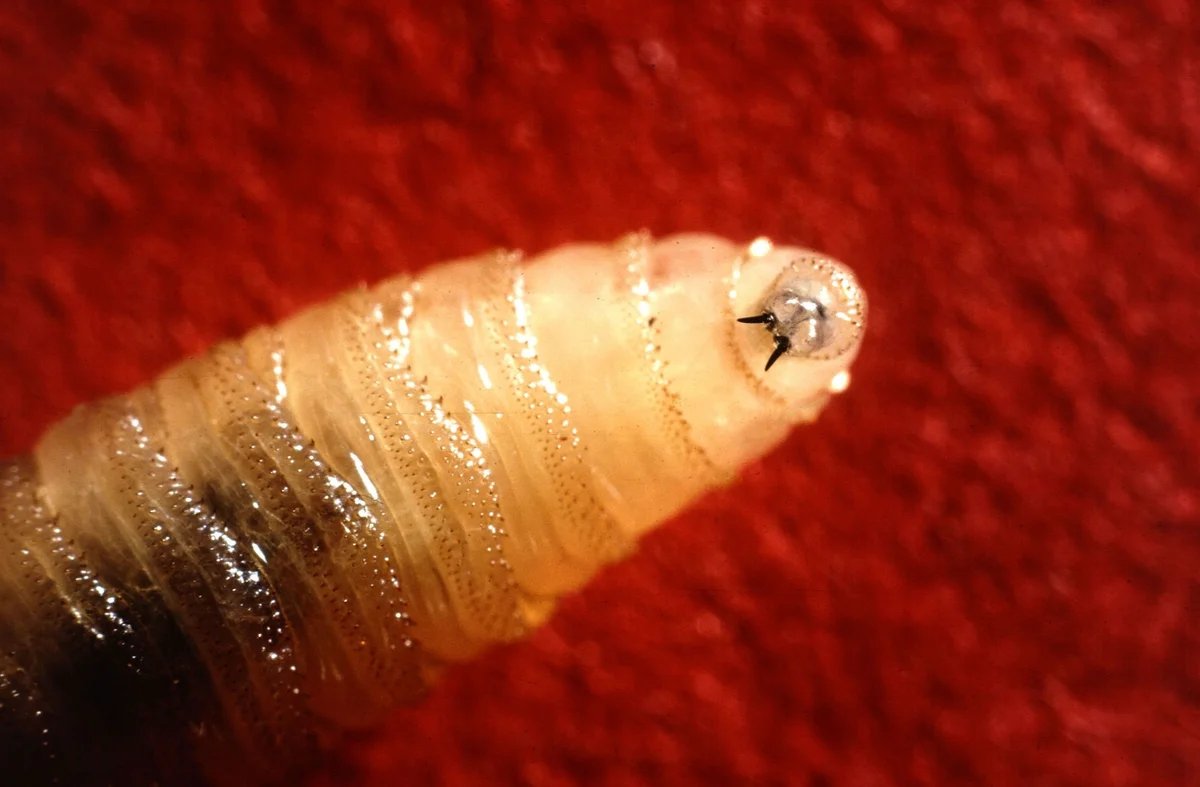
The first case of the New World screwworm in a U.S. cow in about 60 years has been detected, the U.S. Department of Agriculture confirmed yesterday. It is the first instance of the agricultural pest in cattle since it was eliminated in the U.S. in 1966.
Screwworms are parasitic flies that lays their eggs in open wounds or cuts or in the eyes, ears, mouth, nose or genitals of warm-blooded animals—including humans. The maggots hatch and burrow through the skin, causing painful, foul-smelling wounds.
Livestock in the southern U.S. and Mexico suffered devastating screwworm outbreaks in the first half of the 20th century. But the parasite was eliminated in those nations thanks to a wildly successful effort called the sterile insect technique, which involved the release of sterile flies in Panama that caused the fly population to collapse.
On supporting science journalism
If you’re enjoying this article, consider supporting our award-winning journalism by subscribing. By purchasing a subscription you are helping to ensure the future of impactful stories about the discoveries and ideas shaping our world today.
Yet the New World screwworm remained endemic to the Caribbean and South America, where, in 2005, it was estimated to cause annual economic losses of around $6.1 billion in today’s dollars. And in recent years the fly has been spreading northward through Central America. Experts had been warning that it was only a matter of time before it arrived in the U.S.
The new infection was detected in a three-week-old calf in Zavala County, Texas; it was found in the calf’s umbilical area, according to the USDA.
“Protecting our livestock industry is a national security issue of the utmost importance, and USDA is wasting no time in taking action,” said Dudley Hoskins, the agency’s undersecretary for marketing and regulatory programs, in a statement. “The United States has defeated this pest before, and we will do it again.”
USDA and Texas officials are taking “immediate action” to contain the threat, according to the statement. Efforts include forming an incident command team with the Texas Animal Health Commission, establishing a 20-kilometer perimeter around the site of the infection with quarantines and movement controls, releasing sterile New World screwworm flies from the ground and the air, trapping flies along the border, screening wildlife in the area and doing outreach in local communities.
People who live around Zavala County should check their pets or livestock for signs of an infection—for example, draining or growing wounds and screwworm maggots and eggs in or around body openings, the USDA says. If they suspect an infection, people should contact their state animal health official or local USDA veterinarian.
New World screwworms rarely infect humans, but they can infect people who live in or travel to areas where the flies are endemic. People who spend a lot of time outside and have open wounds are most at risk. Anyone who suspects they may have an infection should seek immediate medical care. People should not try to remove maggots themselves—a health care provider may need to remove them surgically, according to the U.S. Centers for Disease Control and Prevention.
To prevent infection, the CDC advises keeping wounds clean and covered, sleeping indoors with closed windows or screens and using insect repellant or wearing long-sleeved clothing.
It’s Time to Stand Up for Science
If you enjoyed this article, I’d like to ask for your support. Scientific American has served as an advocate for science and industry for 180 years, and right now may be the most critical moment in that two-century history.
I’ve been a Scientific American subscriber since I was 12 years old, and it helped shape the way I look at the world. SciAm always educates and delights me, and inspires a sense of awe for our vast, beautiful universe. I hope it does that for you, too.
If you subscribe to Scientific American, you help ensure that our coverage is centered on meaningful research and discovery; that we have the resources to report on the decisions that threaten labs across the U.S.; and that we support both budding and working scientists at a time when the value of science itself too often goes unrecognized.
In return, you get essential news, captivating podcasts, brilliant infographics, can’t-miss newsletters, must-watch videos, challenging games, and the science world’s best writing and reporting. You can even gift someone a subscription.
There has never been a more important time for us to stand up and show why science matters. I hope you’ll support us in that mission.