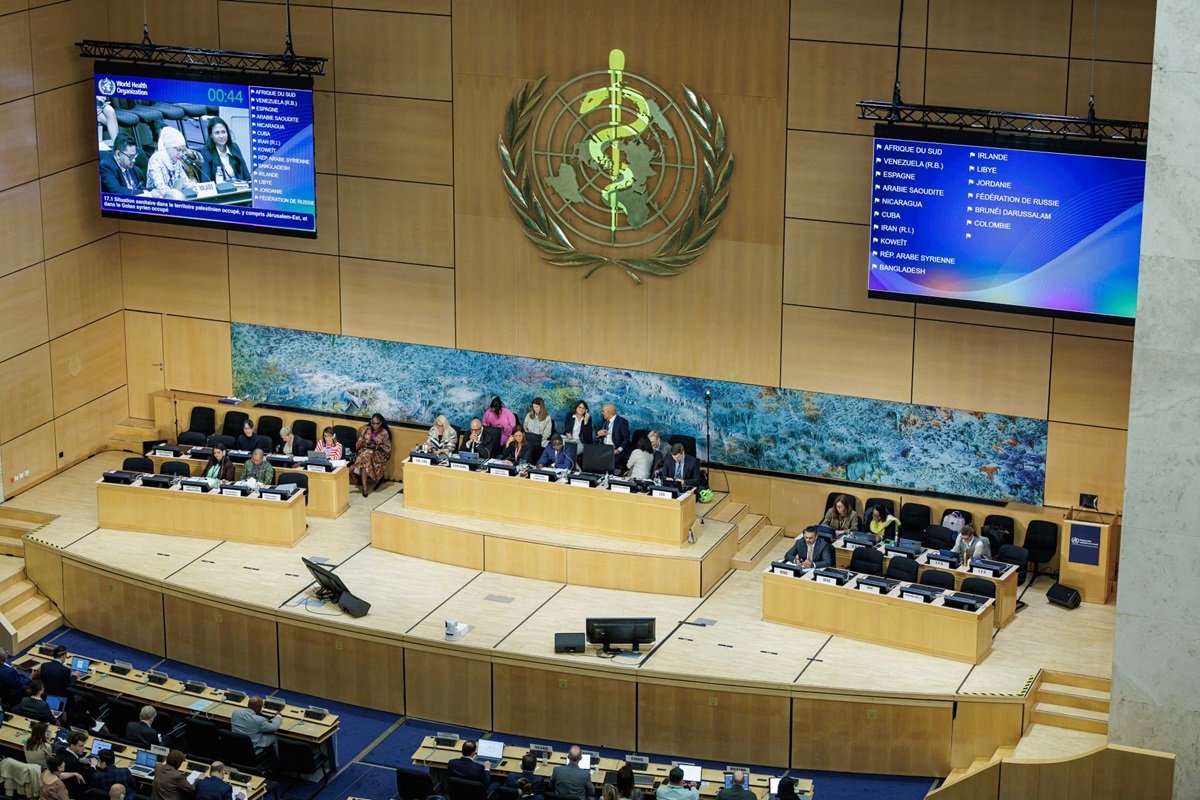
At the Seventy-ninth World Health Assembly in Geneva this week, Member States adopted more than 20 decisions and 13 resolutions on health issues including stroke, liver disease, tuberculosis, antimicrobial resistance, diagnostic imaging, emergency care, haemophilia, precision medicine and radiation.
The Assembly also covered a range of political and administrative issues, including the agreement to reform the global health architecture through a Member State-led, WHO-hosted joint process.
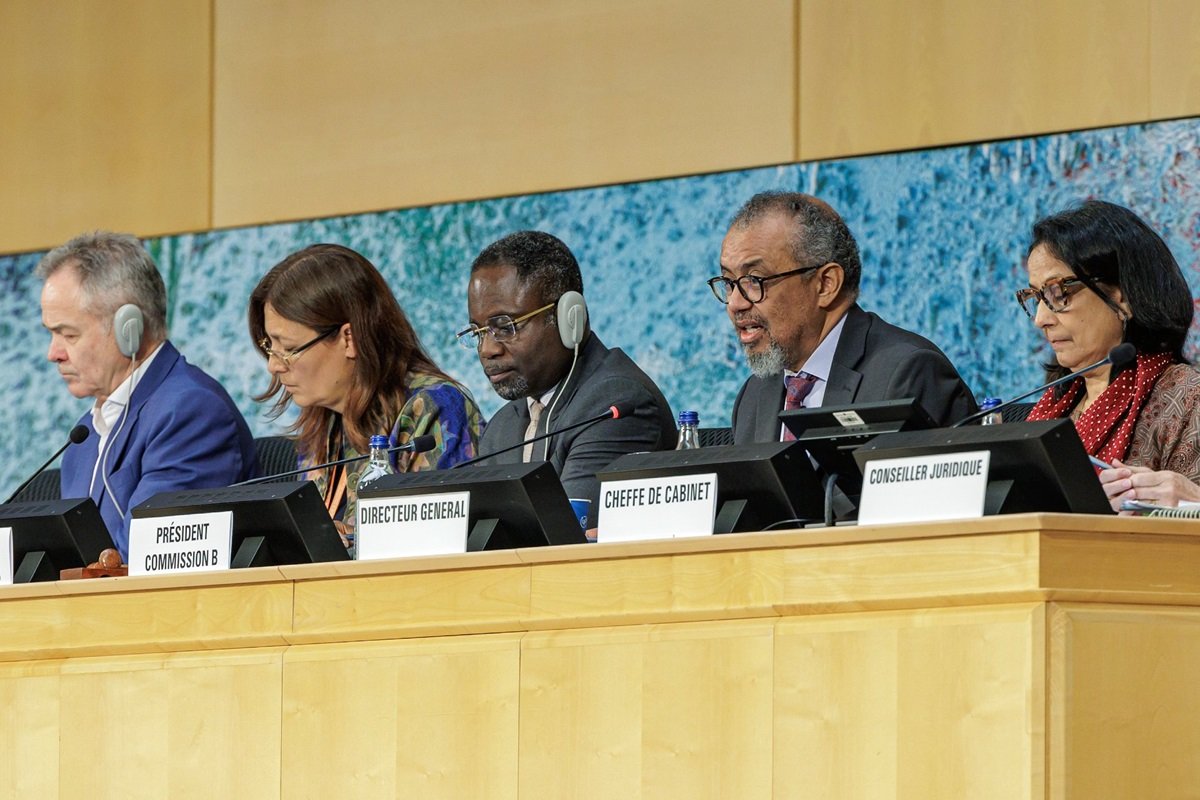
At the closing of the Assembly, WHO Director-General Dr Tedros Adhanom Ghebreyesus presented a ceremonial gavel in appreciation to the President of the Seventy-ninth World Health Assembly, Dr Víctor Atallah Lajam, Minister of Health of the Dominican Republic, and to the Chairs of Committee A, Dr Timur Sultangaziyev, Deputy Minister of Health, Kazakhstan, and Committee B, Dr Kwabena Mintah Akandoh, Minister of Health, Ghana.
“Every resolution you adopt, every agreement you reach, only has value when it changes what happens in a clinic, in a community, or in a household,” said Dr Tedros in his closing remarks.
“When a health worker has what they need to do their job; when a child is vaccinated; when a mother survives childbirth; when an outbreak is contained before it spreads. That is now the task before us… It will require political commitment, sustained financing, and continued cooperation between Member States, partners and communities.”
Countries agree critical amendments to the WHO Code on ethical international recruitment of health workers
Member States today approved a resolution to amend the WHO Global Code of Practice on the International Recruitment of Health Personnel (the Code) and to strengthen its implementation, following Member State-led consultations in the lead up to the Seventy-ninth World Health Assembly. The resolution marks an important step toward the vision that everyone, everywhere can access competent and motivated health and care workers – a foundation for both universal health coverage and global health security.
Key revisions to the Code include the incorporation of provisions covering health personnel recruited internationally for employment as care workers and clarification on the applicability of the Code’s recommendations during emergencies. The Code also encourages co-investment in health systems and the health workforce to ensure international recruitment generates proportional benefits for both source and destination countries.
These additions were recommended by an Expert Advisory Group (EAG) appointed by the WHO Director-General. In its final report, the EAG also noted the progress in health workforce data availability, provision of migrant health worker rights, and the integration of ethical recruitment principles in national policies. The report also highlighted areas requiring improvement in the Code’s implementation, including greater support for strengthening of health systems in source countries.
Since its adoption by the Sixty-third World Health Assembly in 2010, the Code has undergone three rounds of reviews to assess its relevance and effectiveness. This first update in 16 years – triggered by the third review – marks a milestone and an opportunity to renew global commitment to advancing health equity and further fostering lobal collaboration on the ethical governance of international mobility of health personnel.
Related links
Countries adopt landmark strategy placing health at the heart of economic policy
The World Health Assembly approved a decision to adopt the Strategy on the economics of health for all (2026–2030), marking a significant step towards aligning economic systems with health, equity and sustainable development. Delegates emphasized that health and economic prosperity are deeply interconnected and must be advanced through coordinated government approaches.
The strategy sets out a vision of a world in which the economy both serves and benefits from the achievement of health for all, placing people, well-being and equity at the centre of policy and financing decisions. It outlines actions to ensure that health is systematically integrated into economic, fiscal and industrial policies, while strengthening the case for investment in health and enabling the sustainable financing of universal health coverage.
Member States highlighted the urgency of these measures in the context of a global health financing emergency, stressing the need to shift towards well-being-oriented economies and to invest in resilient health systems and essential public goods. The strategy also aims to equip countries with stronger technical capacity and an improved evidence base, enabling more effective engagement with financial and economic actors and supporting informed decision-making.
Broad support was expressed for the strategy’s comprehensive and forward-looking approach, alongside recognition of the importance of continued collaboration and implementation at the country level. Emphasis was placed on translating the strategy into practical actions, supported by guidance and monitoring.
Related links
World Health Assembly approves first resolution on radiation and health
The Assembly has approved a resolution on Radiation and health: strengthening global protection, preparedness and response, marking the first time WHO Member States have agreed on a comprehensive approach covering both ionizing and non-ionizing radiation.
The resolution recognizes widespread exposure to radiation globally – from environmental, occupational, medical sources, as well as emergency situations – and the associated health risks, including both acute and long-term effects such as cancer. It also highlights the increased vulnerability of children and pregnant women, as well as the broader health and psychosocial impacts of radiation emergencies.
Through this resolution, Member States commit to strengthening national systems for radiation protection, including improved monitoring of exposure, workforce training, and the integration of radiation risk management into broader public health programmes. It also emphasizes the safe and equitable use of radiation in medical imaging, radiotherapy, and radiopharmaceuticals.
Recognizing that natural sources such as ultraviolet radiation and radon contribute significantly to the global cancer burden, countries agreed to scale up prevention, public communication, and awareness efforts.
The resolution reaffirms WHO’s leadership role in providing evidence-based guidance and technical support and calls for stronger global coordination with key international partners. It also requests WHO to undertake a global mapping of relevant actors and initiatives – including their roles and mandates in radiation and health to identify gaps and advance the public health agenda on radiation protection and emergency preparedness and response. Progress will be reported to the World Health Assembly in 2028.
Related links:
Member States agree on updated action plan to reduce deaths from antimicrobial resistance
Countries approved the Global Action Plan on Antimicrobial Resistance (GAP-AMR) for 2026–2036, renewing commitments to strengthen the global response to AMR.
WHO’s Global Antimicrobial Resistance and Use Surveillance System (GLASS) indicates that one in six common bacterial infections in 2023 were resistant to antibiotic treatment. Studies estimate that 4.71 million deaths were associated with bacterial AMR in 2021. Without urgent action, AMR could cause up to 39 million deaths by 2050, disproportionately affecting low- and middle-income countries.
The GAP-AMR 2026-2036 aims to preserve the ability to treat human, animal and plant infections by expanding equitable access to and appropriate use of effective antimicrobials, reducing infections through a One Health approach. By 2030, the plan aims to enable the attainment of the 2024 UN General Assembly target of 10% reduction in bacterial AMR-associated deaths in humans, while also reducing antimicrobial use in agrifood systems, and minimizing environmental pollution from resistant microbes and antimicrobial residues.
Global momentum to tackle AMR has accelerated since the launch of the first GAP-AMR in 2015. More than 170 countries have developed multisectoral national action plans on AMR and 104 countries reported AMR data to the WHO surveillance system in 2025. For sustainable action, the updated plan emphasizes the need for strengthened governance, sustainable financing, and accountability on AMR, including mainstreaming AMR interventions into health system strengthening efforts.
WHO and its Quadripartite partners – FAO, UNEP and WOAH – will enhance technical support and coordination. The plan provides adaptive guidance enabling countries to accelerate action through a One Health approach tailored to national priorities and contexts. It will be complemented by a separate operational and monitoring framework.
Related link
A79/5 Add.2: Draft updated global action
plan on antimicrobial resistance 2026–2036