Academy Awards bosses have announced a string of rule changes amid the rise in the use of artificial intelligence (AI).
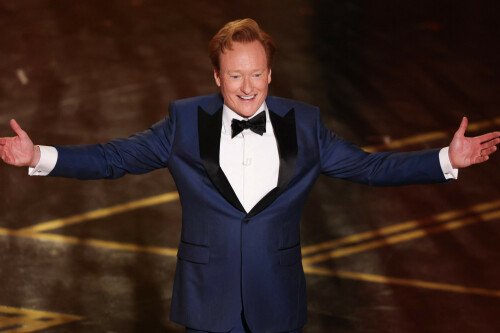
Conan O’Brien hosted the last Oscars
The Academy of Motion Picture Arts and Sciences have made some changes for next year to reflect their dedication to “listening to the global filmmaking community” and is in line with its standards that “have always evolved alongside technology,” an insider told Entertainment Weekly.
The new guidance explained the acting honours can only allow nominations for “roles credited in the film’s legal billing and demonstrably performed by humans with their consent,” while the writing branch’s eligibility guidance states “screenplays must be human-authored to be eligible” for recognition in either the Best Adapted Screenplay and Best Original Screenplay categories.
And further AI guidance has also been issued.
The Academy stated: “Under Eligibility (Rule Two) regarding Generative Artificial Intelligence, the Academy reserves the right to request more information about the nature of the use and human authorship.”
Away from technological concerns, one major change in the acting categories is the decision to scrap a decades-old rule which prevented actors from receiving multiple nominations in the same category in the single year.
Instead, a new rule states performers may now “be nominated for multiple performances in the same category if those performances place in the top five votes, which aligns with achievements in other award categories.”
In addition, changes have been made to the Best Original Song category in relation to the eligibility of music which plays during the end credits.
The Academy explained: “The rules clarify a song’s eligibility when based on its placement in the end credits.
“For songs submitted as the first new music cue once the end credits begin, the video clip must include the last 15 seconds of the film before the credits begin.”
Updated guidance also affects awards given out for casting, cinematography, international films, visual effects, and make-up and hairstyling.
The rule changes come ahead of another big change for the Oscars, because they are moving to YouTube.
It was announced in December that the Academy have agreed a multi-year deal with the streaming service starting in 2029, which will allow the video-sharing platform exclusive rights to the Oscars ceremony until 2033, ending a partnership with ABC, which has broadcast the event since 1976.
In addition, red carpet coverage, behind-the-scenes content, and the Governors Ball will stream live and free to viewers around the world, as well as for YouTube TV subscribers in the US.
At the most recent Academy Awards – which were presented by Conan O’Brien – One Battle After Another was the night’s biggest winner, bagging six Oscars, including the coveted Best Picture.