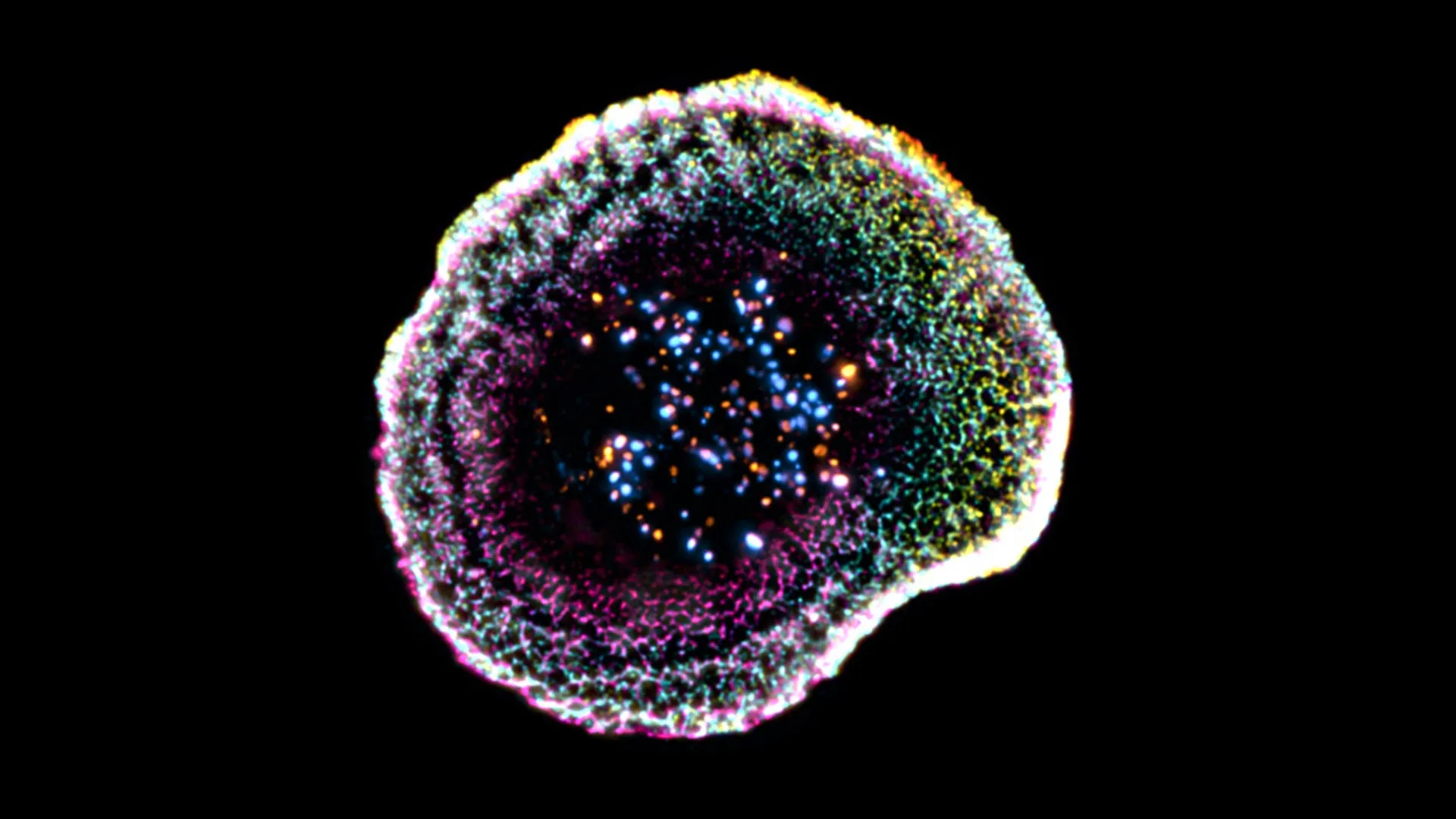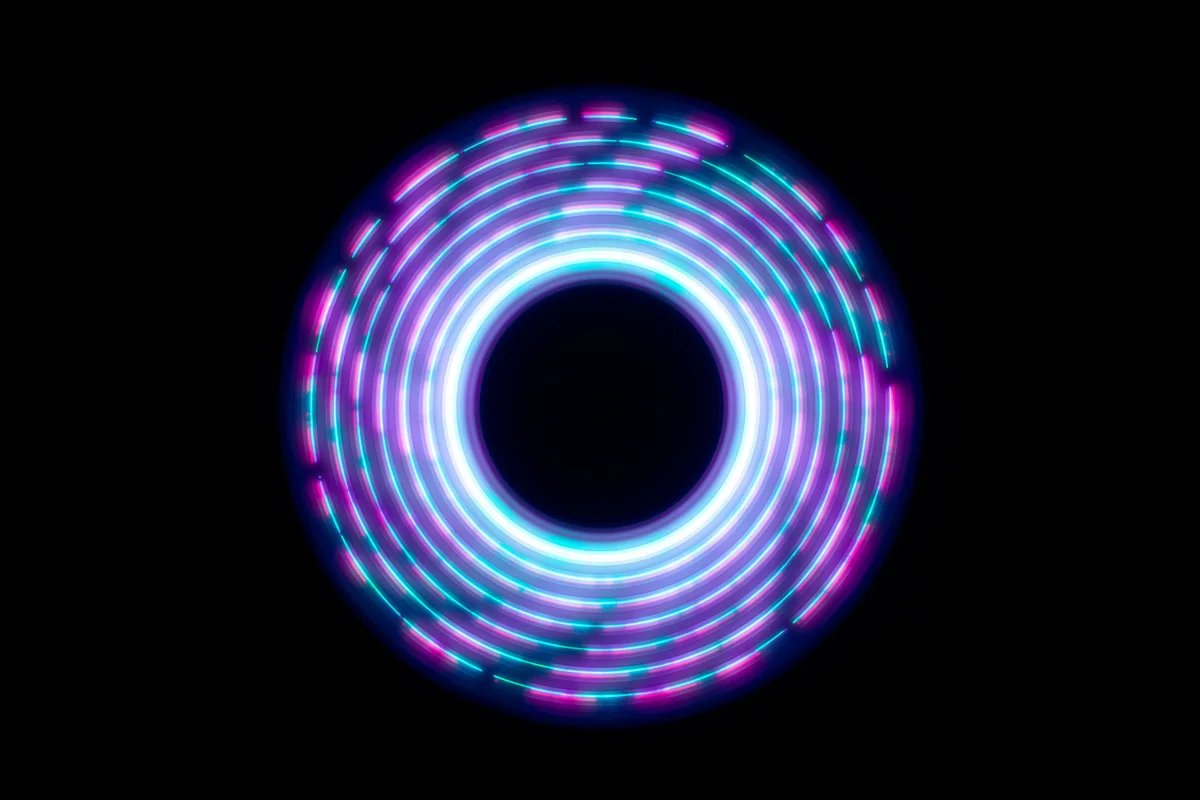
The speed of light in a vacuum has been known as both a universal constant and a hard speed limit for all matter in the universe ever since Albert Einstein published his special theory of relativity in 1905. Rules, however, are made to be broken. And an international team of physicists appears to have found just such a loophole: the only thing that goes faster than light, it turns out, is darkness.
More specifically, individual dark spots known as optical vortices, or phase singularities, do so. As a light wave travels through space, it oscillates and twists—at the center of that twist, the peaks and troughs of the light wave cancel each other out, creating dark spots that—under certain conditions—outrun the light wave itself. The research was conducted by Technion–Israel Institute of Technology physicist Ido Kaminer and his colleagues.
“Our discovery reveals universal laws of nature shared by all types of waves, from sound waves and fluid flows to complex systems such as superconductors,” Kaminer said in a statement. The discovery confirms a prediction dating to the 1970s. Importantly, these vortices don’t carry mass, energy or information, so they don’t violate Einstein’s rules, according to the researchers. “Phase singularities do not carry energy or information and thus can ‘move’ superluminally without breaking causality,” the physicists wrote in their study, which was published last month in Nature.
On supporting science journalism
If you’re enjoying this article, consider supporting our award-winning journalism by subscribing. By purchasing a subscription you are helping to ensure the future of impactful stories about the discoveries and ideas shaping our world today.
To make their discovery, the researchers constructed a unique microscope system that let them observe optical vortices in hexagonal boron nitride, a two-dimensional form of ceramic that can be used to convert light into quasiparticles that are a mixture of light and matter called polaritons. Polaritons move relatively sluggishly—around 100 times slower than the speed of light. With that speed, the team was able to observe how oppositely charged singularities approached each other and accelerated each other to superluminal, or faster-than-light, speeds before they were annihilated.
The technique used to measure the singularities’ velocity could open the door to studying other tiny, fast phenomena in physics, chemistry and biology—or perhaps to find new ways to encode quantum information in materials, according to the researchers.
“We believe these innovative microscopy techniques will enable the study of hidden processes in physics, chemistry, and biology, revealing for the first time how nature behaves in its fastest and most elusive moments,” Kaminer said.
It’s Time to Stand Up for Science
If you enjoyed this article, I’d like to ask for your support. Scientific American has served as an advocate for science and industry for 180 years, and right now may be the most critical moment in that two-century history.
I’ve been a Scientific American subscriber since I was 12 years old, and it helped shape the way I look at the world. SciAm always educates and delights me, and inspires a sense of awe for our vast, beautiful universe. I hope it does that for you, too.
If you subscribe to Scientific American, you help ensure that our coverage is centered on meaningful research and discovery; that we have the resources to report on the decisions that threaten labs across the U.S.; and that we support both budding and working scientists at a time when the value of science itself too often goes unrecognized.
In return, you get essential news, captivating podcasts, brilliant infographics, can’t-miss newsletters, must-watch videos, challenging games, and the science world’s best writing and reporting. You can even gift someone a subscription.
There has never been a more important time for us to stand up and show why science matters. I hope you’ll support us in that mission.