These snakes steal poison from their prey—here’s how they know they have enough
Snakes that gain poisons from eating toads seem to know when they’re toxic by keeping track of what they last ate
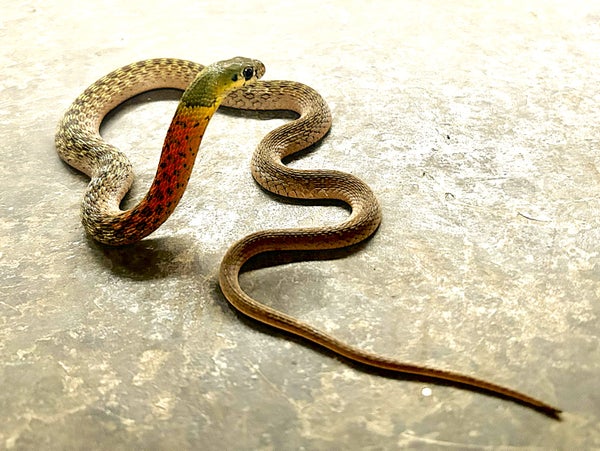
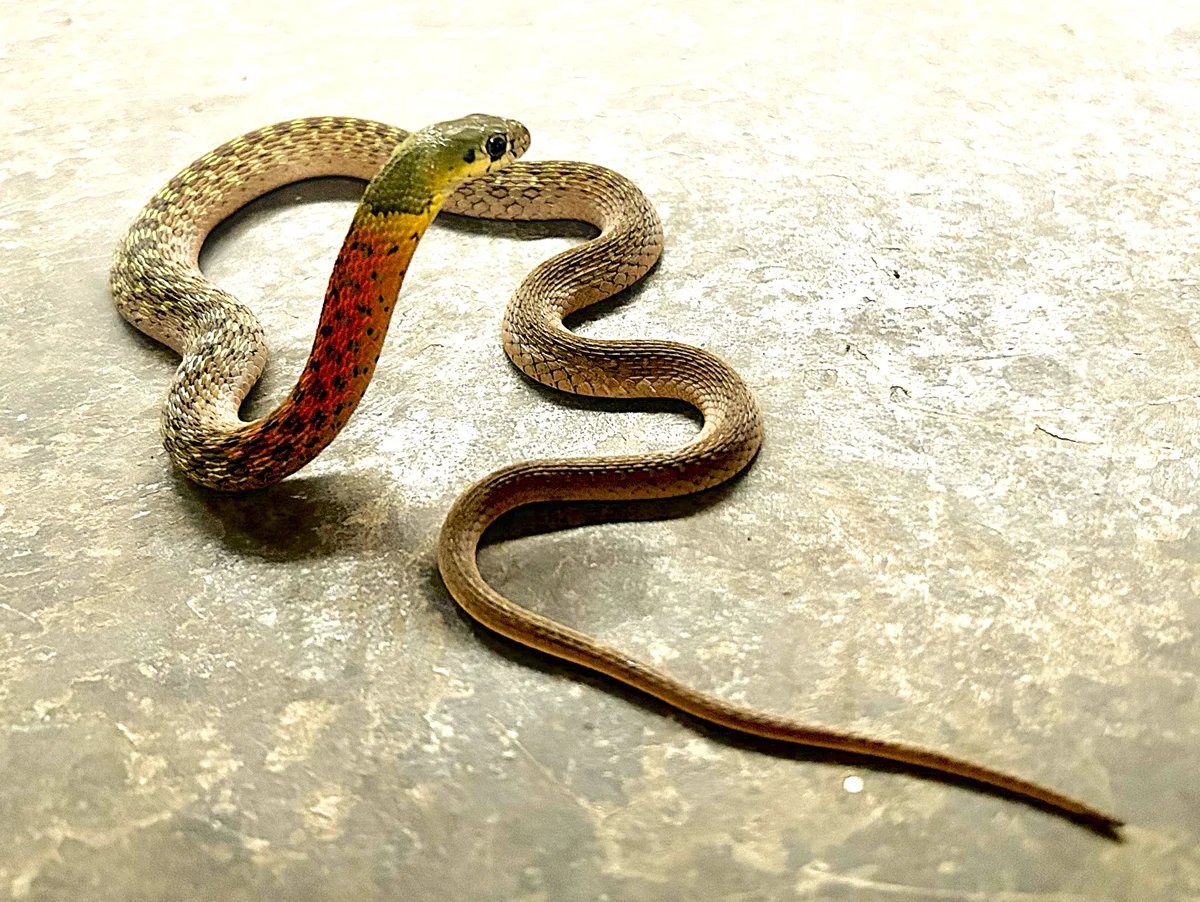
A red-necked keelback in the “Go ahead—I dare you.” posture it assumed when it is flush with toxins from its toad prey.
Red-necked keelback snakes are highly toxic—mere drops of their pungent yellow poison could blind a mongoose and stop its heart within minutes. But the snakes don’t make that toxin themselves; rather, they steal it from the poisonous toads they eat.
After a red-necked keelback (Rhabdophis subminiatus) eats a true toad (a member of the Bufonidae family), the snake’s intestines soak up the toxic bufadienolide molecules from the amphibian’s skin. The toxins are then shuttled into more than a dozen pairs of storage pockets in the snakes’ necks called nuchal glands. Then the snakes act fearless. They rise and jut their necks at mongooses and other would-be predators as if to say, “Go ahead—I dare you.”
That brazen attitude doesn’t last, though. If dinner has been nontoxic recently—poison-free frogs or fish, for example—these reptiles often hurriedly slither away.
On supporting science journalism
If you’re enjoying this article, consider supporting our award-winning journalism by subscribing. By purchasing a subscription you are helping to ensure the future of impactful stories about the discoveries and ideas shaping our world today.
Scientists used to think that these and other Asian snakes that “toxin sequester” were somehow gauging their toxin stocks to guide their defense choices. Pit vipers and rattlesnakes that produce their own poisons do this, probably by feeling more or less “full” in their glands—although researchers are still working out the exact mechanisms.
To see if this was the case in toxin sequesterers, too, Tomonori Kodama, a behavioral ecologist at Nagoya University in Japan, fed nontoxic frogs and toxic toads to 23 wild red-necked keelbacks. A few weeks later, he and his colleagues pinned them down with a foam-coated hook to mimic a mongoose attack. A few days afterward, the researchers used forceps to squeeze the snakes’ nuchal glands empty and then pinned them down with the fake mongoose again.
To the team’s surprise, the snakes didn’t seem to realize that their poison tanks had run out. The animals responded to the attacks with their classic, neck-showcasing, daredevil attitude at essentially the same rate, whether before or after squeezing.
The results, published recently in Ethology, suggest that red-necked keelbacks don’t have any direct feedback about their toxin stores—or at least, they don’t act on it if they do, says Deborah Hutchinson, a snake biologist based in Seattle, who wasn’t involved with the new research.
It seems that they might instead remember what type of prey they most recently ate, Kodama says.
More research could expose why these snakes don’t monitor their reserves, says Kurt Schwenk, an evolutionary biologist at the University of Connecticut. “Maybe snakes in the field replenish their supply of the toxin regularly enough that they are never sufficiently depleted for monitoring to matter,” he says.
It’s Time to Stand Up for Science
If you enjoyed this article, I’d like to ask for your support. Scientific American has served as an advocate for science and industry for 180 years, and right now may be the most critical moment in that two-century history.
I’ve been a Scientific American subscriber since I was 12 years old, and it helped shape the way I look at the world. SciAm always educates and delights me, and inspires a sense of awe for our vast, beautiful universe. I hope it does that for you, too.
If you subscribe to Scientific American, you help ensure that our coverage is centered on meaningful research and discovery; that we have the resources to report on the decisions that threaten labs across the U.S.; and that we support both budding and working scientists at a time when the value of science itself too often goes unrecognized.
In return, you get essential news, captivating podcasts, brilliant infographics, can’t-miss newsletters, must-watch videos, challenging games, and the science world’s best writing and reporting. You can even gift someone a subscription.
There has never been a more important time for us to stand up and show why science matters. I hope you’ll support us in that mission.