
Kendra Pierre-Louis: For Scientific American’s Science Quickly, I’m Kendra Pierre-Louis, in for Rachel Feltman.
The year is 1998. Brandy and Monica’s hit song “The Boy Is Mine” is all over the radio. The movie There’s Something About Mary is doing solid numbers at the box office. And right around Labor Day the first episode of a Japanese animated television series centered on a 10-year-old boy named Ash Ketchum and his quest to become a master of taxonomy debuts in the U.S. Wait, is that not how you remember the plot of Pokémon?
[CLIP: The Pokémon theme song: “I wanna be the very best / Like no one ever was.”]
On supporting science journalism
If you’re enjoying this article, consider supporting our award-winning journalism by subscribing. By purchasing a subscription you are helping to ensure the future of impactful stories about the discoveries and ideas shaping our world today.
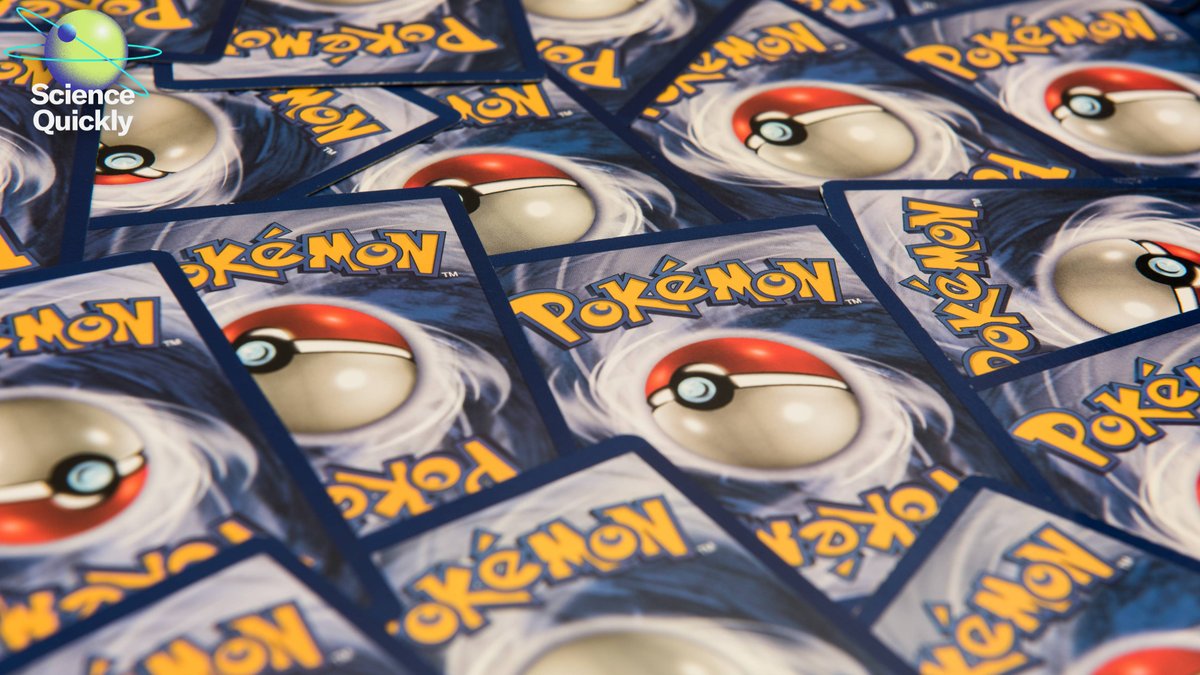
Pierre-Louis: It’s easy to think of Pokémon—the TV series, video games and trading cards—as just child’s play. But for some young people, the franchise can be a gateway into scientific understanding.
We sat down with two scientists who were Pokémon fans as children: Arjan Mann, the assistant curator of fossil fishes and early tetrapods at Chicago’s Field Museum, and Spencer Monckton, an entomologist at the University of Guelph’s Center for Biodiversity Genomics in Canada. They both credit their scientific careers in part with their past Pokémon fascination.
As adults Spencer named an insect after a Pokémon character, and Arjan has co-curated an upcoming Pokémon-themed exhibition at the Field Museum.
We spoke to them about the relationship between Pokémon and science and how it goes both ways: Pokémon influences science and science influences Pokémon.
Pierre-Louis: Thanks for taking the time to join us today.
Arjan Mann: Thank you.
Spencer Monckton: Yeah, happy to join you.
Pierre-Louis: I have a very difficult first question for both of you, but we’ll start with Arjan: What got you into Pokémon?
Mann: I was a kid when the Pokémon TV series came out. I was really into the trading card game, too. And I actually kind of, like, remember one of my first favorite episodes. ’Cause I was also a kid that was into fossils, I really liked when they went to that underground realm and found all the fossil Pokémon.
[CLIP: In an episode of the Pokémon TV series, Ash Ketchum exclaims: “Wow! Look at all the people digging.”
Pikachu reacts: “Pika!”
Misty says: “We’d better hurry before all the fossils are dug up.”]
Mann: And that’s kind of what triggered that “Oh, my God, this is cool” to me. [Laughs.]
Pierre-Louis: Spencer?
Monckton: Yeah, I think probably the same answer. I did watch the show. I remember getting the game from the store and sitting in my grandparents’ car, playing it on the drive home. I can’t honestly remember why I wanted it, except that it was a game that looked fun. I probably was watching the show. But I was instantly hooked.
It’s funny—I also remember feeling a lot of appeal from the fossil Pokémon. But just in general the discovery element of, of the games really kept me going on them.
Pierre-Louis: Okay, I have to confess, I never quite got into Pokémon, and I was surprised to learn that dozens of Pokémon are named after real-life animals and that even some real-life species are named after Pokémon characters. And I was even more shocked to learn that Pokémon’s creator, Satoshi Tajiri, was inspired by his childhood as a hobbyist entomologist. Can you talk a bit about the relationship between, like, science and Pokémon, especially, I think, as it relates to taxonomy?
Monckton: Yeah, I mean, it’s funny—like, looking back, you know, I don’t have the standard origin story that most entomologists do. Like, normally you hear, as a kid they’re out in the forest digging in the mud and turning over rocks. Like, I spent time in the forest, I went outdoors with my family, and I had an appreciation for natural spaces in general, but I wasn’t digging around looking for bugs.
And so the appreciation for natural spaces was always there, but the, like, discovery and learning the names of things and what they do, like, that element didn’t exist, but it’s very much central to what Pokémon is. And so it’s funny that that inspiration that came from the natural world for the game’s creator ended up instilling the same curiosity in me—and probably, I’m sure, many other people around my age and younger—and then was an influence in me becoming an entomologist after the fact and I think, at least for me, built this idea in my head of a system of classification that things fit into.
Like, all the creatures in that game, they have categories of different—you know, they have types: like, grass type, bug type, normal type, electric type, whatever. And they can have multiple types in combination, and so you have these, like, nested classifications. Then, of course, there’s, like, different generations, and they have their evolutions, which doesn’t make sense in terms of biology, but it—you still—like, it’s almost like metamorphosis, right? It’s all—like, there are all these concepts that are there in simplified form, and it really kind of gets you thinking about creatures from the perspective of, like, a system of information. And I, I think that was a big influence on me.
Pierre-Louis: Arjan?
Mann: Yeah, I think he touched on a lot of the same points: that its classification system is kind of, like, a weird parallel for Linnaean taxonomy and other systematic forms that we use in paleontology and other natural history forms. And that indexing and collecting aspect of it is another thing that really jibes with natural history collections and how we both get specimens and hunt for specimens and classify them.
So I do think that it is the gateway to this form of classification for so many kids. Like, I knew how to classify Pokémon and what Pokémon were before I knew what the natural world was. That’s the—one of the first times in history, probably, kids are learning it in a different way to natural history, rather than, you know, collecting bugs first. You know, my first collecting thing was Pokémon cards, you know? [Laughs.]
Pierre-Louis: Can you give us some examples, or an example, of a Pokémon that are named after real-life animals and sort of the opposite, animals that are named after Pokémon?
Mann: There’s been many people who’ve named fossil after Pokémon. Like, there’s Turtwig, which I think is, like, this turtle Pokémon with a little plant growing out of it.
[CLIP: In an episode of the Pokemon TV series, a Turtwig vocalizes as it runs to battle another Turtwig: “Turtwig, Turtwig, Turtwig, Turtwig, Turtwig, Turtwig, Turtwig!”
The second Turtwig vocalizes as it goes flying.
Ketchum says: “Way to go, Turtwig!”]
Mann: And one of my colleagues at the Field Museum, Fabiany Herrera, actually named an animal after Turtwig, so there’s that. [Laughs.]
Monckton: I also really like the [Bulbasaurus].
Mann: Oh, yeah.
Monckton: It’s a dicynodont or something, I think.
Mann: It is, yeah. There’s that one. [Laughs.] Although that, strangely, apparently is not named after the Pokémon. It’s like …
Monckton: Oh!
Mann: After its bulbous, like, head or something like that.
Pierre-Louis: [Laughs.]
Mann: But I think the parallels are—yeah, I think they knew what they were doing. [Laughs.] Yeah.
Monckton: Yeah, I mean, the one that I like the most, I think, is Stentorceps weedlei. It’s a different wasp with a big spine on its face, which Weedle, of course, has, like, this big, conical spine right on its face, and it’s just perfect.
[CLIP: In an episode of the Pokémon TV series, Ketchum exclaims: “A weedle!”
He opens his Pokédex, which reads him a description: “Weedle: The stinger on this Pokémon’s head guarantees that any attacker will get the point right where it hurts.”]
Monckton: Like, I don’t think you could really call it anything else. Of course, Weedle turns into a wasp as it reaches its final evolution.
I also learned about a genus of beetles, Binburrum from Australia, and there’s one species for each of the legendary bird Pokémon from the original series. And those were always so exciting, just to know that they existed but not encountering them in the game until, like, you finally—“Oh, my gosh!”
Pierre-Louis: I think that’s, like, another really good example of how many scientists were impacted by Pokémon at young ages.
Beginning in May, Arjan, visitors to the Field Museum can visit an exhibition featuring Pokémon and the real-life fossils they’re based on. Can you tell me what inspired this exhibition?
Mann: Yeah, so the exhibit was sort of the brainchild of this researcher in Japan named Daisuke Aiba, and he’s a paleontologist that studies ammonites and other invertebrates. And he, obviously, is a Pokémon fan and had this idea to compare fossil Pokémon in particular to their real-world fossil influences and how natural history and science influence each other.
This exhibit, a version of it originally was—debuted in Japan and we are adapting it for an American audience—well, a North American audience, I should say—and making the content more relevant to North America by adding fossils from North America and fossils that are local, also. So showing off a bit of our own natural history in comparison to Pokémon.
The exhibit opens on May 22 this year and runs through April next year, in 2027, so please come to Chicago and look at the Pokémon Fossil Museum exhibit. You can get tickets now online.
Pierre-Louis: Spencer, my understanding is there’s a bee that you named after a Pokémon character.
Monckton: Yes, Chilicola charizard. And so it’s a little bee that nests inside of hollowed-out stems, like, plant stems …
Pierre-Louis: Mm-hmm.
Monckton: That lives in the mountains in Chile. So it lives in kind of very Charizard-like locales …
Pierre-Louis: [Laughs.]
Monckton: Around volcanoes and, you know, scrubby deserts.
I think I had a thought that feels important to express [Laughs], which is, you know, like, as a grad student, you know, I dealt with imposter syndrome, as all grad students do, and part of that was this whole, you know, like, “I’m not, like, a field biologist. I’m not a natural history guy. I didn’t learn that stuff as a kid.” It’s kind of like Arjan was saying, like, my first blush with nature in terms of, like, interacting with species was really kind of Pokémon.
And I think when it sort of clicked, like, this species, I could name it after Charizard, and that’s just a thing that I could do, and it would be an honest expression of the inspiration that that series had on me becoming a scientist, an entomologist, someone who goes out and works in the field, I feel like that was really kind of a therapeutic realization and, and helped me kind of recognize, like, “No, I am a biologist, and that’s part of my story.” And even if it was a video game and I wasn’t out, you know, picking through mud, I still learned the same skills, just in a different way. And I think that’s really special.
Pierre-Louis: Yeah, cool.
And this is for both of you: If you could create a new Pokémon based off a real-world creature or fossil, what would it be?
Monckton: I mean, I have a bias towards insects, of course …
Pierre-Louis: [Laughs.]
Monckton: Because they’re most living things. [Laughs.] I mean, okay, I should preface this with the fact that I have not kept up with the, the later generations of Pokémon.
Pierre-Louis: You mean you’re not still out there collecting cards and, like, fully embracing the Pokémon lifestyle? [Laughs.]
Monckton: No, although I did just learn last year that there is a cicada Pokémon, which would’ve been the top of my list, so I’m glad that that one exists. I think it’s called Ninjask.
[CLIP: In an episode of the Pokémon TV series, an announcer speaks: “Ninjask!”
A Pokédex reads a description: “Ninjask, the ‘Ninja Pokémon’ and the evolved form of Nincada: Because of its swift flying velocity, it can become impossible to see.”]
Monckton: Love it.
I think it would be neat, though, to have something like an owl-fly or an ant lion because in that group—I mean, any of the lacewing insects. Neuroptera is the order of insects. They have, usually, predatory larval forms.
Pierre-Louis: Mm-hmm.
Monckton: So they’re these wild little things with big tusks that—a lot of them hunt ants and things like that.
So you could have—you know, the initial form would be this nasty-looking little critter that’s crawling around, and then it would eventually evolve into this neat-looking—I mean, some of these are very bizarre. They kind of look like maybe—a lot of people confuse an owl-fly for a dragonfly, for example, but it’s a totally different insect. And they’re kind of fuzzy, and they got these knobbly antennae. That would be probably my top pick.
Mann: For me it would have to be this group of animals called gorgonopsians. They’re one of my side projects and trying to sort out their systematics and taxonomy. I’ve been working on these guys since I was a Ph.D. student. They’re mammal forerunners that look like this gnarly mix between maybe a saber-toothed cat and a wolf but also are a little bit sprawling in their posture. So they’re related to dicynodonts a little bit, but they’re more the carnivorous form.
To me, like, actually, we described one earlier this year, Arctops from Zambia, and one of my students made a Pokémon-style illustration of this animal. I think she used—oh, God, what’s that Pokémon—one of these flame-type Pokémons as the kind of base for it, and it looked really awesome. So I think I would love, like, a—maybe an Arcanine-like-type gorgonopsian as my [Laughs], as my Pokémon, if that’d be cool.
Pierre-Louis: I have kind of a big-picture, kind of zoom-out question, which is: we’ve been talking a lot about Pokémon, but as someone who watches, like, a lot of sci-fi, a lot of fantasy, it becomes pretty apparent pretty quickly how much, like—from everything from, like, the aliens in Alien to, like, all sorts of things—how much these very creative people, like, in film and in Hollywood depend on the natural world as inspiration. And I was wondering if, I dunno, if you had anything to say to that, I guess. [Laughs.]
Mann: Yeah, it’s the continued importance of natural history. You know, we’re still describing and finding new things, new phenomena, and that influences everything in pop culture, and pop culture influences us. It’s a two-way street. So that’s why we should fund natural history. That’s why we should be involved and care about natural history—for that reason as well as other things, yeah.
Monckton: Absolutely. To me it’s like the ultimate source of inspiration is just the natural world. And I mean, you mentioned Aliens—I love the—that whole universe …
Pierre-Louis: Mm-hmm.
Monckton: And there’s kind of this internally consistent biology that they keep kind of developing and adding new information to. And I’m, I’m such a sucker for that kind of thing.
Pierre-Louis: [Laughs.]
Monckton: I just—it, it doesn’t have to really make sense as long as it follows its own logic. And, like, The Expanse is another example where they’re tying in real-world scientific concepts that also involve genetics and, and, like, natural history and physics as well.
And I was just remembering—I was at an entomology conference and one of the plenary talks was someone who worked on the Avatar films, and they were talking about how much of the inspiration in—I think they worked on several different film series, but they also talked about Star Wars and just how designs for ships and creatures were inspired by different types of insects. Like, they were pointing to specific things and, and not just in the appearance but in the, the mechanics of how things move and really looking closely at, at, you know, “How did nature do it, and how do we use that?” to kind of use it as inspiration in these, like, biomimetic designs. It’s science fiction, but it’s clearly very much inspired by the real world.
Pierre-Louis: You’re speaking my language. I’m, like, an Expanse superfan. I’ve even gotten to interview the showrunner, so, like [Laughs].
Mann: Oh, wow. Bring it back! Bring it back! [Laughs.]
Pierre-Louis: [Laughs.] That’s all for today! Tune in on Friday, when we dig into the science of why birds were the only dinosaurs that survived the Cretaceous–Paleogene extinction event.
Science Quickly is produced by me, Kendra Pierre-Louis, along with Fonda Mwangi, Sushmita Pathak and Jeff DelViscio. This episode was edited by Alex Sugiura. Shayna Posses and Aaron Shattuck fact-check our show. Our theme music was composed by Dominic Smith. Subscribe to Scientific American for more up-to-date and in-depth science news.
For Scientific American, this is Kendra Pierre-Louis. Have a great week!


