Crude oil prices jumped more than 8% on Monday, as market participants feared war between the U.S. and Iran will spiral out of control and lead to major supply disruptions.
U.S. crude oil rose 8.4%, or $5.72, to close at $72.74 per barrel, extending gains after the official market close on a new report that Iran said it had closed the Strait of Hormuz. Global benchmark Brent jumped 9%, or $6.65, to $79.45.
Prices closed at their highest levels since the U.S. and Israel bombed Iran’s nuclear facilities in June 2025. Oil had jumped more than 12% earlier in the session before easing off session highs.
Prices then extended their gains again after the close as Reuters reported comments from the commander of Iran’s Revolutionary Guard, who said the Strait of Hormuz was closed and that it would set any ship on fire that tried to pass.
The massive wave of airstrikes launched by the U.S. and Israel against Iran over the weekend killed Supreme Leader Ayatollah Ali Khamenei and other top officials in the Islamic Republic. See the latest developments here.
It is unclear who will ultimately govern the fourth-largest oil producer in OPEC. How the oil market ultimately reacts will depend on whether the war leads to a prolonged disruption to maritime traffic through the Strait of Hormuz, the most important chokepoint in the world for the global oil trade.
“We view the pace of the rebound in traffic through Hormuz and the extent of Iranian retaliation as key for the oil price in the next few days,” UBS analysts led by Henri Patricot told clients in report on Sunday.

Crude oil futures, YTD
President Donald Trump said Sunday that combat operations will continue until all U.S. objectives have been met. Trump said earlier that Iran wants to talk and he has agreed to do so, leaving open the possibility of de-escalation that avoids a prolonged disruption.
“They want to talk, and I have agreed to talk, so I will be talking to them,” Trump told The Atlantic on Sunday. The president told CNBC that U.S. military operations in Iran are “ahead of schedule.”
But Iran’s security chief Ali Larijani rejected negotiations with the U.S. He said the joint U.S.-Israeli attack had dragged the entire region into an unnecessary war.
“We will not negotiate with the United States,” the former adviser to the late supreme leader said in a post on social media, dismissing reports that it is seeking to restart negotiations with Washington.
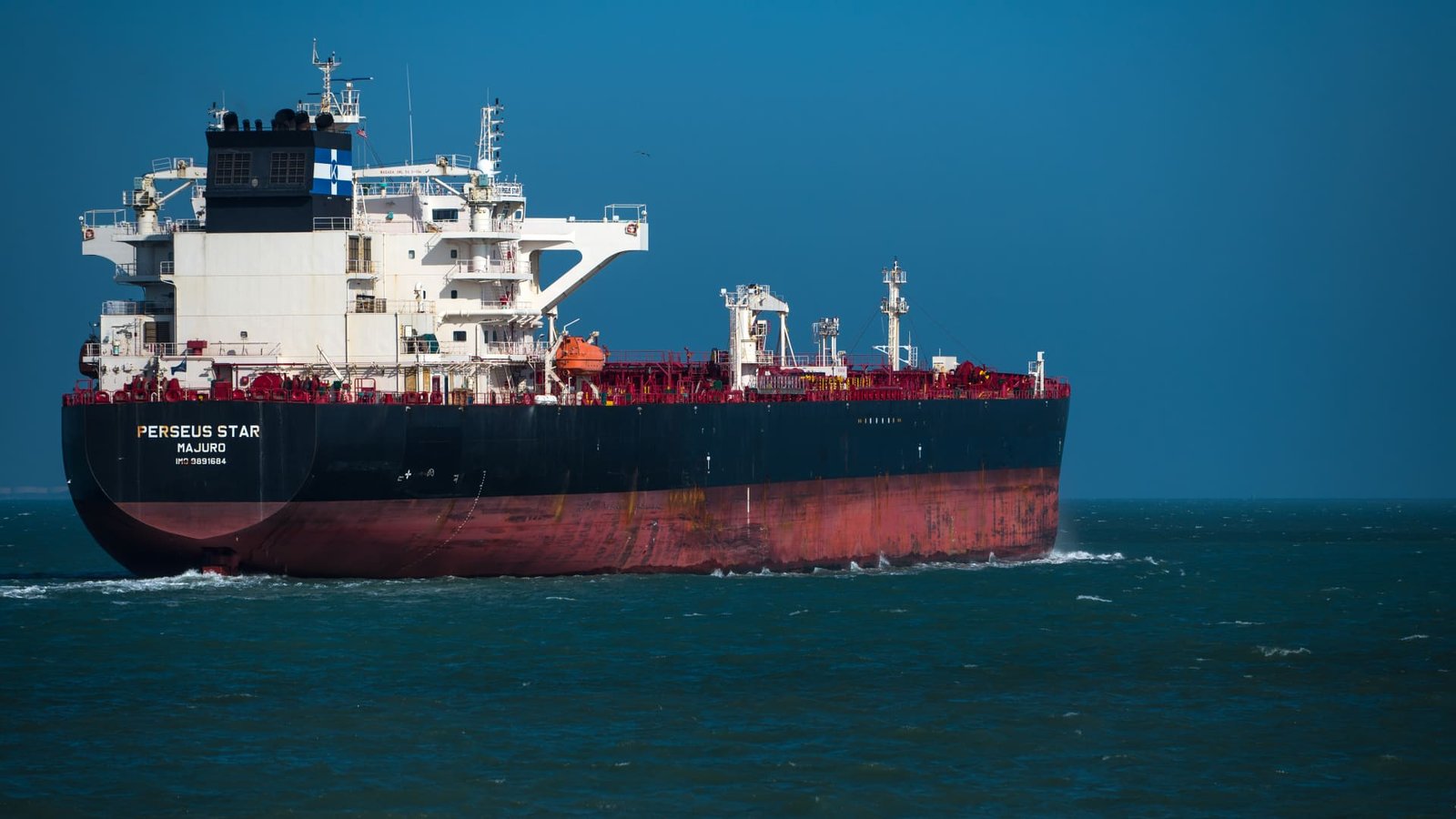
Tanker traffic through the Strait has already come to a halt as shipping companies take precautionary measures, according to consulting firm Rystad Energy.
“Nothing seems to be going through at the moment – tankers are definitely spooked,” said Matt Smith, oil analyst at energy consulting firm Kpler.
More than 14 million barrels per day passed through the Strait on average in 2025, or about a third of the world’s total seaborne crude exports, according to Kpler data. About three-quarters of those exports go to China, India, Japan and South Korea, according to the firm.
Brent could hit $100 per barrel as the security situation in the Middle East spirals, Barclays analysts told clients in a Saturday note. It is even possible that the market is looking at a material disruption that sends Brent spot prices above $120 per barrel, the UBS analyst told their clients.
“How this ends is extremely uncertain at this point but in the meantime oil markets will have to face their worst fears,” Barclays analyst Amarpreet Singh told clients. “The potential effect on oil markets is hard to overstate.”
Iranian oil exports could also collapse amid uncertainty about who is in charge in Tehran, domestic unrest, and labor strikes in its oil producing regions and ports, said Andy Lipow, president of Lipow Oil Associates. Iran produces about 3.3 million bpd.
Brent crude oil futures, YTD