World has entered an era of ‘global water bankruptcy,’ U.N. warns
Humans are using more water than Earth can support, with many water sources already damaged beyond repair, a report from the United Nations found
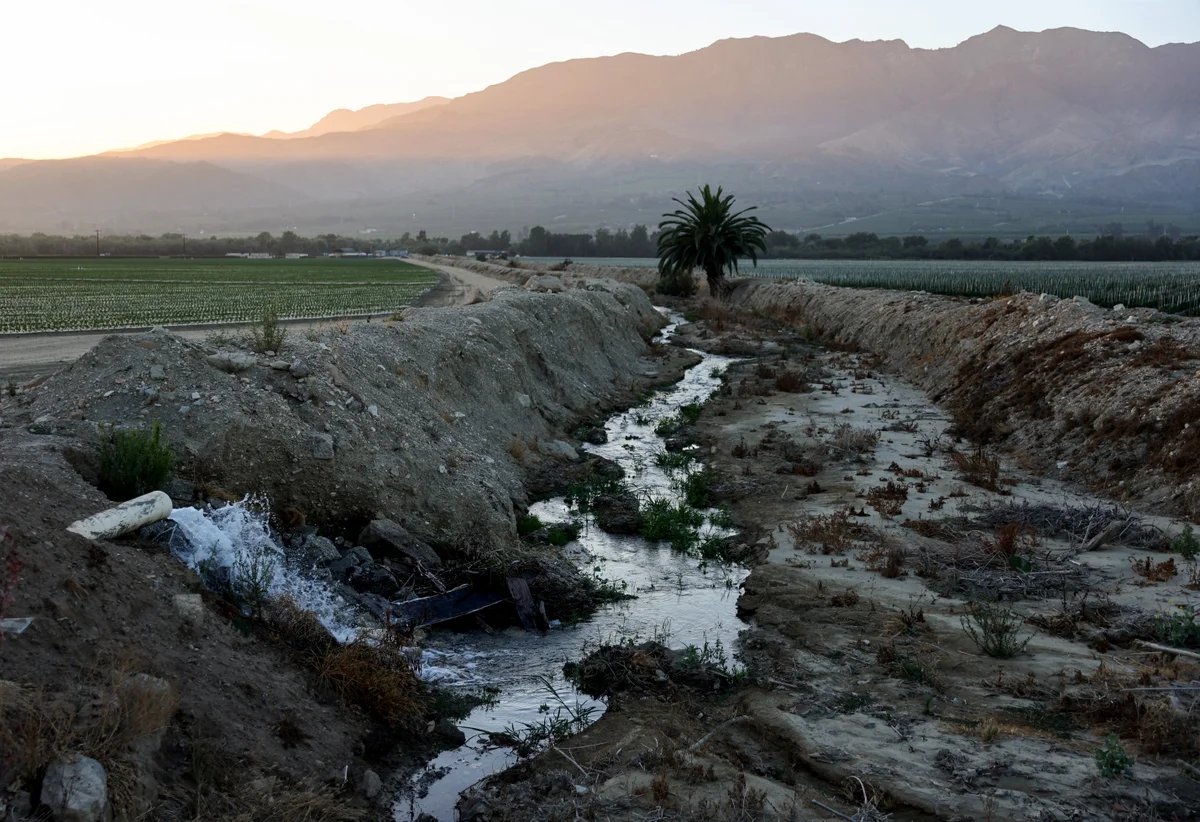
An irrigation ditch carries a light flow of water along agricultural fields amid drought conditions in June 2022 near Fillmore, Calif.
Humans use more water than the planet can support, entering an era of “global water bankruptcy,” a new report from the United Nations warns. Almost 75 percent of the world’s population now lives in countries that are experiencing significant water insecurity, according to the report.
Rivers, lakes, wetlands and other water sources are already “damaged beyond realistic prospects of full recovery,” the report states.
The report compares the situation to a bank account going into the red: humans are using more water than our planet can produce and using more water that is stored in sources such as glaciers, wetlands and aquifers.
On supporting science journalism
If you’re enjoying this article, consider supporting our award-winning journalism by subscribing. By purchasing a subscription you are helping to ensure the future of impactful stories about the discoveries and ideas shaping our world today.
The impacts extend beyond drinking water, the report states. Kaveh Madani, director of the United Nations University Institute for Water, Environment and Health and author of the report, said at a press briefing on Tuesday that a functioning water system helps prevent biodiversity loss, fights climate change and supports national security.
“If you invest in water, you’re investing in everything else,” Madani said.
The report stresses that countries must take immediate action to put more sustainable water systems in place. “Recognizing this post-crisis reality is not an act of resignation,” the report states. It is a “starting point” to safeguard water “before the remaining natural capital is lost.”
It’s Time to Stand Up for Science
If you enjoyed this article, I’d like to ask for your support. Scientific American has served as an advocate for science and industry for 180 years, and right now may be the most critical moment in that two-century history.
I’ve been a Scientific American subscriber since I was 12 years old, and it helped shape the way I look at the world. SciAm always educates and delights me, and inspires a sense of awe for our vast, beautiful universe. I hope it does that for you, too.
If you subscribe to Scientific American, you help ensure that our coverage is centered on meaningful research and discovery; that we have the resources to report on the decisions that threaten labs across the U.S.; and that we support both budding and working scientists at a time when the value of science itself too often goes unrecognized.
In return, you get essential news, captivating podcasts, brilliant infographics, can’t-miss newsletters, must-watch videos, challenging games, and the science world’s best writing and reporting. You can even gift someone a subscription.
There has never been a more important time for us to stand up and show why science matters. I hope you’ll support us in that mission.