Weekend winter storm that battered eastern U.S. was supercharged by climate change
A warmer atmosphere can hold more moisture, and that’s why last weekend’s winter storm dumped more snow, sleet and freezing rain than similar weather systems might have in the past
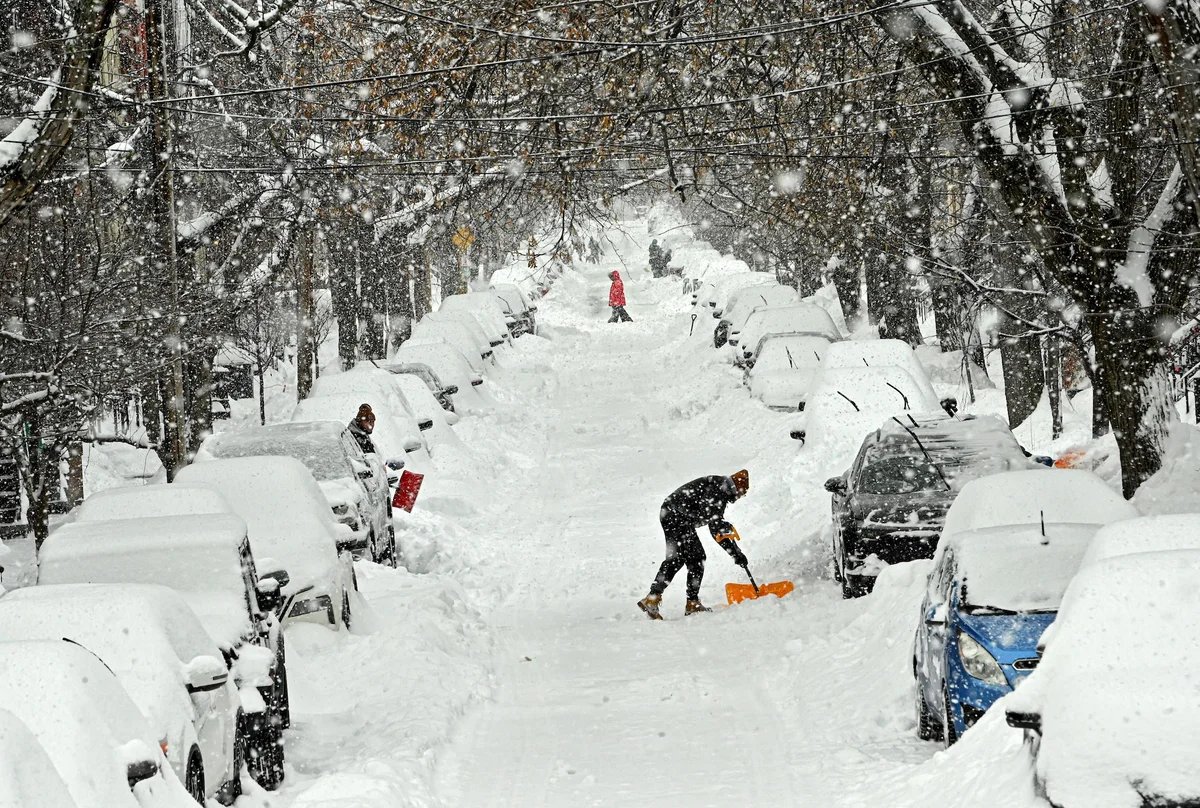
People dig out their cars parked along Lancaster Street during a winter storm on January 26, 2026, in Albany, N.Y.
Lori Van Buren/Albany Times Union via Getty Images
If you live in the eastern U.S., you are likely among the millions dealing with the aftereffects of the heavy snow, sleet and freezing rain that buried the region over the weekend. And while it may be extremely cold, new research reveals that last weekend’s weather was in fact supercharged by global warming.
Some of the hardest hit places saw more than two feet of snowfall, while up to an inch of ice from freezing rain shut down roads and cut power throughout the Southeast. No doubt, this storm was big. It was always going to pack a punch—but it dumped more frozen precipitation than it would have if the storm had occurred decades earlier. It may seem paradoxical that a warming climate could mean heavier snowfalls, but hotter, albeit still below freezing, temperatures are nonetheless a recipe for more snow.
That’s because for every one degree Celsius (1.8 degrees Fahrenheit) of warming, the atmosphere can hold about 7 percent more moisture. And this storm happened in an atmosphere that has become up to five degrees C (nine degrees F) warmer than it was in past decades, according to the research organization ClimaMeter, which produced the new analysis. That means that this storm had up to 20 percent more precipitation than it would have if there was no human-caused warming.
On supporting science journalism
If you’re enjoying this article, consider supporting our award-winning journalism by subscribing. By purchasing a subscription you are helping to ensure the future of impactful stories about the discoveries and ideas shaping our world today.
Some regions of the U.S. could see more snow for a time as the planet’s temperature rises—particularly those places prone to lake-effect snow, because bodies of water take longer to freeze over in winter.
The effect of climate change on snowstorms means that “infrastructure and emergency planning standards, historically based on past snowfall records, may no longer be sufficient,” said analysis co-author Haosu Tang of the University of Sheffield in England in a statement.
It’s Time to Stand Up for Science
If you enjoyed this article, I’d like to ask for your support. Scientific American has served as an advocate for science and industry for 180 years, and right now may be the most critical moment in that two-century history.
I’ve been a Scientific American subscriber since I was 12 years old, and it helped shape the way I look at the world. SciAm always educates and delights me, and inspires a sense of awe for our vast, beautiful universe. I hope it does that for you, too.
If you subscribe to Scientific American, you help ensure that our coverage is centered on meaningful research and discovery; that we have the resources to report on the decisions that threaten labs across the U.S.; and that we support both budding and working scientists at a time when the value of science itself too often goes unrecognized.
In return, you get essential news, captivating podcasts, brilliant infographics, can’t-miss newsletters, must-watch videos, challenging games, and the science world’s best writing and reporting. You can even gift someone a subscription.
There has never been a more important time for us to stand up and show why science matters. I hope you’ll support us in that mission.