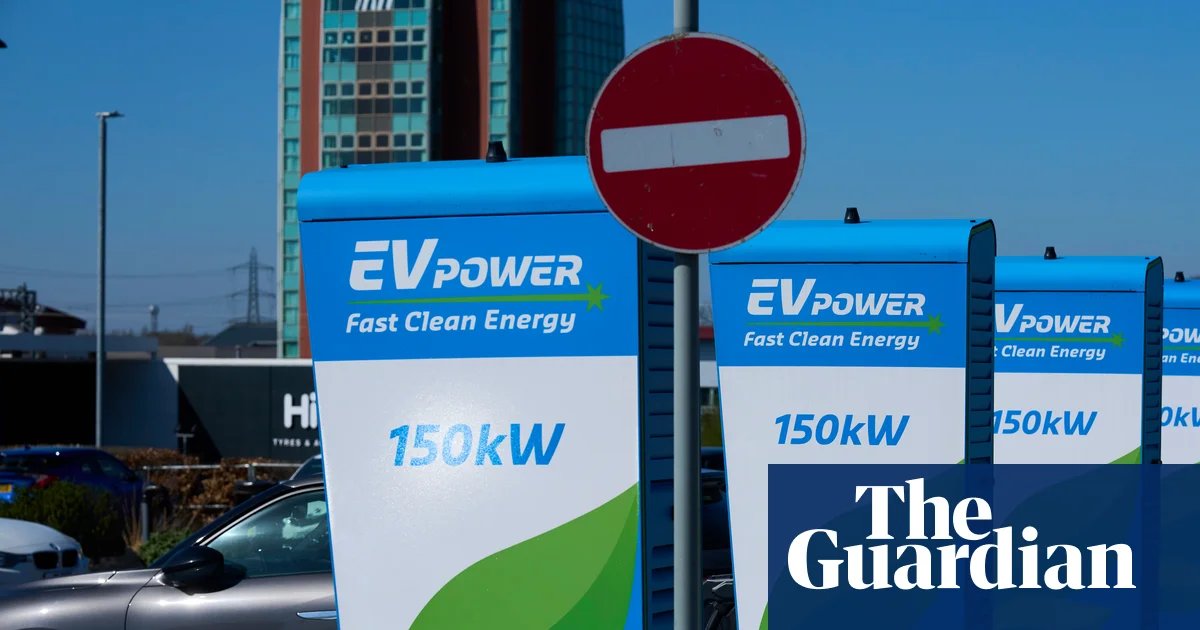
Government officials considered cutting the VAT charged on electricity used at public EV chargers from 20% to 5% at the last budget, but the Treasury under chancellor Rachel Reeves rejected the proposal amid disagreement between departments.
Officials in the Department for Transport encouraged electric car charge point operators to write to the Treasury explaining how they would respond to a VAT cut, according to three industry sources. The charger companies said that they would pass the tax cut on to consumers.
DfT ministers are understood to support lowering VAT on public charging, at a time when households are under pressure from the cost of living. The department is led by Heidi Alexander.
The government is coming under increasing pressure to cut VAT on electricity for public charging, because of a perceived unfairness between those able to charge at home and those without off-street parking.
People who charge at home pay the domestic rate of 5% on their electricity, but but HMRC applies the standard 20% rate to public charging. Critics have called the difference a “pavement tax” that is holding back the transition to electric vehicles, particularly in urban areas.
However, the Treasury has resisted change, over what are understood to be concerns about the cost of future lost VAT, which would grow as the number of EVs rises and fuel duty revenues from petrol and diesel cars decline.
The VAT disparity will be an important part of the government’s review of public charging costs, which is due to report in the autumn.
Yet the Treasury’s hand could be forced. A London tax tribunal in March found that the rate should have been 5% all along, because of a misapplication of the law. HMRC is appealing against the ruling, but several experts have said they doubt it will succeed.
Dan Caesar, the founder of Electric Vehicles UK, said: “VAT on public charging should be canned, making EVs cheaper for all. HMRC’s appeal against this, despite best efforts of other departments, shows what a mess the government is in.
“At the same time, the majority of British citizens can still benefit from much cheaper motoring, and the government shouldn’t be afraid to shout that from the rooftops.”
Equalising VAT on public charging would probably add an incentive for more people to shift to electric cars, at a time when other policies from the Labour government have slowed it down. Reeves in November said the government would introduce a 3p-a-mile charge for electric cars from 2028 to replace fuel duty revenues.
The government is also considering further weakening its zero emission vehicle (ZEV) mandate, which requires manufacturers to sell an increasing share of electric cars. Charging companies have reacted furiously to the prospect of fewer electric cars plugging in at their charging infrastructure.
A government spokesperson said: “The government is boosting the EV transition by saving drivers up to £3,750 off a new car, with more than 95,000 people benefiting already, and investing over £7.5bn into the UK electric vehicle sector.
“We’re also reviewing the cost of public EV charging which will look at the impact of energy prices, wider cost contributors, and options for lowering these costs for consumers.”