Come Sunday, the team behind Train Dreams will finally learn the results of their four Oscar nominations, including Best Picture. And, for producer Ashley Schlaifer, it’s been a very long road to this moment.
The Clint Bentley-directed film premiered at Sundance in 2025, was snapped up by Netflix and went on to win Best Feature, Director and Cinematography at the Independent Spirit Awards, with DP Adolpho Veloso also winning the BAFTA and Critics Choice Award. Behind-the-scenes though, the film has been some ten years in the making. Before Bentley came on board with co-writer Greg Kwedar, Schlaifer was there, pushing for this adaptation of Denis Johnson’s novella. A self-confessed bookworm, Schlaifer fell hard for Johnson’s story and was determined to see it on screen, despite its not being an obvious choice. After seeing Bentley’s film Jockey (also written with Kwedar), Schlaifer zeroed in on him to direct. Here, she tells the story of shepherding the film from development through production — which, on an indie film, as she says, often means playing every role from CEO to assistant.
DEADLINE: Congratulations. You’ve been working in this business a while, including on films like Twilight and Now You See Me. It must feel pretty good to have this Oscar nomination for Train Dreams, which you were so deeply involved with from start to finish.
ASHLEY SCHLAIFER: It’s wild and it’s such a dream. It’s not like when I read the novella I was like, “Oh, this is going to be what happens.” I think it always just starts with story, but yes, to be here now… We’ve obviously had so many incredible supporters, and Netflix has been so incredible, but this film took many years to make and was done truly in an independent way all the way through. And now, we’ve obviously have had the most amazing, incredible, giant machine behind us for the last year. And so, to be here now, really, yes, it is a dream.
(L-R) Joel Edgerton, Felicity Jones, Kerry Condon on a panel for “Train Dreams” at Deadline’s Contenders Film: London event.
Deadline
DEADLINE: This novella was not an obvious choice to put on the screen. The protagonist Robert Grainier (Joel Edgerton) is so interior, the dialogue is minimal, so this had to feel like a huge challenge. Tell me about when you first came across the novella and what about it made you envisage it as a film?
SCHLAIFER: At that time, I was running Kamala Films and a friend called me inquiring about the book, and it wasn’t something that I had heard was on our small slate. And so, I called [Kamala Films founder] Marissa [McMahon] and I said, “Is this a project that we have?” And she had said that she had optioned it several years prior, but the rights had lapsed well before I started with the company. She asked if I had read it, and I had read Denis’s other works, Jesus’ Son and Tree of Smoke, so I was already a really big fan of his, but I hadn’t read Train Dreams, and so I went and I read it.
And I think in the way that people get to experience the film (which I don’t get to experience by having produced it and when you are behind the scenes making the thing), I think I got to experience the novella that way. And it’s some of the most beautiful prose that I’ve ever read. Just the way that he writes can be so stark and cut you like a knife, and sometimes have this really dark, twisted humor. I think Clint calls it this “woolliness”, this strangeness. At first, it just sat with me. I couldn’t get the book out of my head. And so, I had two competing thoughts: One of, “This has no business being a film,” and then the other competing thought was, “I can’t stop thinking about this.”
I feel like we punched above our weight. We were this tiny little engine that could. We didn’t have enough days, we didn’t have enough money, but we all made it work, and everyone really cared.
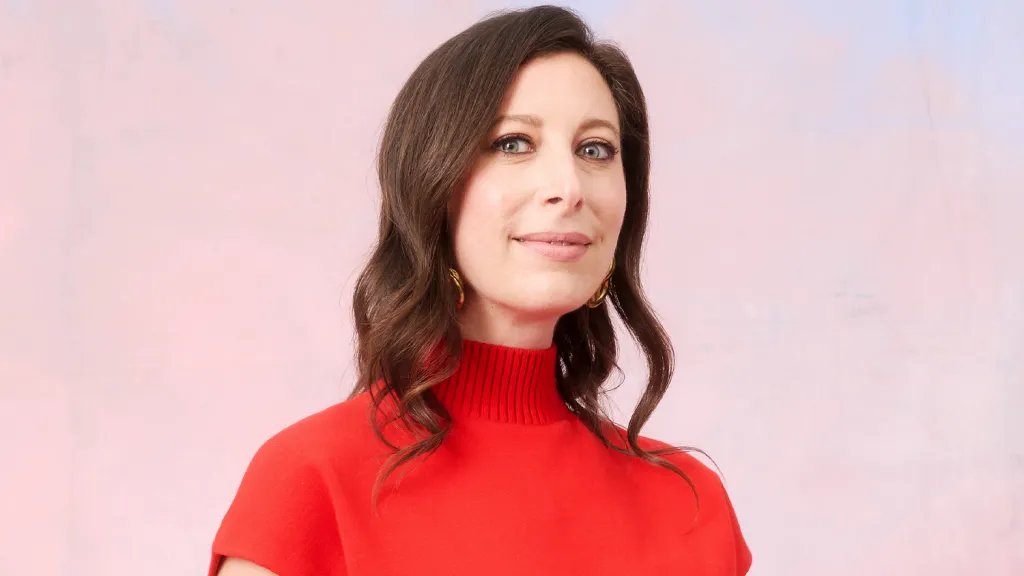
Ashley Schlaifer, Train Dreams producer.
Just from the time I was a child, I was a voracious reader. My mother couldn’t buy enough books for me to read. So I was always reading so many books, and then hiding under the covers with a flashlight, reading. So I’ve always been a big book lover, and I think then that translated into also a love for film and that translation of the words on the page, and being able to translate them into something on the screen that people can experience in a three-dimensional way, in a different way.
So, I think as a producer, when you can’t stop thinking about a story, whether that’s a novella, or an article, or an original idea, I think that you have to follow that. I went back to Marissa and I said, “I really think we should try to get the rights back and I want to take this on.” I knew that it was this unlikely adaptation, but also, I think I saw this love story. I saw this love letter to ones that we’ve loved and lost, and to life, and all these things, and this story about this person who is in every man and is like any single person that lives a life, but how that all has meaning, and I think that really stuck with me. Because most of us living in this world, we’re not going to be written in history books and we’re not conquering new worlds, but it doesn’t mean that each and every single one of our lives isn’t special, doesn’t have meaning, and I think that’s what was so special about the novella and, obviously, what Clint and Greg captured in the script, what Clint captured in the film, Joel, everyone, the whole incredible team that we have together. But yes, it really started with just not being able to get the story out of my head, and knowing that it might be a Herculean task, but wanting to take it on.

L-R: Ashley Schlaifer, Marissa McMahon, Clint Bentley, Joel Edgerton, Michael Heimler and Teddy Schwarzman attend the 2025 “Train Dreams” Premiere at Sundance.
Arturo Holmes/Getty Images
DEADLINE: I agree with you on every level about what the story is saying. To me, it’s a story of growing up. Eventually, he realizes the answers are all within. The call is coming from inside the house, and it’s just existence, like the bugs crawling on the ground. What was it Kerry Condon’s character says about nature?
SCHLAIFER: Yes, that we’re all connected from every little thing, from the trees down to the little ants. There were so many themes in the novella that Clint and Greg did an incredible job of adapting and bringing to life in the film. I think it’s these connections and love — full stop — and all these themes that I really believe in, that I think were encompassed in this short little novella. It’s only 117 pages. It’s shorter than many scripts I’ve read over the 20 years of my career, and yet it encompassed so much.
DEADLINE: It’s like alchemy putting together a project like this. You’re basically a wizard of sorts with your cauldron. Tell me about what you saw in Jockey that made you go after Clint to direct? He was obviously following a story that’s close to his family. His father is a jockey. He and Greg are journalistic-style filmmakers.
SCHLAIFER: So, we had been on this quixotic search for the right filmmaker, and we talked with some very interesting people, but I think it’s really important to also listen and make sure that you’re talking about the same film. It’s so important to make sure that everyone is rowing in the same direction. And then, like I said, we’d been in this long search to find the right filmmaker for it, and then the pandemic happened. So, then, all of film, independent film… It was obviously a hard time for so many, but for us in the film industry, things stopped in a lot of ways.
I was really just excited to dive into these films in Sundance to escape the reality we’re living in. And I remember reading the logline for Jockey, and there was something about it that just struck me, even just from the few little sentences that Sundance puts in their little booklet. And there was something about it. I can’t tell you what that was, but it seemed like, OK, it’s this simple story of this man. The moment it was over, I was like, “This is the director for Train Dreams. This is the guy,” Jockey was made for a very small [amount of money], well under a million. There were so many things about it. It was the organic treatment of emotion and the way that the emotion wells up in you in that film, and crescendos and builds, and this treatment of this man. Before I even knew that his father was a jockey and that this was really a story, an ode, to his family, I just thought like, “Oh, to tell the story about the person that’s usually never shown or talked about in these films in this world.” And it felt like he had captured this beautiful ennui, and this emotion, and this feeling.
‘Train Dreams’
Netflix
While it was so different from what Train Dreams was, I think what was the most important thing was making sure you’re finding a filmmaker who was going to capture those emotions. It doesn’t matter whether it was set at a horse farm in present day, or 1920s Pacific Northwest. I think the humanistic nature of Clint’s filmmaking and that story, that’s what spoke to me. And I thought, “Well, what if we give this incredible filmmaker a larger platform, more money, a bigger canvas? What will he do then?” And so, yeah, immediately tracked them down, and that’s when I got to meet both Clint and Greg.
So we’re on the Zoom and I’m raving about Jockey. I think at that point, I hadn’t seen Transpecos [directed by Kwedar, co-written with Bentley], so they’re telling me about that. And I immediately watched it right after our Zoom… I don’t think Clint was looking to do a period film. He wasn’t setting out to do that, but we started talking about all these things and the things that they care about, and nature, and these human stories, and people that are lost. And once we started talking about those themes, they started to get excited.
Finally, they came to me with, “Hey, here’s our way in.” So it was a really beautiful journey getting to develop it. I know you’ve talked to them about this, but they took themselves to the Idaho panhandle and Washington. They told me that they were going to go do this. They were like, “Yeah, we’re going to go up there and we’re going to just go write.” I think that’s what’s so beautiful. They incorporated their journalistic backgrounds in the way that they treated researching the world. So, that way, it felt authentic.
DEADLINE: You shepherded this through the gritty nuts and bolts of the production too. You were on hand dealing with the 29-day shoot in Washington State. Kerry Condon called it “rustic”, that was how she put it.
SCHLAIFER: I love Kerry.
DEADLINE: She told me she loved it though, because she’s a horse farm girl.
L-R: Joel Edgerton and Kerry Condon in ‘Train Dreams’
Netflix
SCHLAIFER: It’s true. There was no Ritz. There was no Four Seasons. It is rustic. I think we got so incredibly lucky with every single person who joined the team. Obviously, we were lucky to get Adolpho, who had worked on Jockey with Clint. We got Alexandra Schaller, who hadn’t worked with Clint before, but who’s an incredible production designer and made magic happen on a very independent budget. Malgosia Turzanska [costume designer], who’s had such an incredible year, she went directly from our film to Hamnet. And so, we had these incredible artisans.
After Clint and Greg had written their script, we spent a bunch of time figuring out who was going to play our Robert. Obviously, there’s the physicality of having someone who lived during that time and who would be out there in the woods, chopping down trees, building railroads. But then, more so, it’s who’s someone who you want to look at their face for two hours and who can do that subtle performance, because Robert is such an internal character. He’s a man who has big emotions, but doesn’t know how to always express them through words. And I don’t know if everyone realizes how much more complicated and difficult it is to do the type of performance that Joel gave in the film. And when he said yes, that was when everything started.
I believe it was March in 2023 when Joel said yes, then it was full steam ahead in terms of starting to get all of our artisans onboard, like Alex and Adolpho, Malgosia. And then the one thing that… At that time, it was devastating, but I think we all talk about how we ultimately made the better movie for it, was the strikes. And we hit pause when the rules changed, and we were ready with our waiver, but then, it’s a miracle it got made, but there are all these beautiful moments of kismet. Joel talks about how someone had given him the book years prior to us submitting it.
DEADLINE: He tried to get the rights to it before he learned they weren’t available.
SCHLAIFER: Yes.
Felicity Jones as Gladys and Joel Edgerton as Robert Grainier in ‘Train Dreams’.
Netflix
DEADLINE: And Clint tells a story about how the color yellow became an important theme and then one day they discovered a field full of yellow flowers had appeared right where they planned to shoot.
SCHLAIFER: Exactly. So that’s the thing. Every movie is difficult to mount, and this one had all sorts of challenges, but I also think it was coupled with such incredible kismet in that way. Joel and Felicity [Jones] had been wanting to work together, and it hadn’t worked out in the past, and getting her to play Gladys. Them on screen together just felt so real and organic. And obviously, Bill Macy and Kerry. I feel like we punched above our weight. We were this tiny little engine that could. We didn’t have enough days, we didn’t have enough money, but we all made it work, and everyone really cared.
I think everyone who read the script… Kerry read it. She was in between F1, this giant film, and we were asking her to come in and just do a few days for this very small role, but it’s like her role, that arc, is so important. So I really do believe, just like her character says, every little thing matters. On this film as well, it’s like every little piece, every single person who touched it along the way helped it to become what it is.
DEADLINE: So, can you tell me what you’re up to next?
SCHLAIFER: There’s a couple of things in packaging. I’ve started producing and started my own company [Blue Hour Pictures]. To me, it’s always been about two things. I’m always hunting for incredible stories in two ways. I’ve always gone to every festival, both domestic and foreign, looking next for great filmmakers. It’s like finding the Clint Bentleys of the world, these incredible filmmakers to work with. The same year at Sundance, I met this other incredible filmmaker, Julie Zammarchi, who is super brilliant. I’m trying to do a film with her. The other piece has always been reading books. So, there’s a couple projects I’m putting together now, hopefully I’ll be able to share very soon. For me, it’s always about things that really feel like they stand out and feel different. It can be things that feel both intimate, and also epic at the same time.