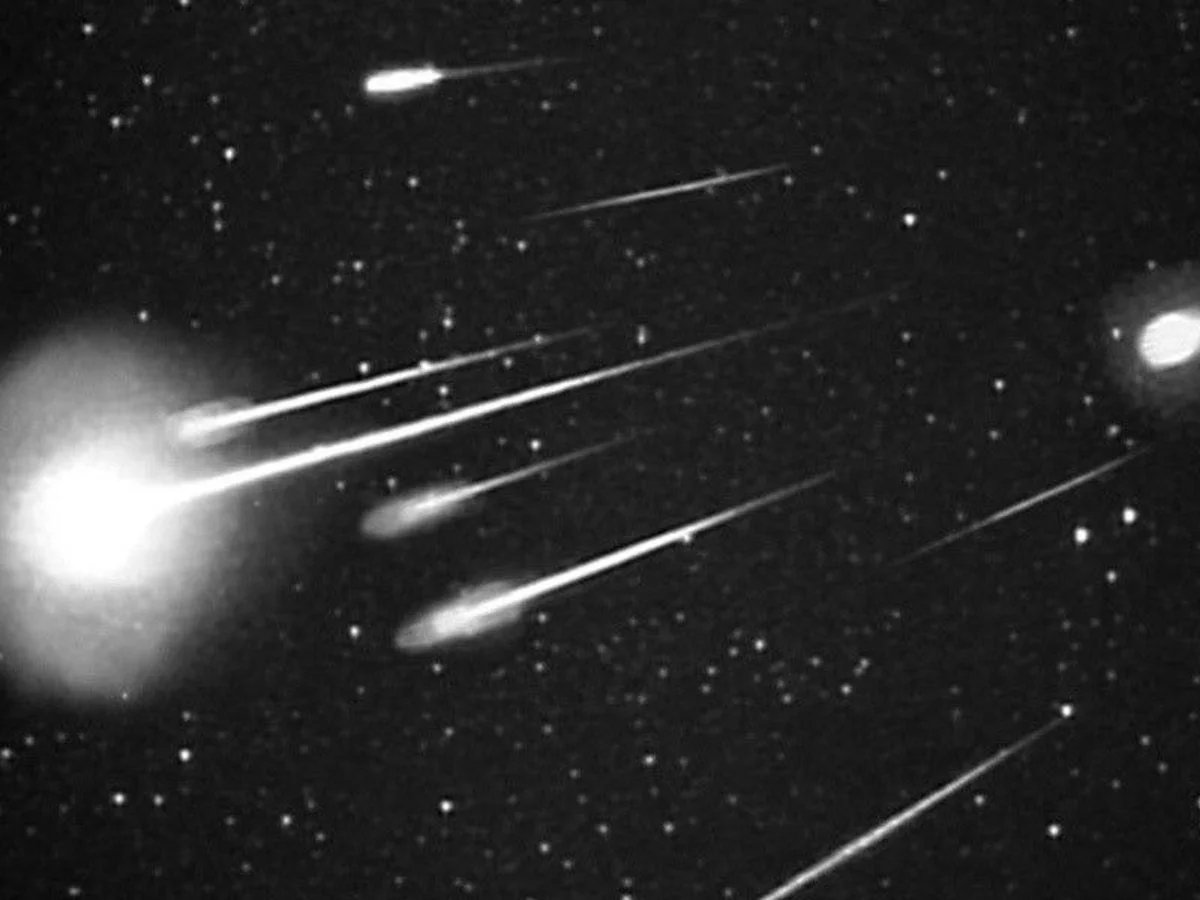
Stunning video shows huge fireball blazing over Europe
A large, bright meteor fell over Europe on Sunday, with some observers saying they could hear the rock’s explosive descent from the ground
A massive fireball streaked through the evening sky over Europe on Sunday, showering at least one German town with debris and triggering an investigation into the size of the object.
The European Space Agency’s Planetary Defense team, which is leading the investigation, currently estimates that the fireball was a few meters in diameter. Apparently the event was audible from the ground, and the fireball was visibly glowing for about six seconds. Falling debris from the meteor damaged a house, according to the agency, but there are no reported injuries.
On supporting science journalism
If you’re enjoying this article, consider supporting our award-winning journalism by subscribing. By purchasing a subscription you are helping to ensure the future of impactful stories about the discoveries and ideas shaping our world today.
For comparison, a large meteor that fell over Chelyabinsk Oblast in Russia in 2013, was 18 meters in diameter. It exploded during its descent about 30 kilometers (18.6 miles) above the ground, showering the surrounding area with debris and triggering a shockwave that shattered the windows of houses, injuring many. Scientists estimated that it had the same explosive power as about 440,000 tons of TNT, according to NASA.
Because of the timing of Sunday’s event and the direction the meteor was traveling in as it fell, the European Space Agency doesn’t think any of the large-scale telescope sky surveys that are designed to scan for these objects would have caught it.
It’s unclear where the fireball came from; these falling space rocks are often debris from passing comets and asteroids. When these rocks enter Earth’s atmosphere at speed, they burn up—the bigger the rock, the brighter the burn. If any bits of a meteor survives the journey through the atmosphere to hit the ground, then it becomes a meteorite. Unless they are very large, meteors typically break apart in the atmosphere, as the fireball over Europe did on Sunday.
It’s Time to Stand Up for Science
If you enjoyed this article, I’d like to ask for your support. Scientific American has served as an advocate for science and industry for 180 years, and right now may be the most critical moment in that two-century history.
I’ve been a Scientific American subscriber since I was 12 years old, and it helped shape the way I look at the world. SciAm always educates and delights me, and inspires a sense of awe for our vast, beautiful universe. I hope it does that for you, too.
If you subscribe to Scientific American, you help ensure that our coverage is centered on meaningful research and discovery; that we have the resources to report on the decisions that threaten labs across the U.S.; and that we support both budding and working scientists at a time when the value of science itself too often goes unrecognized.
In return, you get essential news, captivating podcasts, brilliant infographics, can’t-miss newsletters, must-watch videos, challenging games, and the science world’s best writing and reporting. You can even gift someone a subscription.
There has never been a more important time for us to stand up and show why science matters. I hope you’ll support us in that mission.