
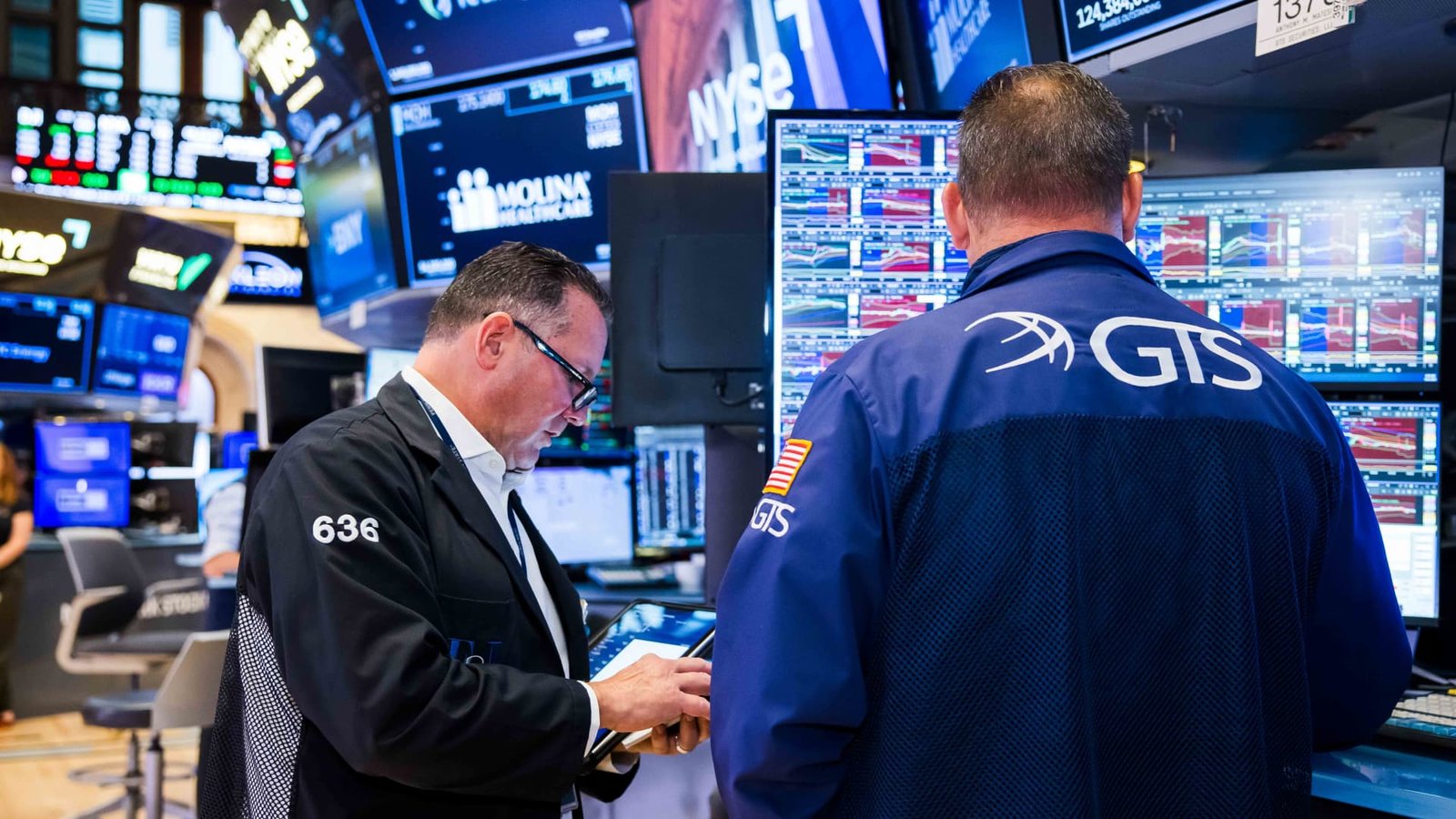
Traders work on the floor of the New York Stock Exchange.
NYSE
The S&P 500 fell on Wednesday as artificial intelligence giants Nvidia and Oracle came under pressure for a second day.
The broad market index dropped 0.4%, while the Nasdaq Composite pulled back 0.5%. The Dow Jones Industrial Average declined 160 points, or 0.4%.
Nvidia slid almost 1%, continuing its declines from Tuesday as heightened fears about the potentially circular nature of the AI industry drew investor skepticism. Earlier this week, the chipmaker announced a $100 billion partnership with OpenAI.
Fellow leading AI player Oracle also fell for a second straight day, losing 2% Wednesday.
Beyond the two names, shares of Micron Technology moved lower by 2% as the company’s earnings and forecast weren’t strong enough to impress investors, signaling that confidence in the AI trade is still in question.
The S&P 500 closed in the red on Tuesday, snapping a three-day winning streak, on those AI trade worries. The index had reached a new all-time intraday high earlier in the session and posted a record close Monday. The tech-heavy Nasdaq fell as well, bogged down by Nvidia.
Traders could be profit-taking amid elevated market valuations, which Federal Reserve Chair Jerome Powell called out at a Tuesday press conference.
“Tech is probably a little bit extended,” Jay Hatfield, CEO of Infrastructure Capital Advisors, said to CNBC, adding that “there’s no real reason to be bullish.” “I would not say, ‘Oh, nobody’s going to use AI and the world is coming to an end, but it’s clearly valuation.”
“This might go on for a couple days,” he also said, noting seasonal weakness. As it stands, the S&P 500 is still almost 3% higher on the month, much more than September’s average decline of 4.2% in the past five years.
Traders are cautious before jobless claims data Thursday and PCE inflation data Friday. They’re watching troubling developments regarding a government shutdown as well.
President Donald Trump had axed a meeting scheduled for this week with Senate Minority Leader Chuck Schumer and House Minority Leader Hakeem Jeffries that could have possibly averted the shutdown before a Sept. 30 deadline.

