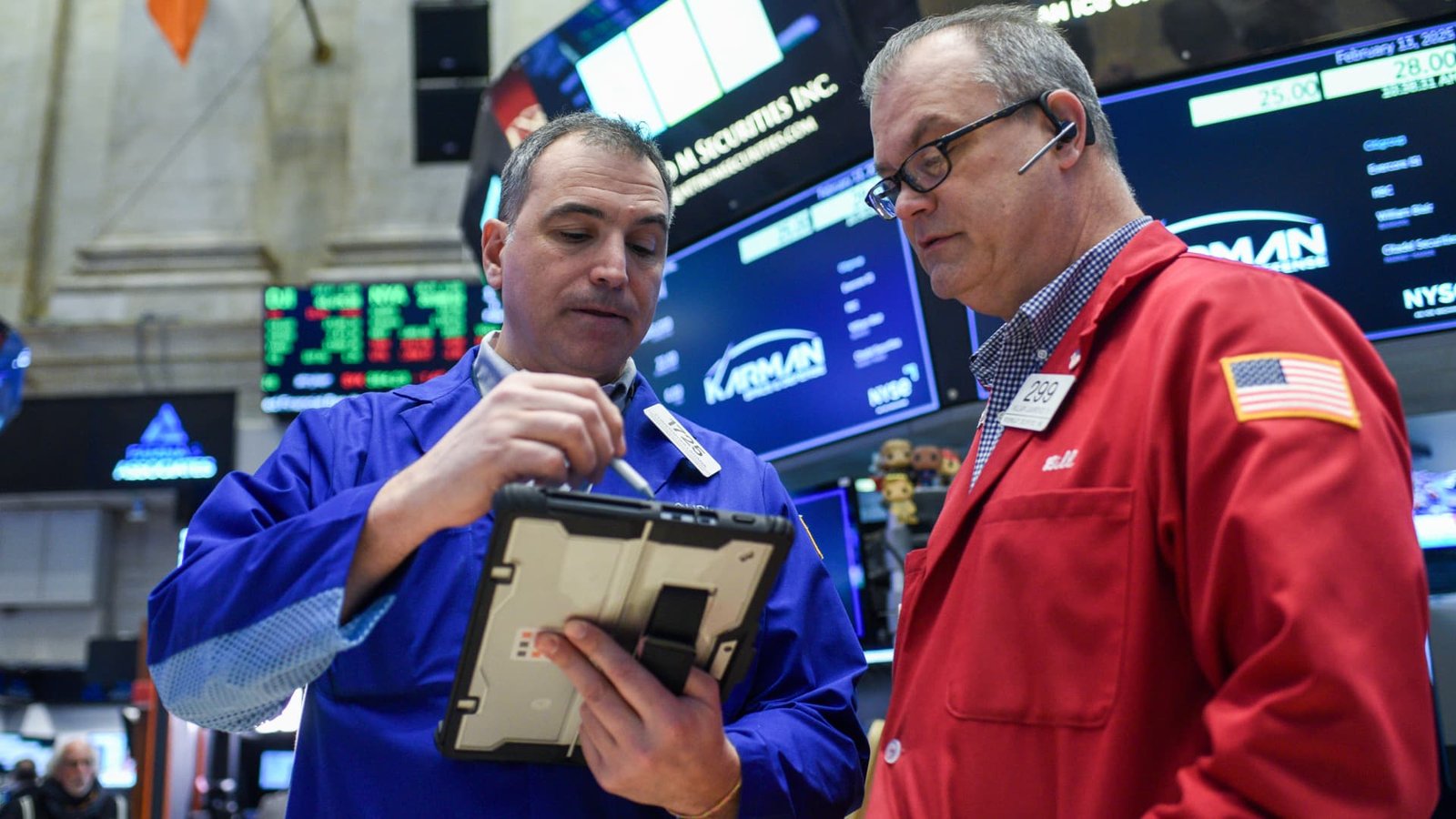
Traders work on the floor of the New York Stock Exchange on Feb. 13, 2025.
Danielle DeVries | CNBC
U.S. stock futures wavered early Wednesday, as the latest jobs data exacerbated concerns about the economy and appeared to pull attention away from hopes of a compromise on President Donald Trump’s controversial tariffs.
Futures tied to the Dow Jones Industrial Average and S&P 500 each traded about 0.1% down. Nasdaq 100 futures flickered around flat.
Stock futures took a leg up overnight after Commerce Secretary Howard Lutnick said he expected an announcement on an agreement with Canada and Mexico. Lutnick added on Wednesday morning that Trump was considering which sectors of the economy to give relief to on the taxes.
Those updates have boosted stocks like automakers in Wednesday’s premarket that were hard hit due to concerns about rising costs for materials. However, even as investors’ desires for tariff resolutions swirled, Trump said a “little disturbance” from his levies slapped on the two countries — along with China, which was also hit with a new import tax — was OK during a Tuesday night address to Congress.
But those gains largely evaporated on Wednesday morning after the ADP’s private payroll report showed far less job growth in February than predicted by economists polled by Dow Jones. That release added to a growing stack of data points which have raised alarm around slowing in the U.S. economy.
Trump’s tariffs — and subsequent announcements of retaliatory plans from China, Mexico and Canada — have rocked markets this week. The tech-heavy Nasdaq on Tuesday came within striking distance of correction territory, a term that refers to an index falling 10% from a recent peak. With Tuesday’s declines, the S&P 500 had officially wiped out its gains since it closed on Election Day in November.
“The thing that we have emphasized over and over again is that Trump introduces uncertainty,” said Michael Green, chief strategist at Simplify Asset Management. “We now are at a point where a single tweet or a single release of information can significantly change the interpretation of what markets look like.”