This may be the oldest ‘butthole’ imprint on Earth
Fossils show exceptionally rare evidence of a cloacal vent—the slit that most vertebrates use to excrete, have sex and lay egg—which could shed light on the evolution of the orifice
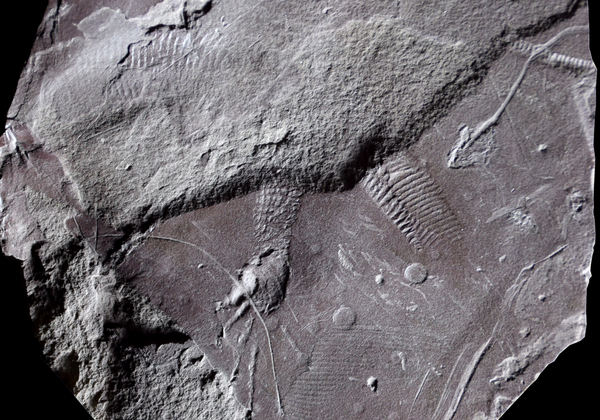
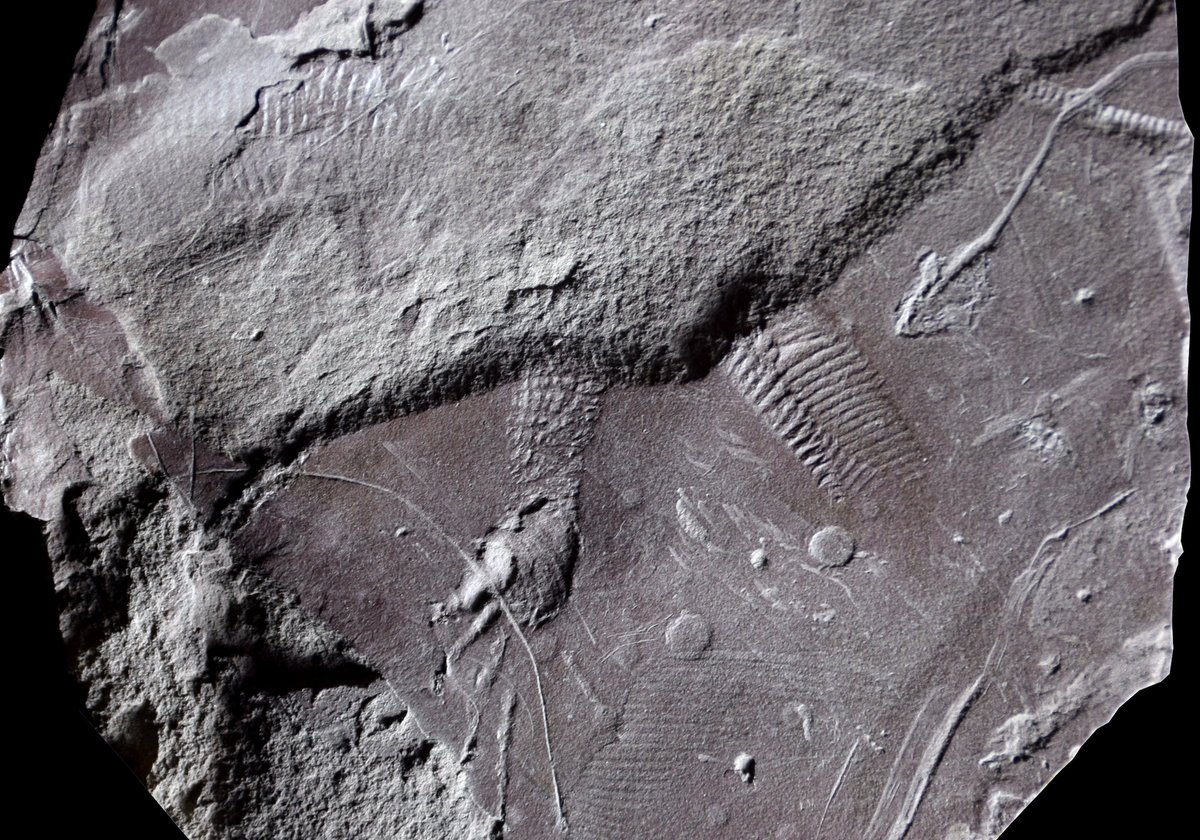
Fossil impression of the hind limb, tail and cloacal vent of Cabarzichnus pulchrus, a small lizard-like reptile.
Around 299 million years ago volcanic eruptions buried a patch of mud in what is today central Germany. Amid impressions of scales, tails and feet that fossilized in the patch was something else: Earth’s oldest known “butthole” imprint.
“Finding an impression of [an] animal squatting in the mud and preserved with such fidelity is quite a scoop,” says Jakob Vinther, a paleontologist at the University of Bristol in England, who was not involved with a new study describing the find in Current Biology. “The animal literally cemented itself—and its nether regions—into eternal history like the movie stars on the Hollywood Walk of Fame.”
The structure imprinted into the fossilized mud is a slit that is technically called a cloaca. Unlike marsupials and placental mammals that split their “business elements” into separate orifices, “most other animals have the Swiss Army knife equivalent of a rear opening,” Vinther says. This gives them “one opening for everything—pooping, peeing, sex and laying eggs.”
On supporting science journalism
If you’re enjoying this article, consider supporting our award-winning journalism by subscribing. By purchasing a subscription you are helping to ensure the future of impactful stories about the discoveries and ideas shaping our world today.
Lead author Lorenzo Marchetti, a paleontologist at the Natural History Museum of Berlin, discovered the vent while scrutinizing rare diagonal and hexagonal scale imprints in the fossil. “I noticed something unusual, and after a comparison with modern animals, it became clear what it was,” he says.
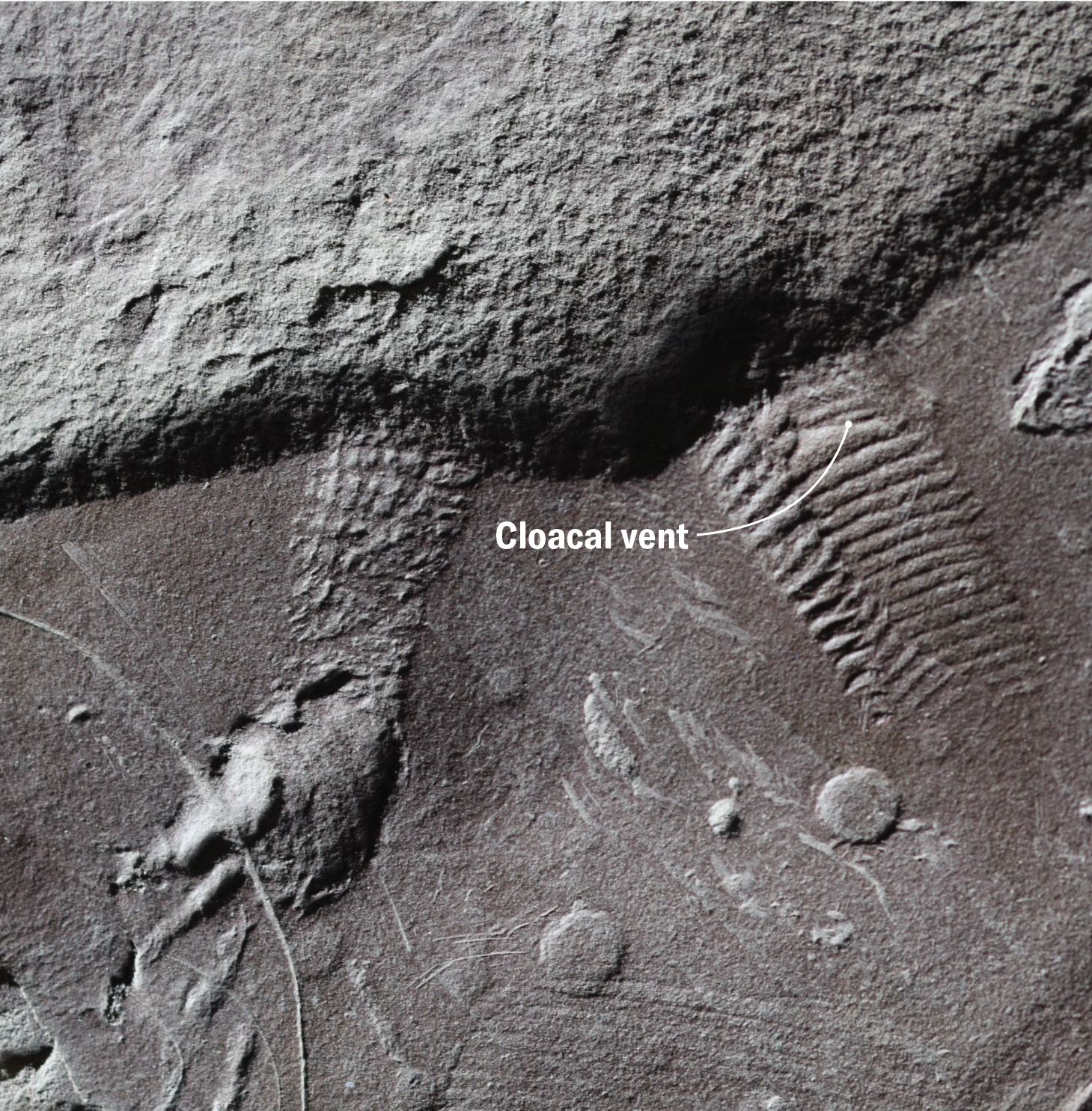
A closer look at the fossilized impression of the cloacal vent.
Cloacal vents vary in size and shape across the reptile world, but a lack of fossil preservation has kept their evolution mysterious.
“Only two examples of this structure are currently known in fossil reptiles,” Marchetti says. They are this one and that of a 130-million-year-old ceratopsian called Psittacosaurus, which Vinther and his colleagues reported in 2021. Radioisotopes of ash within the new fossil suggest its cheeky impressions were planted about 170 million years before the Psittacosaurus fossil.
The scale imprints and footprints in the ancient muck helped Marchetti and his colleagues to determine that the derriere belonged to a never-before-named species. The animal, which the researchers named Cabarzichnus pulchrus, was a small lizardlike reptile that had likely been lounging in the mud to cool off, Marchetti says.
“It’s pretty remarkable to see the fine details preserved of such a small animal,” says Phil Bell, a paleontologist at the University of New England in Australia, who was not involved with the research. “The consistency of the mud has to be absolutely perfect for such an imprint to occur.”
Fossil cloacae “are as rare as hens’ teeth,” Vinther says, “and finding another one is exciting to say the least.”
It’s Time to Stand Up for Science
If you enjoyed this article, I’d like to ask for your support. Scientific American has served as an advocate for science and industry for 180 years, and right now may be the most critical moment in that two-century history.
I’ve been a Scientific American subscriber since I was 12 years old, and it helped shape the way I look at the world. SciAm always educates and delights me, and inspires a sense of awe for our vast, beautiful universe. I hope it does that for you, too.
If you subscribe to Scientific American, you help ensure that our coverage is centered on meaningful research and discovery; that we have the resources to report on the decisions that threaten labs across the U.S.; and that we support both budding and working scientists at a time when the value of science itself too often goes unrecognized.
In return, you get essential news, captivating podcasts, brilliant infographics, can’t-miss newsletters, must-watch videos, challenging games, and the science world’s best writing and reporting. You can even gift someone a subscription.
There has never been a more important time for us to stand up and show why science matters. I hope you’ll support us in that mission.